How to Use an Apple Corer Safely: 5 Easy Steps
How to Use an Apple Corer Safely is mostly about hand placement. Most injuries happen when the apple rolls or the corer slips. The tool looks simple, but it concentrates force into a small metal edge.
That's why casual technique can cause a fast, deep cut.
Manufacturer specs often list corer tube diameters near 18 to 25 mm. Cut-resistant gloves may carry ANSI/ISEA 105 ratings, with A2 to A4 levels common for light kitchen work. A stable board and correct angle reduce the need for brute force.
The next section explains where the danger zones sit.
Quick Answer
How to Use an Apple Corer Safely starts with a stable board. Keep your supporting hand away from the tube. Press straight down with controlled force.
Stop before the blade reaches your fingers. Clean the sharp edge carefully.
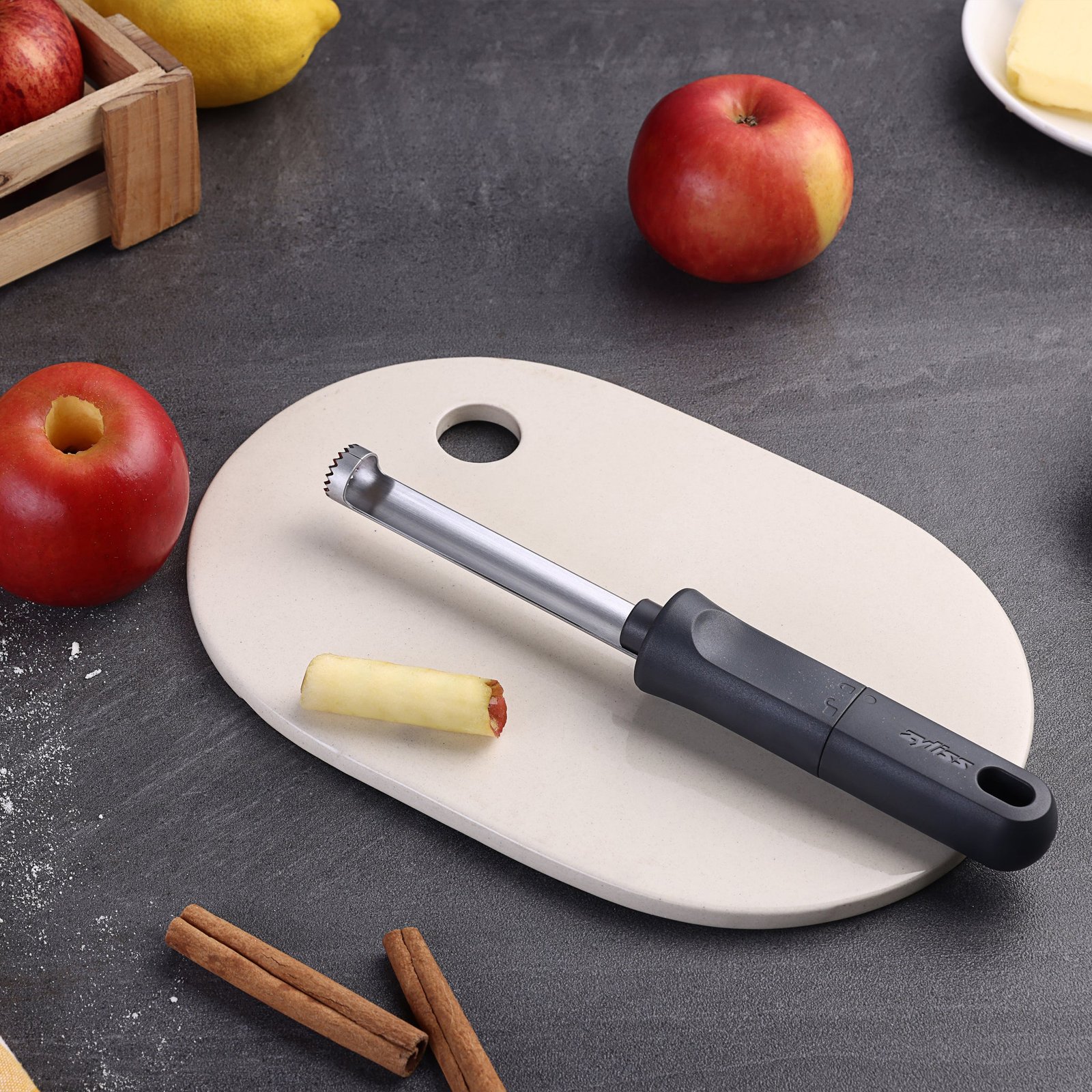
Image source: Bing (Web (fair-use with source credit))
Why Apple Corer Safety Is a Real Injury Issue, Not Just Kitchen Advice
An apple corer is a puncture tool. We treat it as a safety topic because it can fail quickly. It uses a narrow metal tube and a sharpened rim to punch through fruit.
Your hand often sits close to the exit path. That creates a real risk of puncture wounds and lacerations.
The U.S. Consumer Product Safety Commission tracks consumer product injuries. Kitchen hand tools are common culprits.
The danger rises when people core apples on plates, counters, or in their palms. A slipped corer can move fast. It can also hit bone or tendon in the hand.
The Anatomy of an Apple Corer and Where Cuts Happen
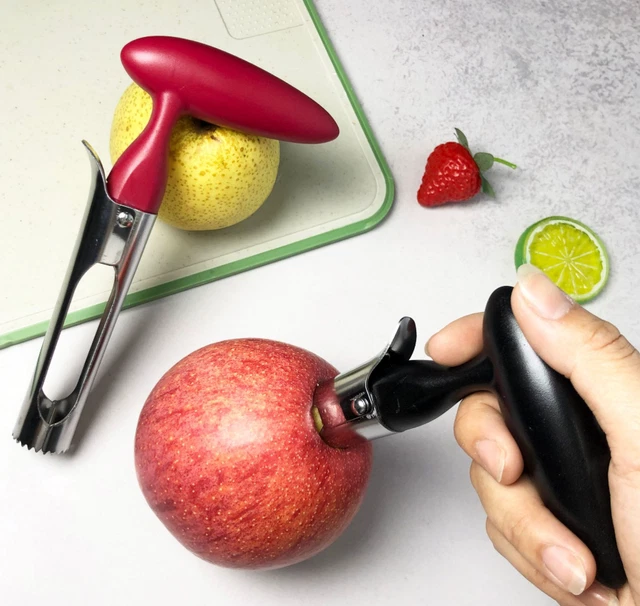
A typical handheld apple corer has four key parts. They are the handle, the coring tube, the serrated cutting edge, and the core chamber. The tube diameter often measures 18 to 25 mm.
That is wide enough to remove seeds and core in one pass.
Cuts usually happen at three points. The first is the top hand, if fingers wrap over the cutting path. The second is the holding hand, if the palm sits under the apple.
The third is during cleaning, when fingers meet the hidden inner edge.
Core Safety Facts: Hand Position, Cutting Angle, and Pressure
The safest position keeps your holding hand on the side of the apple, not under it. Curl your fingertips inward. Your thumb should stay clear of the tube line.
If the apple is small, use a fruit holder or cut a thin base first.
The corer should enter at about a 90-degree angle to the board. Angled entry makes the tube skid. It can also wedge into the apple wall.
Use steady downward pressure with a gentle twist. If it won't move, stop. Don't force it.
Pressure control matters more than strength. A sharp corer needs less force. A dull or bent corer invites sudden slips.
If you feel the tool jump, reset. Never chase a slipping corer with your free hand.
Setup: Board Stability, Tool Condition, and Glove Options
Start with a stable cutting board. Place a damp paper towel or non-slip mat under it. This stops the board from skating.
Wash and dry the apple, because a wet surface can slide.
Inspect the corer before each use. The handle should feel tight. The tube should be straight.
The cutting edge should be clean and not burred.
| Safety factor | What to check | Why it matters |
|---|---|---|
| Board | No wobble, damp towel underneath | Prevents apple movement |
| Corer edge | Sharp, clean, not bent | Reduces needed force |
| Handle | Secure, dry grip | Prevents tool slip |
| Glove | ANSI/ISEA 105 or EN 388 rated | Adds cut protection |
As of 2026, basic stainless steel corers usually cost $5 to $15. Heavy-duty models may cost $10 to $30. A cut-resistant kitchen glove can cost less than a trip to urgent care.
Choose a glove rated for cut protection, not warmth.
Step-by-Step: How to Core an Apple Safely
The safe method is slow and boring. That is the point. You want the tool to remove the core without your hand becoming the backstop.
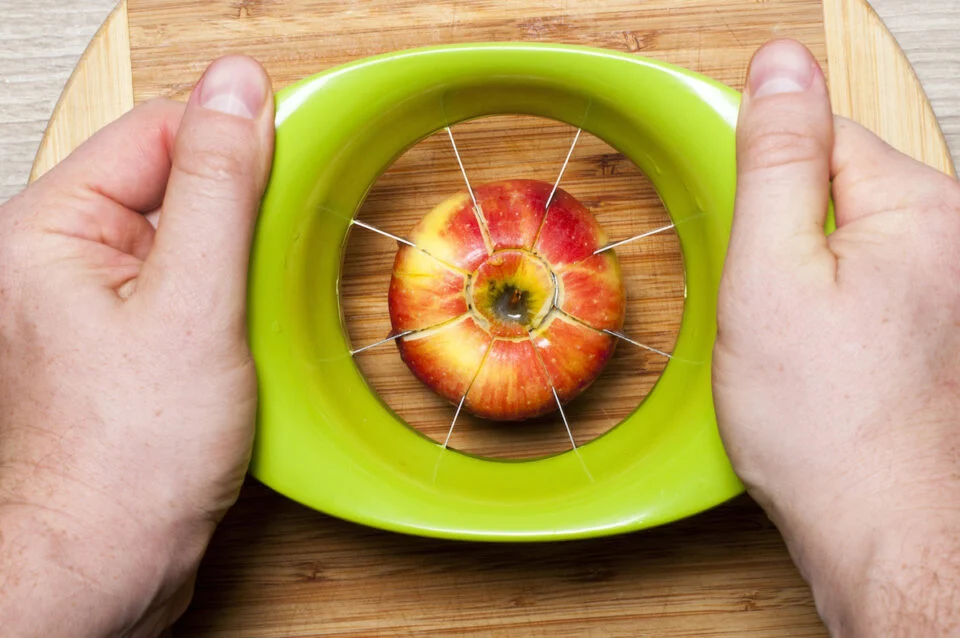
Image source: Bing (Web (fair-use with source credit))
Basic Method for Firm Apples
- Set the apple stem-up on the board.
- Hold the side of the apple with fingertips curled inward.
- Center the corer over the stem.
- Press straight down while twisting gently.
- Stop before the corer hits the board.
- Lift the corer out carefully.
- Push the core out with a blunt tool.
If the apple rocks, stop. Trim a thin slice from the base and reset. If the corer jams, don't yank it.
Ease it out or relieve pressure with a knife.
Safer Adjustment for Small Hands or Weak Grip
Use a cut-resistant glove on the holding hand. You can also core the apple while it sits in a shallow bowl or on a damp towel. This adds stability.
If grip is limited, quarter the apple and cut out the core with a paring knife instead. That removes the vertical punching motion.
What to Do if the Corer Jams, Slips, or Hits the Board
If the corer jams, keep your hands still. Don't twist harder. Lift the apple and tool together if you can.
Place them on the board.
If the corer slips off the apple, stop immediately. Reset your stance and check the angle. A slip usually means the corer entered at an angle or the apple moved.
If the corer hits the board, you went too far. Pull it out slowly. Check the edge for bends.
A bent tube can cut unevenly and require more force next time.
Common Apple Coring Mistakes and How to Avoid Them
Aggregate reviews report that most injuries come from predictable habits. Avoid these:
- Holding the apple in your palm.
- Coring on a plate or counter.
- Pushing at an angle.
- Twisting a stuck corer.
- Using a dull or bent tool.
- Cleaning the edge with a bare finger.
The fix is simple. Use a board. Keep hands out of the path.
Let the tool do the work. If a method feels rushed, slow down.
Cleaning and Storing an Apple Corer Without Cutting Yourself
Clean the corer right after use. Dried apple pulp makes the edge harder to see. Rinse it under warm water with the cutting edge facing away from your fingers.
Use a bottle brush or dish brush for the inside.
Dry it fully before storage. Store it with a blade guard or in a dedicated drawer slot. Don't toss it loose into a utensil drawer.
If the corer is dishwasher-safe, place it where the edge cannot contact hands during loading.
Apple Corer vs Paring Knife vs Slicer: Which Is Safer?
No method is risk-free. The safest option depends on the task and the user.
| Method | Best for | Main risk |
|---|---|---|
| Apple corer | Whole baked apples | Puncture if hand is below |
| Paring knife | Quartered apples | Slice cuts |
| Apple slicer | Rings and wedges | Pinch and blade contact |
For whole apples, a corer is often faster than a knife. For users with limited grip, quartering and using a knife may be safer. A countertop peeler-corer-slicer can reduce hand force, but it has more moving parts and needs careful cleaning.
When Kids, Older Adults, or Commercial Kitchens Need Extra Rules
Children should only use an apple corer with close adult supervision. Many corers are not suitable for young children. A safer lesson is to let them rinse apples or place cores in a bowl.
Older adults with reduced grip strength may benefit from a glove and a non-slip setup. If arthritis makes twisting painful, switch to a quarter-and-cut method.
Commercial kitchens should follow workplace hand tool safety rules. In the United States, food businesses should also follow U.S. Food and Drug Administration guidance for cleaning and sanitizing food-contact utensils.
If You Cut Yourself: Immediate Steps and When to Get Medical Help
Stop and put the corer down. Rinse a minor cut under clean running water. Apply gentle pressure with a clean cloth.
Cover it with a bandage before returning to food prep.
Get medical help if the wound is deep, won't stop bleeding, or shows fat, tendon, or bone. Also seek help if the cut is near a joint or causes numbness. Puncture wounds can trap bacteria deep in tissue.
Don't ignore increasing pain, redness, or swelling.
When to Replace a Damaged Apple Corer
Replace the corer if the tube is bent, the handle is loose, or the edge is chipped. A damaged corer needs more force and behaves unpredictably. Rust that won't clean off is another reason to retire it.
Also replace it if the core catcher cracks or the handle slips when wet. Low-cost tools are not worth a preventable injury. For frequent baking, choose a one-piece stainless steel model with a secure grip.
Pre-Use Safety Checklist
Run this quick check before coring:
- Board is stable and dry.
- Apple is washed and dry.
- Corer tube is straight.
- Cutting edge is clean.
- Handle is tight.
- Holding hand is on the side.
- Corer path is clear.
- Gloves or guards are used when needed.
If any item fails, fix it first. This takes less than a minute. It prevents most common coring injuries.
Frequently Asked Questions
Can kids use an apple corer safely?
Some older kids can use one with direct adult supervision. The child should use a stable board and keep the holding hand on the side of the apple. For young children, skip the corer.
Let them wash apples or remove cores after an adult does the cutting.
Is an apple corer safer than a knife?
It can be safer for keeping apples whole. It reduces some knife work. The risk changes if your hand sits under the apple.
A paring knife may be safer for quartered apples because the cutting path is easier to see.
What apples are easiest to core?
Firm apples are easier and safer. They hold their shape under pressure. Soft, mealy, or bruised apples can collapse and cause the corer to slip.
Good baking apples stay stable during coring. Chill very soft fruit briefly if you must core it.
Do I need a cut-resistant glove?
You don't always need one. A glove is smart for batch prep, weak grip, or teaching beginners. Look for ANSI/ISEA 105 or EN 388 cut ratings.
A light kitchen glove with an A2 to A4 rating is often enough.
How do I clean the corer safely?
Rinse it soon after use. Keep the cutting edge facing away from your fingers. Use a brush for the inside tube.
Dry it fully before storing it with a guard or in a protected drawer slot. This prevents hidden cuts during cleanup.
What to Do if the Corer Jams, Slips, or Hits the Board
A stuck corer is a warning to stop. Do not twist harder. Extra torque can make the tube break free and shoot toward your hand.
What if the tube gets stuck?
Set the apple and corer on the board. Hold the apple from the side. Ease the corer out with a gentle rocking motion.
If it will not move, use a blunt utensil to push the core from the bottom. You can also slice a small wedge next to the tube with a paring knife. Keep fingers clear of the exit path.
What if it slips off the apple?
Stop right away. A slip usually means the apple moved, the rim was off center, or the angle was not vertical.
Reset the apple. If the skin is wet, dry it. If the apple is misshapen, trim a small base so it sits flat.
What if it hits the board?
Pull the corer out slowly. Check the rim for bends or burrs. A bent edge can grab the fruit and cause a sudden jerk.
Next time, stop just before the rim reaches the board. You can finish the last few millimeters with a knife if needed.
Common Apple Coring Mistakes and How to Avoid Them
Most coring injuries come from habits that feel efficient. The risky move is usually the one that saves a few seconds.
| Mistake | Why it is risky | Safer fix |
|---|---|---|
| Coring in the palm | Hand sits under the blade path | Core on a stable board |
| Pushing at an angle | Tube can skid or wedge | Keep the corer vertical |
| Twisting a stuck tool | Sudden release can cut skin | Ease it out or cut relief slots |
| Rushing through a batch | Grip fatigue reduces control | Reset your hold every few apples |
| Cleaning by feel | Hidden inner edge cuts fingers | Use a brush and look at the rim |
Batch prep deserves special attention. Your grip tires after many apples. Fatigue makes you lean into the tool more than you should.
Take a short break every dozen apples. Switch your stance if your wrist feels stiff. If the corer starts to feel hard to control, stop and switch methods.
Cleaning and Storing an Apple Corer Without Cutting Yourself
Cleaning is where many close calls happen. The cutting rim is small and easy to miss. Rinse the corer soon after use so pulp does not hide the edge.
Hold the handle, not the tube. Point the sharp end away from your body. Use a long bottle brush or dish brush for the inside.
If the corer is dishwasher-safe, load it with the cutting edge down or secured in a utensil basket. Do not let it rest loose where a hand can grab it. In a commercial sink, follow your food code for sanitizing food-contact tools.
Dry the corer fully before storage. Moisture can cause corrosion and make the handle slick.
Store it in a blade guard, drawer organizer, or wall rack. Do not toss it into a mixed utensil drawer. Keep it out of reach of children.
If you notice rust, a loose handle, or a rough rim, do not try to salvage it with bare hands. Retire or replace it.
Apple Corer vs Paring Knife vs Slicer: Which Is Safer?
The safest tool depends on the final shape you need. A handheld corer is best for whole apples. A paring knife is best for control.
A slicer is best for uniform wedges.
| Tool | Best use | Main safety issue | Who it suits |
|---|---|---|---|
| Apple corer | Whole baked apples | Puncture risk below the fruit | Confident home cooks |
| Paring knife | Quartered apples | Slicing cuts | Users who want full visibility |
| Apple slicer | Rings and wedges | Pinch points and blade contact | Fast prep with firm fruit |
A corer can be safer than a knife because it removes the core in one motion. That benefit disappears if your palm sits under the apple. For small apples, a knife may be the calmer choice.
A countertop peeler-corer-slicer reduces hand force. It also adds gears, blades, and suction feet. Clean it carefully and keep fingers away from the cutting head.
For users with arthritis or weak grip, a stable press or quarter-and-cut method may beat a handheld corer.
When Kids, Older Adults, or Commercial Kitchens Need Extra Rules
Extra rules are needed when strength, judgment, or speed changes the risk. The tool is simple. The user's situation is not.
Kids and beginners
Children should only use a corer with direct adult supervision. Many kids lack the hand control to keep fingers clear. Start with a gloved holding hand and a board that cannot slide.
A safer teaching method is to let an adult start the cut. The child can finish with light pressure. If the child has to force the tool, stop.
Older adults and low-grip users
Reduced grip strength can lead to overleaning. That puts the body behind the blade path. Use a non-slip mat, a glove, and a firm apple.
If twisting hurts, quarter the apple and remove the core with a paring knife. A countertop press may also be easier. Choose the method that needs the least force.
Commercial kitchens
Commercial prep raises exposure because workers core many apples per shift. Train staff on hand placement, jams, and first aid. Provide cut-resistant gloves where appropriate.
Follow local health rules for cleaning and sanitizing food-contact utensils. Keep first aid supplies nearby. Remove bent or dull corers from service immediately.
If You Cut Yourself: Immediate Steps and When to Get Medical Help
Stop coring now. Rinse minor cuts, apply pressure, cover the wound.
Seek care for deep cuts, heavy bleeding, numbness, or joint pain. Puncture wounds can infect deeply.
When to Replace a Damaged Apple Corer
Replace bent tubes, loose handles, or rough rims. Damage raises slip risk.
Retire corers with rust that will not clean off. A worn tool needs dangerous force.
Pre-Use Safety Checklist
Check board stability, apple dryness, corer edge, handle tightness, and hand position. Keep the corer path clear.
Reset if anything wobbles or slips. Most injuries come from rushed setups.
Apple Corer Safety FAQs
Can kids use one safely?
Yes, with close adult supervision. Keep hands beside the apple.
Is it safer than a knife?
Yes, often for whole apples. It depends on grip and hand position.
How do I clean it safely?
Rinse soon, point edge away, use a brush.
When should I replace it?
Replace bent, loose, rusty, or rough corers immediately.