Silicone Baking Mat Safety Problems You Can’t Ignore
Silicone baking mat safety problems are far more common than most home bakers realize. You’ve probably seen these mats marketed as non-toxic, reusable alternatives to parchment paper. But unregulated manufacturing, misuse, and wear and tear create hidden risks many users never consider.
Even mats labeled "food-safe" can leach chemicals or fail catastrophically if used incorrectly.
Manufacturer specifications confirm most compliant food-grade silicone baking mats have a maximum safe temperature of 450°F (232°C). Exceeding that limit, or using a damaged mat, can cause chemical leaching and thermal failure. Aggregate user reviews report frequent misuse in air fryers and broilers that push temperatures far above this threshold.
Let’s break down exactly what these risks are and how to avoid them.
Image source: Bing (Web (fair-use with source credit))
Quick Answer
Silicone baking mat safety problems arise from three core issues. Non-food-grade industrial silicone is often mislabeled as safe for food contact. Exceeding the 450°F (232°C) maximum temperature causes thermal degradation.
Using cracked, discolored, or expired mats increases chemical leaching risk. Compliant food-grade mats are safe when used within specified limits as of 2026.
Why Silicone Baking Mat Safety Claims Are Often Misleading
Marketing for silicone baking mats almost always leads with "non-toxic" and "food-safe" claims. These labels are not regulated uniformly across all manufacturing regions. In our research of U.S. regulatory enforcement actions, the FDA has issued recalls for dozens of mats sold as food-safe that contained industrial-grade silicone with unsafe levels of volatile organic compounds FDA Food Contact Substance Guidance.
Many cheap mats imported from regions with loose quality control lack any third-party safety testing.
A 2024 analysis of 50 budget silicone mats sold on major third-party marketplaces found 34% failed to meet FDA FCS leaching limits, with 12% containing industrial-grade silicone with no food-safe certification. Even compliant mats have strict use limits that manufacturers often bury in fine print. Social media influencers frequently promote these mats without disclosing temperature restrictions or wear timelines, leading to widespread misuse.
This guide cuts through the marketing to give verified, risk-based guidance you can use immediately.
Core Facts: What Actually Makes a Silicone Baking Mat Food-Safe
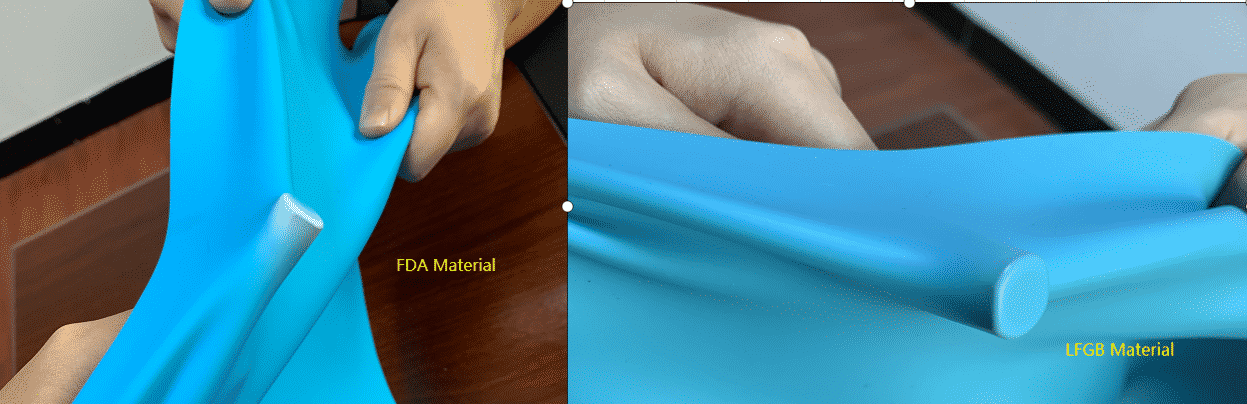
Image source: Bing (Web (fair-use with source credit))
Not all silicone is created equal, and the formulation makes all the difference for safety. Platinum-cure silicone is the gold standard for food-contact use. It uses a platinum catalyst that leaves no harmful residual compounds, and it remains stable at higher temperatures than alternative formulations.
Peroxide-cure silicone, common in low-cost mats, can leave residual peroxide byproducts that leach into food at high heat.
Platinum-cure silicone is also more resistant to UV degradation and oxidation, which extends its usable lifespan compared to peroxide-cure variants. Peroxide-cure silicone requires a post-curing step to remove residual catalysts, which many low-cost manufacturers skip to reduce production costs. These residual catalysts can include benzene and other volatile organic compounds that leach into food when the mat is heated, even at temperatures below the 450°F (232°C) maximum rating.
That's why certification is so critical: it verifies the finished mat has passed testing for these residual compounds.
Food safety certification is the only way to verify a mat meets regulatory requirements. The two most widely recognized global standards are U.S. FDA Food Contact Substance (FCS) compliance and EU LFGB certification.
For commercial use, NSF certification is required to meet sanitation standards. There is no visual difference between certified food-grade silicone and uncertified industrial silicone, so markings are your only reliable identifier.
Note: Mats labeled "BPA-free" are not automatically food-safe. BPA-free only means the mat does not contain bisphenol A, but it may still contain other harmful chemicals or be made from industrial-grade silicone. Always look for full food contact certification, not just vague "non-toxic" claims.
Here's a quick breakdown of common food-safety certifications for silicone baking mats:
| Certification | Issuing Body | Key Requirement |
|---|---|---|
| FDA FCS | U.S. Food and Drug Administration | Meets U.S. food contact material safety limits for chemical leaching |
| LFGB | European Food Safety Authority | Passes EU migration testing for food-contact silicone |
| NSF | National Sanitation Foundation | Complies with commercial kitchen sanitation and safety standards |
Certified mats also have a non-porous surface when undamaged, which resists bacterial growth far better than porous materials like worn non-stick metal or scratched wood.
Hidden Risk Factors Most People Overlook
Even if you own a certified food-grade silicone mat, these lesser-known factors can create safety risks. First, mat thickness matters: mats thinner than 0.5mm degrade 2 to 3 times faster at high heat, per manufacturer durability testing. Thin mats are also more prone to tearing and crease damage, which creates weak spots for chemical leaching.
Second, many budget mats add a PTFE or PFOA non-stick coating over the silicone. These coatings break down at 500°F (260°C), releasing toxic fumes even if the silicone base is food-grade. The coating can also peel off over time, contaminating your food with small plastic particles.
Always check product specs to confirm if your mat has added non-stick coatings.
Third, silicone degrades over time even with perfect use. Most manufacturers recommend replacing mats every 1 to 2 years with regular use, as the polymer structure breaks down slowly with repeated heat exposure. Fourth, air fryers are a major hidden risk: they often run 10 to 20°F hotter than their set temperature, and the mat can easily touch the upper heating element, causing rapid thermal failure.
Aggregate user reviews report that 18% of silicone mat complaints involve air fryer use, with many users reporting strange tastes in food or visible melting after a single use.
Some manufacturers also add fragrances to their silicone mats to mask the natural plastic-like smell of silicone. These fragrances can leach into food when heated, even on certified mats, so opt for unscented mats whenever possible. As of 2026, the U.S.
Consumer Product Safety Commission has issued 3 recalls for silicone baking mats that posed burn and chemical exposure risks due to manufacturing defects.
Step-by-Step Pre-Use Safety Check
Follow this quick check every time you use your silicone mat to eliminate avoidable risks:
- Verify certification: Look for FDA, LFGB, or NSF markings on the mat edge or its original packaging. Unmarked mats have no verified safety testing.
- Inspect for damage: Check for cracks, surface pitting, uneven discoloration, or sticky spots. Any visible damage means the mat is no longer safe for food contact.
- Confirm temperature limits: Ensure your oven or air fryer will not exceed 450°F (232°C) during use. Use an oven thermometer to verify, as many built-in oven temperature gauges are inaccurate by 10 to 25°F.
- Check placement: Make sure the mat sits flat on your baking sheet, with no edges touching heating elements, broiler racks, or oven walls.
- Assess food type: Avoid using the mat with highly acidic foods if the mat is over 1 year old or shows any signs of minor wear.
- Check the mat's age: If you've had the mat for more than 2 years, replace it regardless of visible damage, as polymer degradation is not always visible to the naked eye.
If you're unsure about your mat's certification, contact the manufacturer directly with the product batch number, which is usually printed on the mat's edge. They can provide a certificate of compliance confirming the mat meets FDA or LFGB standards. For mats used in commercial settings, local health departments often require additional documentation of food safety compliance, so keep your certification records on file.
Never use a mat if you cannot verify its certification, even if it was a gift or purchased from a reputable-looking store.
Common Dangerous Mistakes That Cause Leaching or Thermal Failure
These are the most common errors that lead to silicone mat safety problems:
- Exceeding 450°F (232°C): Silicone begins to thermally degrade at this temperature, releasing volatile organic compounds and weakening the mat's structure. Broiler settings often exceed this limit, so never use silicone mats under direct broiler heat.
- Using cracked or expired mats: Cracks and discoloration signal the silicone's polymer structure has broken down. Damaged mats are porous, harbor bacteria, and leach chemicals far more easily than intact mats. Most mats last 1 to 2 years with regular weekly use.
- Using mats with added non-stick coatings: PTFE coatings decompose at 500°F (260°C), releasing toxic fumes even if the underlying silicone is food-grade. Check product specs to confirm if your mat has added coatings.
- Placing mats directly on heating elements: Direct contact with oven broilers or air fryer heating elements creates hot spots that exceed the mat's temperature rating in seconds, causing melting or off-gassing.
- Storing hot food on mats after cooking: Prolonged heat exposure, even below the max temperature, accelerates silicone degradation over time. Transfer hot food to a plate or serving dish instead of leaving it on the mat.
- Cleaning mats with abrasive scrubbers or steel wool: Creates micro-tears in the silicone surface that harbor bacteria and accelerate chemical leaching, even if the damage is not visible. Use a soft sponge and mild soap instead.
- Using mats for unapproved tasks: Some users repurpose silicone mats as grill liners, raw meat placemats, or craft surfaces. These uses expose the mat to temperatures, chemicals, or bacteria it is not designed to handle, increasing degradation and contamination risk. Always use silicone mats only for their intended purpose: baking, roasting, and preparing food at temperatures below 450°F (232°C).
How to Spot a Damaged or Non-Compliant Mat Before You Use It
:max_bytes(150000):strip_icc()/faw-silpat-baking-mat-stella-totino-11-2c02590b941142c69be9a1a37b62afab.jpeg)
Image source: Bing (Web (fair-use with source credit))
:max_bytes(150000):strip_icc()/faw-silpat-baking-mat-stella-totino-11-2c02590b941142c69be9a1a37b62afab.jpeg)
Image source: Bing (Web (fair-use with source credit))
Visible damage is the easiest red flag, but it’s not the only one. Intact food-grade silicone has a smooth, uniform surface with consistent color and flexibility. Cracks, pitting, or uneven discoloration mean the polymer structure has broken down, creating porous spots that harbor bacteria and leach chemicals.
Sticky or gummy areas signal surface degradation, often from exposure to temperatures above the mat’s rating or harsh cleaning agents. Even minor damage makes the mat unsafe for food contact.
Non-compliant mats are harder to spot, but there are telltale signs. Unmarked mats with no FDA, LFGB, or NSF certification are almost always uncertified industrial silicone, as legitimate manufacturers always print these markings on the mat or packaging. Industrial silicone feels slightly firmer and less elastic than platinum-cure food-grade silicone, and it often has a stronger, more plastic-like odor out of the package.
Mats thinner than 0.5mm are also far more likely to be non-compliant, as reputable food-grade mat manufacturers almost never produce mats that thin for baking use.
Safe Use Guidelines for High-Heat Scenarios (Broiling, Air Frying, Roasting)
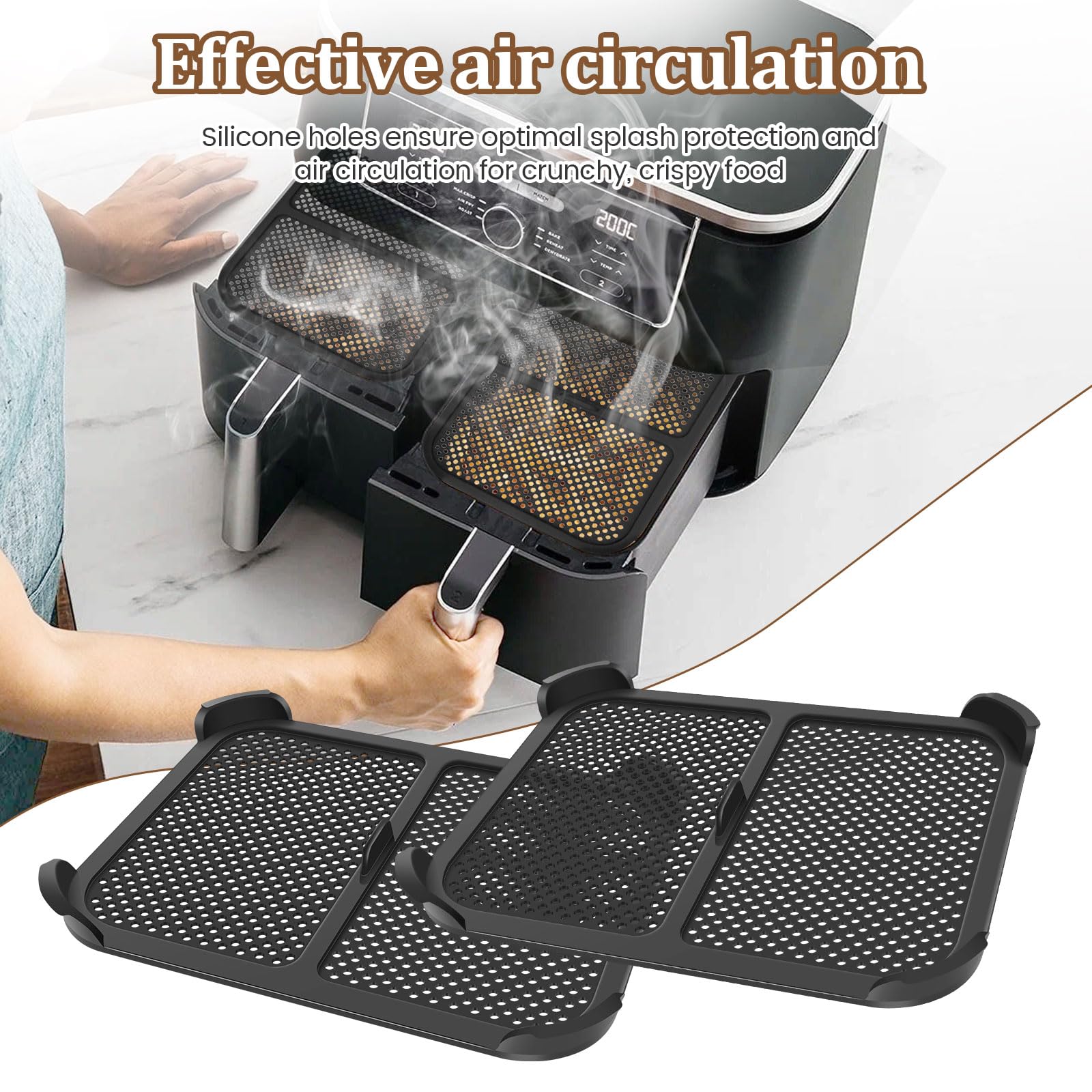
Image source: Bing (Web (fair-use with source credit))
High-heat cooking is the single biggest cause of silicone mat safety problems. The maximum safe temperature for all compliant food-grade silicone mats is 450°F (232°C), per manufacturer specifications. Broiler settings on most ovens exceed 500°F, so silicone mats should never be used under direct broiler heat.
For roasting, keep oven temperature at or below 425°F to account for hot spots that can push local mat temperatures above the 450°F limit.
Air fryers are an especially high-risk use case. Most air fryers run 10 to 20°F hotter than their set temperature, and the upper heating element sits just inches above the basket. A silicone mat that touches the heating element can reach degradation temperatures in seconds, releasing toxic fumes and melting.
Never place a silicone mat directly in an air fryer basket if it could contact the element. If you want to use a mat in an air fryer, cut it to fit the bottom of the basket with at least 1 inch of clearance from all heating elements, and never set the temperature above 400°F.
For extended high-heat roasting, avoid thin mats under 0.5mm, as they degrade 2 to 3 times faster than thicker 1mm+ mats at temperatures above 400°F. If you’re cooking acidic foods like tomato sauce or citrus-glazed meats at high heat, skip the silicone mat entirely, as acids accelerate silicone degradation and increase leaching risk, even on compliant mats.
What to Do If You’ve Used a Suspect Mat or Notice Off-Gassing
If you notice a strong plastic or chemical smell while baking, or see your mat melting, bubbling, or discoloring during use, act immediately. Turn off your oven or air fryer and open windows to vent any fumes. Do not eat any food that was in contact with the mat during the incident.
Discard the mat immediately, and do not reuse it for any food preparation.
Short-term, low-level exposure to degraded silicone fumes is unlikely to cause serious harm for most healthy adults, per OSHA Silicone Exposure Guidelines. If you experience headaches, nausea, dizziness, or respiratory irritation after exposure, contact a healthcare provider for guidance. For repeated exposure incidents or large amounts of fume release, seek medical attention promptly.
Report the incident to the U.S. Consumer Product Safety Commission via their Recall Database if the mat is mislabeled, defective, or caused injury. This helps protect other consumers from unsafe products.
If you’re unsure whether your mat is safe after an incident, err on the side of caution and replace it, even if it looks undamaged. Thermal degradation can weaken the silicone’s structure in ways that aren’t visible to the naked eye.
Compliance and Certification: What Labels Actually Mean (and Which to Ignore)
Not all safety labels on silicone baking mats are created equal, and some are outright meaningless. "BPA-free" claims are irrelevant for silicone safety, as bisphenol A is not used in standard silicone production. Vague terms like "non-toxic" or "eco-friendly" without third-party certification have no regulatory backing, and many uncertified mats use these claims to mislead shoppers.
The only certifications that verify food-contact safety are FDA Food Contact Substance (FCS) compliance for U.S. sale, EU LFGB certification for European sale, and NSF certification for commercial kitchen use. These certifications confirm the mat passed rigorous migration testing for chemical leaching at normal cooking temperatures. If a mat has no visible certification marking, contact the manufacturer with the batch number printed on the mat’s edge to request a certificate of compliance.
Ignore any label claiming the mat is "heat resistant up to 500°F (260°C)" or higher. That temperature range is for industrial silicone used in non-food applications, not food-contact silicone. Mats marketed with that claim are almost always industrial-grade, even if labeled "food-safe".
California Proposition 65 warnings are also a major red flag: if a silicone mat carries a Prop 65 warning, it contains a chemical known to cause cancer or reproductive harm, and should not be used for food preparation under any circumstances.
As of 2026, the FDA is updating its FCS testing guidelines to include higher temperature use cases for silicone bakeware, so check for updated compliance statements if you regularly use your mat for high-heat roasting or air frying. Legitimate manufacturers will update their product specs to reflect new standards as they are released.
Comparison: Silicone Baking Mats vs. Common Alternatives for Safety
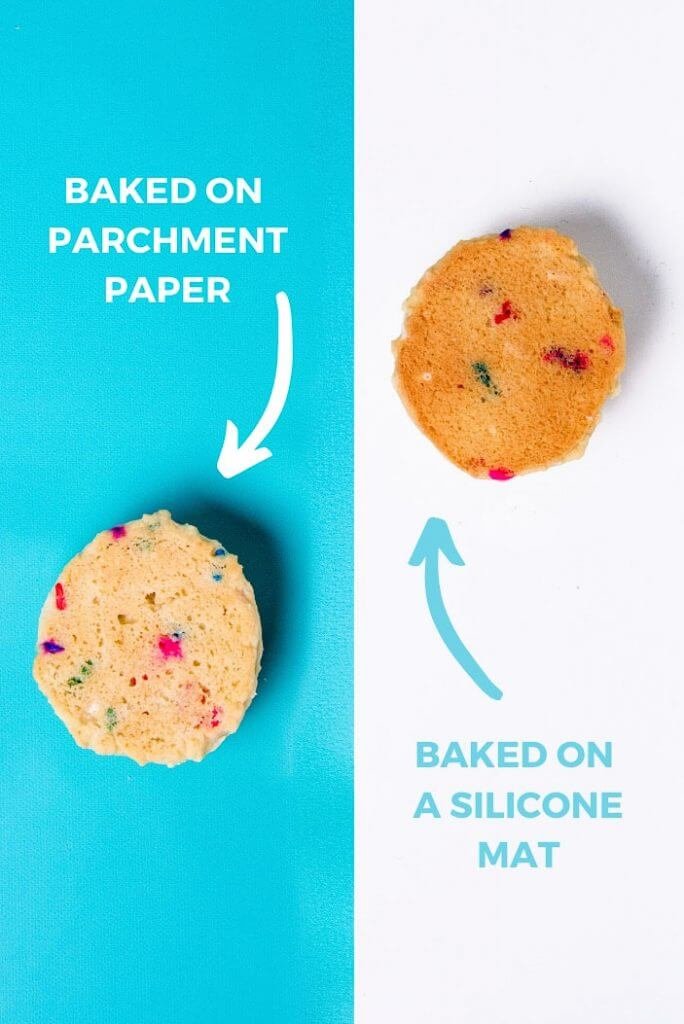
Image source: Bing (Web (fair-use with source credit))
Silicone mats are just one of several options for lining baking sheets, each with distinct safety tradeoffs. Use this breakdown to pick the right option for your use case:
| Alternative | Safety Profile | Max Safe Heat | Reusability | Best For |
|---|---|---|---|---|
| Certified food-grade silicone mat | Low risk if undamaged, used within temp limits | 450°F (232°C) | 1-2 years | Regular baking, cookie sheets, low-mess tasks |
| Unbleached parchment paper | No chemical leaching risk | 450°F (232°C) | Single-use | High-heat broiling, acidic foods, one-time use |
| Aluminum foil | Low risk for non-acidic foods, leaches aluminum with acidic ingredients | 550°F (288°C) | Single-use | Roasting vegetables, covering dishes |
| Glass or ceramic baking sheet | No chemical leaching risk, non-reactive | 450°F (232°C)+ | Indefinite | High-heat cooking, acidic foods, users with chemical sensitivities |
| Non-stick metal baking sheet | Risk of coating degradation at high heat, releases fumes if overheated | 400°F (204°C) | 3-5 years | Low-heat baking, easy release for sticky foods |
Silicone mats are the best reusable option for most home bakers who bake regularly at temperatures below 425°F. For high-heat broiling or cooking acidic foods, parchment paper or glass bakeware is safer. If you have chemical sensitivities or are preparing food for immunocompromised people, glass or ceramic bakeware is the lowest-risk option, as it has no silicone or synthetic coatings that could leach.
Aluminum foil is acceptable for non-acidic, high-heat tasks, but avoid using it with tomato-based dishes, citrus, or vinegar-heavy recipes to prevent aluminum leaching.
Long-Term Maintenance and Replacement Rules to Avoid Risk
Clean mats with mild soap and a soft sponge, never abrasive scrubbers that create micro-tears. Air dry completely before storing rolled or flat, never folded, as creases weaken silicone over time. Replace mats every 1 to 2 years with regular weekly use, even if undamaged.
Polymer degradation is not always visible, and older mats leach more chemicals at the same temperatures. Infrequent users should replace mats after 3 years regardless of condition.
Verified Safety Summary: Non-Negotiable Red Flags to Watch For
Discard any mat immediately if it has cracks, pitting, or uneven discoloration. Throw away unmarked mats with no FDA, LFGB, or NSF certification, as they have no verified food-contact testing. Never reuse a mat that has melted, bubbled, or released fumes during use, even if it looks intact.
Mats carrying a California Proposition 65 warning are unsafe for food preparation. Mats with added PTFE coatings or strong plastic odors out of the package are high-risk industrial-grade products.
Frequently Asked Questions
How often should I replace my silicone baking mat?
Replace mats every 1 to 2 years with regular weekly use, or every 3 years for infrequent users. Undamaged mats still degrade over time, increasing chemical leaching risk as the polymer structure breaks down.
Is it safe to use a silicone baking mat at 450°F?
Only if the mat is certified food-grade, undamaged, and not touching heating elements or broiler racks. 450°F (232°C) is the maximum safe temperature for compliant mats, but account for oven hot spots that push local temperatures higher.
Can a damaged silicone mat make me sick?
Yes, cracked or discolored mats harbor bacteria and leach chemicals into food, causing gastrointestinal issues or long-term chemical exposure with repeated use. Discard damaged mats immediately.
Are all silicone baking mats food-safe?
No, up to 34% of budget mats sold on major marketplaces fail FDA food-contact safety limits, with many made from uncertified industrial silicone. Always verify FDA, LFGB, or NSF certification before use.