Do Professional Chefs Actually Use Herb Scissors?
Do professional chefs use herb scissors? It's a fair question when you're staring at a wall of kitchen gadgets. Most home cooks want to know if these multi-blade tools are actually worth the drawer space, or if they're just another gimmick.
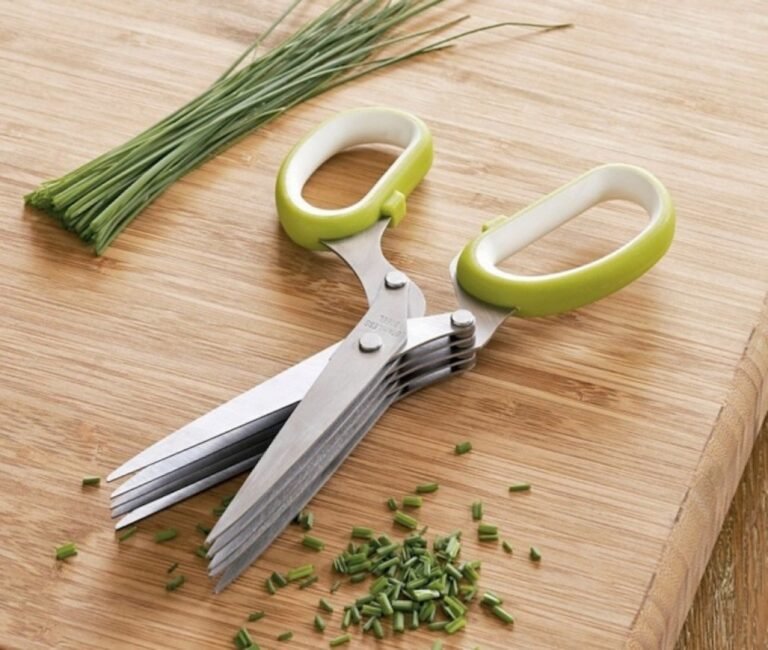
The truth is a bit mixed. Herb scissors typically feature five sharp stainless steel blades. As of 2026, manufacturer specifications indicate these tools are designed to cut five uniform strips at once, which sounds incredibly efficient for garnishing.
Let's look at how they actually perform in a real kitchen.
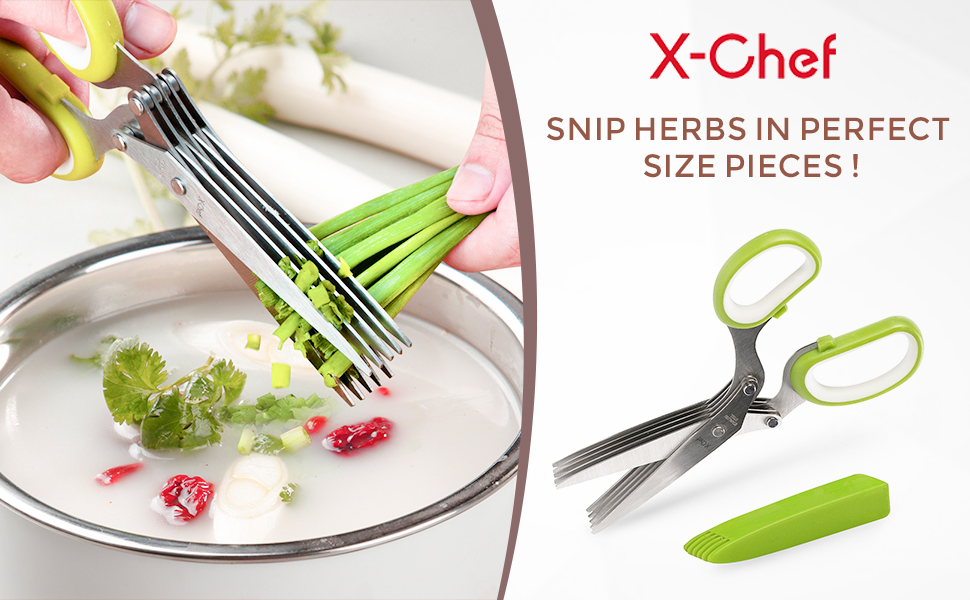
Image source: Web (Bing) / amazon.ca (Web image (fair-use with source credit))
Quick Answer: Do Pro Chefs Actually Use Herb Scissors?
Most professional chefs do not use herb scissors. They rely on a standard chef's knife for prep work. Knives are faster for bulk chopping tasks.
Scissors are mostly used for quick garnishing. You will sometimes see them on salad stations.
Why This Comparison Matters in a Commercial Kitchen
In a commercial kitchen, space and time are everything. Cooks need tools that multitask and clean up fast. A single-purpose gadget takes up space.
It also creates extra dishes to wash during a busy service.
That's why the chef's knife is the ultimate workhorse. It handles everything from breaking down squash to mincing garlic. When you compare a knife to a specialized tool like herb scissors, you have to weigh the time saved against the cleanup required.
Commercial kitchens also follow strict food safety standards. The FDA Food Code sets clear guidelines on equipment sanitation. Tools with multiple moving parts trap food residue easily.
That makes herb scissors a potential cross-contamination risk if they aren't fully disassembled and sanitized.
The Case for Herb Scissors
Herb scissors aren't completely useless. They have a specific niche where they shine. Here is why you might want a pair in your kitchen:
- Uniform cuts: They produce perfectly even strips. This is great for plating.
- Speed for soft herbs: They cut chives quickly. A knife can sometimes crush them.
- Minimal board contact: You can snip herbs directly over a plate or bowl.
- Accessibility: They work well for people with limited knife skills.
If you are garnishing a massive batch of soup, these scissors are handy. You can grab a bunch of chives and snip away. The five blades do the work of five parallel cuts.
This creates a quick, professional-looking garnish.
Best Herbs for Scissors
Not all herbs work well in multi-blade shears. Soft, thin-stemmed herbs are your best bet. Scissors handle these without bruising them.
- Chives: The ideal candidate. They fit perfectly between the blades.
- Dill: Works well for quick weed garnishes on fish.
- Cilantro: Can work for leaves, but the stems may jam.
Avoid using them on woody herbs like rosemary. The blades will struggle, and you'll end up crushing the leaves.
The Case for the Classic Chef's Knife
Ask any line cook what tool they grab first. It's always a chef's knife. A standard 8-inch or 10-inch blade handles 99% of kitchen tasks.
When you master the rock chop technique, you can process a massive bunch of basil in seconds.
The Rock Chop Technique
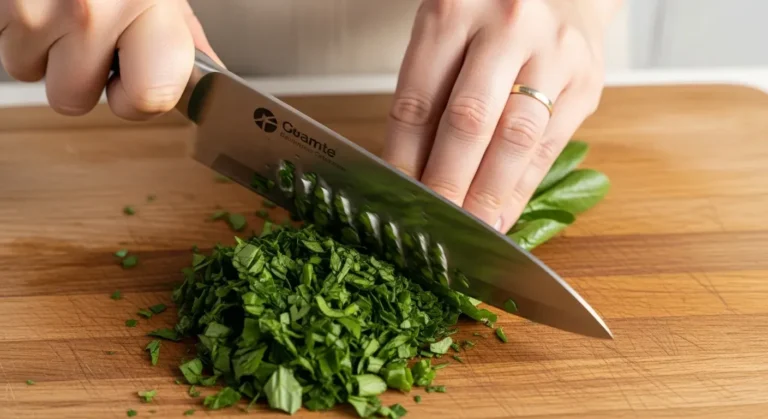
The rock chop is a fundamental knife skill. You keep the tip of the knife on the cutting board. You rock the blade down and through the herbs.
Your free hand guides the food. This method is incredibly fast. It also keeps the herbs confined to the board.
When you use a knife, you clean one tool. A quick wipe and a sanitizer bath are all you need. No tiny crevices for herb bits to hide in.
The Chiffonade Cut
For leafy herbs like basil, pros use the chiffonade. You stack the leaves. Roll them tightly into a cigar shape.
Slice them into thin ribbons. A knife makes this easy. Herb scissors physically cannot do this.
Herb Scissors vs. Chef's Knife: Side-by-Side Comparison
Let's break down the differences side by side. This helps clarify which tool wins in different categories.
| Feature | Herb Scissors | Chef's Knife |
|---|---|---|
| Cut Speed | Fast for single garnishes | Very fast for bulk prep |
| Cleanliness | Hard to clean, traps residue | Easy to wipe and sanitize |
| Versatility | Only cuts soft herbs | Handles all ingredients |
| Skill Required | Low | Moderate to High |
| Maintenance | Blades lose tension, hard to hone | Easy to hone and sharpen |
| Space Used | Small footprint in a drawer | Takes up a knife slot or roll |
Best Use Cases: When Scissors Actually Make Sense
So, who should buy herb scissors? They aren't right for everyone. Based on our research, these tools fit specific situations perfectly.
If you are a home cook who hates sharpening knives, they are a decent buy. They stay sharp for a long time out of the box. You can snip herbs directly into your salad or onto your pizza.
It removes the need for a cutting board.
They are also useful in very specific restaurant stations. A garde manger station, which handles cold appetizers and salads, might use them. The cook can quickly snip chives onto a plate without pulling out a board.
This saves seconds during a rush.
However, for bulk prep, the knife wins. If you need to mince two cups of parsley for a marinade, scissors will frustrate you. The herbs will tangle.
Your hands will cramp. A chef's knife with a rocking motion will finish the job in a fraction of the time.
Common Mistakes: Bruising, Clogging, and Cross-Contamination
Using herb scissors seems straightforward. Still, people make a few common mistakes. These errors ruin the herbs and create safety risks.
Mistake 1: Cramming Too Much Herb
The biggest mistake is overloading the blades. Users try to cut a massive handful of basil at once. The blades aren't designed for thick bundles.
They will stall, and the herb will fold.
Instead, feed small amounts of herbs into the scissors. Trim a few sprigs at a time. This keeps the cut clean and prevents jamming.
Mistake 2: Ignoring the Cleaning Comb
Most herb scissors come with a plastic cleaning comb. It fits between the blades. People lose this comb immediately.
Without it, cleaning is a nightmare.
Trapped green residue builds up fast. If you don't remove it, the blades stick. Worse, old herb residue becomes a food safety hazard.
Mistake 3: Using Them on Wet Herbs
Wet herbs stick to everything. If you wash your herbs and immediately try to snip them, they will slide and clump. Always dry your herbs thoroughly first.
A salad spinner works best. Lay them flat on a towel if you don't have a spinner.
How to Clean and Maintain Herb Scissors
Cleaning is the biggest pain point with these tools. If you don't maintain them, they'll rust or seize up. The USDA food safety guidelines emphasize keeping all food contact surfaces clean to prevent illness.
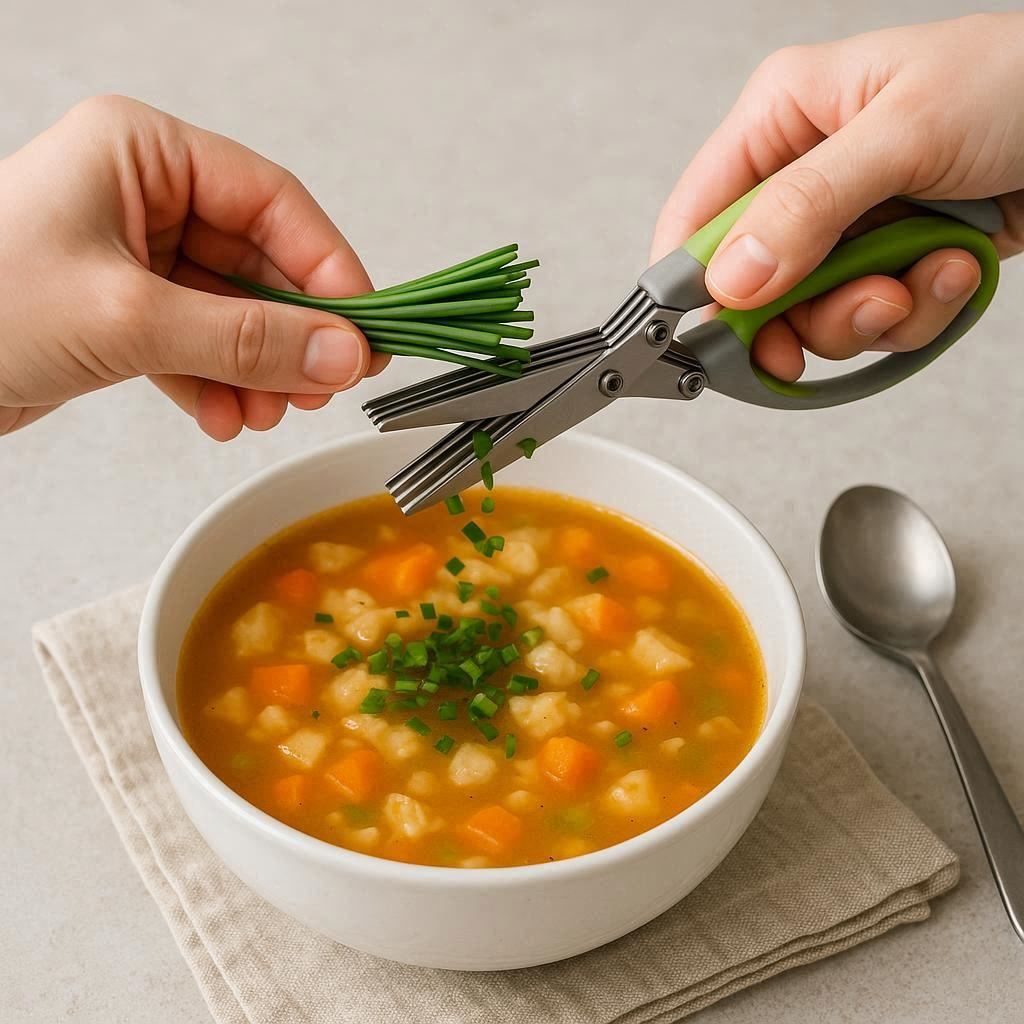
Image source: Web (Bing) / kitchen.thefclbd.com (Web image (fair-use with source credit))
Step-by-Step Cleaning Process
- Disassemble: If your scissors come apart, take the blades apart. Many have a central screw you can loosen.
- Use the Comb: Run the plastic comb between the blades. Push out all the trapped green matter.
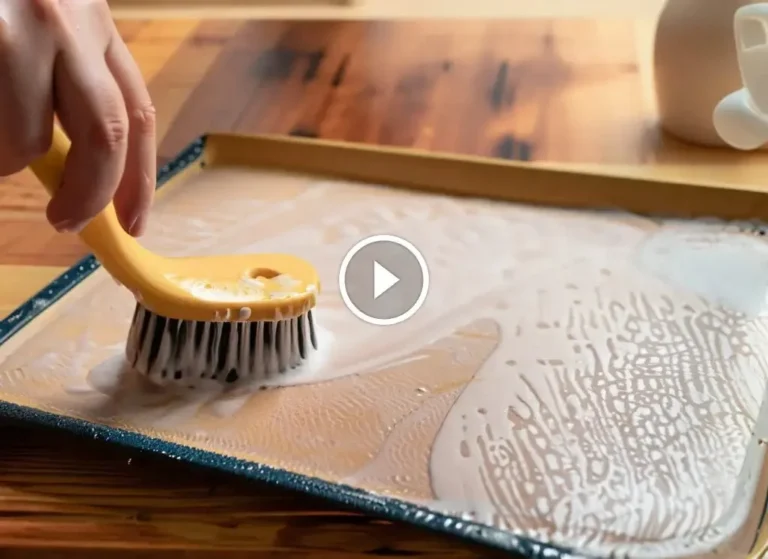
- Wash: Scrub the blades with hot, soapy water. Use a small bottle brush or an old toothbrush to get into the crevices.
- Dry: Dry them completely immediately. Stainless steel can still rust if left damp.
- Oil: Put a drop of food-grade mineral oil on the pivot joint. This keeps the action smooth.
Never just drop them in a sink full of water. The longer they sit, the harder the residue becomes. Clean them right after you use them.
Cost, Specs, and Longevity Expectations
Herb scissors are relatively cheap. You can find them for a few dollars, and premium models cost a bit more. But what are you actually paying for?
Typical Specifications
- Blade Count: Most have 5 blades. Some feature 3.
- Material: Food-grade stainless steel.
- Handle: Usually plastic or silicone-coated metal.
- Includes: A cleaning comb and sometimes a protective sheath.
Longevity Concerns
The main issue with longevity is blade tension. Over time, the pivot loosens. The blades start to separate slightly.
When this happens, they stop cutting and start tearing.
You cannot easily sharpen these blades. Traditional honing rods don't fit between the narrow gaps. Once the factory edge dulls, the tool is essentially dead.
A chef's knife, on the other hand, can last a lifetime with proper sharpening.
Pro Advice: Workflow and Mise en Place Optimization
Professional kitchens run on "mise en place." Everything has its place. Every tool has a purpose. If a tool doesn't serve multiple purposes, it's often left out.
Herb scissors violate this rule. They do one thing. If you want to optimize your kitchen workflow, invest your money in a good chef's knife and a honing rod.
Learn to rock chop. It will change your cooking speed entirely.
If you do buy scissors, keep them in your gadget drawer. Pull them out only for finishing touches. Use them to snip chives over a baked potato.
Do not try to use them for your main prep work. You will slow yourself down.
Frequently Asked Questions
Can you sharpen herb scissors?
You cannot easily sharpen herb scissors. Standard knife sharpeners don't fit between the five blades. Most users throw them away when they dull.
A few high-end models allow you to separate the blades for professional sharpening.
Do herb scissors work on all herbs?
They do not work on all herbs. They are best for soft, thin-stemmed herbs like chives and dill. They will crush woody herbs like rosemary.
They also struggle with thick, curly parsley leaves.
Are herb scissors dishwasher safe?
Many models claim to be dishwasher safe. However, it is not the best way to clean them. The high heat and water pressure can warp the blades.
Hand washing with the included comb works much better.
Why do professional chefs prefer knives?
Professional chefs prefer knives because they are versatile. One tool can process all ingredients. Knives are also much easier to clean and sanitize.
This prevents cross-contamination, which is critical in commercial kitchens.
What is a chiffonade cut?
A chiffonade is a knife technique for cutting flat leaves into thin ribbons. You stack the leaves, roll them tightly, and slice them. Herb scissors cannot perform a chiffonade cut.
Real Scenarios: When Scissors Beat a Knife
In a busy kitchen, the right tool depends entirely on the task at hand. If you are working a garde manger station during a Friday night rush, speed is everything. You need to garnish twenty plates of clam chowder in under three minutes.
Grabbing a cutting board and a knife for each bowl is not practical. Herb scissors let you stand at the pass and snip chives directly onto the soup. This saves valuable seconds and keeps your station clear.
Another scenario where scissors shine is at the pizza station. A hot pizza comes out of the oven and needs a quick finish of fresh oregano or basil. You can hover the scissors over the pie and cut the herbs straight onto the melted cheese.
This prevents the delicate leaves from bruising on a cutting board. It also means one less dirty board to wash during the final cleanup.
However, if you are prepping a large batch of chimichurri sauce for the night, the scissors fail completely. You need to mince two cups of parsley and a half cup of oregano. A chef's knife will process that volume in under a minute.
Scissors would take five times as long and leave uneven, torn pieces.
Pro Advice: Workflow and Mise en Place Optimization
If you decide to keep herb scissors in your kitchen, you must integrate them into your workflow properly. They cannot replace your primary knife. Think of them as a specialized finishing tool.
Store them in your garnishing kit alongside your tweezers and plating spoons. This ensures they are only used for their intended purpose and do not clutter your primary prep space.
Keep the cleaning comb attached to the scissors with a small piece of string or a carabiner. Most people lose the comb immediately, rendering the scissors useless after one use. If you secure the comb, you will be more likely to clean the blades properly between tasks.
Safety, Legal, and Compliance Warnings
Commercial kitchens face strict health code inspections. Inspectors look for hidden food residue on tools. Herb scissors have multiple blades joined tightly together.
This design creates the perfect trap for small herb particles and moisture. If you do not disassemble and scrub between every blade, you risk failing a health inspection.
The FDA Food Code requires all food contact surfaces to be easily cleanable and non-absorbent. If your herb scissors cannot be fully cleaned, they violate this standard. In a restaurant setting, using dirty scissors to garnish a plate can cause cross-contamination.
If you cut raw chicken with regular shears and then grab your herb scissors without washing your hands, you transfer pathogens directly to a finished dish.
Always sanitize the blades after cutting anything other than washed herbs. Never use them to cut raw meats, packaging, or string. Designate them strictly for ready-to-eat garnishes.
Frequently Asked Questions
Are herb scissors dishwasher safe?
Many manufacturers claim their herb scissors are dishwasher safe. However, the high heat and water pressure can warp thin stainless steel blades. They also tend to trap food particles even more inside a dishwasher.
Hand washing with the included comb is the only reliable method.
Can you use herb scissors on woody herbs like rosemary?
You should never use herb scissors on woody herbs like rosemary or thyme. The blades will struggle to cut through the tough stems. You will end up crushing the leaves and pulling the stems.
Stick to soft, thin herbs like chives, dill, and tender basil leaves.
Do herb scissors stay sharp longer than a chef's knife?
Herb scissors do not stay sharp longer than a well-maintained chef's knife. The scissors use thinner stainless steel that loses its factory edge relatively quickly. Unlike a knife, you cannot easily run a honing rod between the five blades to realign the edge.
Why do professional kitchens ban single-use gadgets?
Professional kitchens operate on tight margins and minimal space. A single-use gadget takes up valuable drawer or counter space. Cooks prefer versatile tools that can handle multiple tasks.
A chef's knife can slice meat, chop herbs, and mince garlic, making it far more valuable than a specialized pair of scissors.
Final Verdict: Should You Buy Them?
Herb scissors are a fun gadget for home cooks who love entertaining. They make quick work of chives and look impressive when you garnish a dish at the table. If you hate chopping small herbs or lack strong knife skills, they are a worthwhile ten-dollar investment.
However, if you want to build serious cooking skills, skip them entirely. Put that money toward a decent chef's knife and a cutting board. Learning to rock chop herbs will serve you far better in the long run.
You will gain a foundational skill that applies to dozens of other ingredients. Herb scissors are a shortcut, but a knife is a permanent solution.
Real Scenarios: When Scissors Beat a Knife
In a busy kitchen, the right tool depends entirely on the task at hand. If you are working a garde manger station during a Friday night rush, speed is everything. You need to garnish twenty plates of clam chowder in under three minutes.
Grabbing a cutting board and a knife for each bowl is not practical. Herb scissors let you stand at the pass and snip chives directly onto the soup. This saves valuable seconds and keeps your station clear.
Another scenario where scissors shine is at the pizza station. A hot pizza comes out of the oven and needs a quick finish of fresh oregano or basil. You can hover the scissors over the pie and cut the herbs straight onto the melted cheese.
This prevents the delicate leaves from bruising on a cutting board. It also means one less dirty board to wash during the final cleanup.
However, if you are prepping a large batch of chimichurri sauce for the night, the scissors fail completely. You need to mince two cups of parsley and a half cup of oregano. A chef's knife will process that volume in under a minute.
Scissors would take five times as long and leave uneven, torn pieces.
Pro Advice: Workflow and Mise en Place Optimization
If you decide to keep herb scissors in your kitchen, you must integrate them into your workflow properly. They cannot replace your primary knife. Think of them as a specialized finishing tool.
Store them in your garnishing kit alongside your tweezers and plating spoons. This ensures they are only used for their intended purpose and do not clutter your primary prep space.
Keep the cleaning comb attached to the scissors with a small piece of string or a carabiner. Most people lose the comb immediately, rendering the scissors useless after one use. If you secure the comb, you will be more likely to clean the blades properly between tasks.
Safety, Legal, and Compliance Warnings
Commercial kitchens face strict health code inspections. Inspectors look for hidden food residue on tools. Herb scissors have multiple blades joined tightly together.
This design creates the perfect trap for small herb particles and moisture. If you do not disassemble and scrub between every blade, you risk failing a health inspection.
The FDA Food Code requires all food contact surfaces to be easily cleanable and non-absorbent. If your herb scissors cannot be fully cleaned, they violate this standard. In a restaurant setting, using dirty scissors to garnish a plate can cause cross-contamination.
If you cut raw chicken with regular shears and then grab your herb scissors without washing your hands, you transfer pathogens directly to a finished dish.
Always sanitize the blades after cutting anything other than washed herbs. Never use them to cut raw meats, packaging, or string. Designate them strictly for ready-to-eat garnishes.
Frequently Asked Questions
Are herb scissors dishwasher safe?
Many manufacturers claim their herb scissors are dishwasher safe. However, the high heat and water pressure can warp thin stainless steel blades. They also tend to trap food particles even more inside a dishwasher.
Hand washing with the included comb is the only reliable method.
Can you use herb scissors on woody herbs like rosemary?
You should never use herb scissors on woody herbs like rosemary or thyme. The blades will struggle to cut through the tough stems. You will end up crushing the leaves and pulling the stems.
Stick to soft, thin herbs like chives, dill, and tender basil leaves.
Do herb scissors stay sharp longer than a chef's knife?
Herb scissors do not stay sharp longer than a well-maintained chef's knife. The scissors use thinner stainless steel that loses its factory edge relatively quickly. Unlike a knife, you cannot easily run a honing rod between the five blades to realign the edge.
Why do professional kitchens ban single-use gadgets?
Professional kitchens operate on tight margins and minimal space. A single-use gadget takes up valuable drawer or counter space. Cooks prefer versatile tools that can handle multiple tasks.
A chef's knife can slice meat, chop herbs, and mince garlic, making it far more valuable than a specialized pair of scissors.
Final Verdict: Should You Buy Them?
Herb scissors are a fun gadget for home cooks who love entertaining. They make quick work of chives and look impressive when you garnish a dish at the table. If you hate chopping small herbs or lack strong knife skills, they are a worthwhile ten-dollar investment.
However, if you want to build serious cooking skills, skip them entirely. Put that money toward a decent chef's knife and a cutting board. Learning to rock chop herbs will serve you far better in the long run.
You will gain a foundational skill that applies to dozens of other ingredients. Herb scissors are a shortcut, but a knife is a permanent solution.