What Can You Use Herb Scissors For? 10 Surprising Ways
Wondering what can you use herb scissors for? You're not alone. These multi-blade shears hide in drawer organizers, and most cooks aren't sure if they justify the space.
They promise quick snipping, but the real question is whether they beat the tools you already own.
Our research points to a specific answer. Most herb scissors pack three to five stainless steel blades that cut in a single squeeze. That's the headline feature, but as of 2026, the verdict depends on what you're cutting, how much of it, and how much you value convenience over versatility.

Image source: Web (Bing) / spice.alibaba.com (Web image (fair-use with source credit))
Why This Comparison Matters: The One-Trick Pony Problem
Every kitchen already has a chef's knife. Most have a pair of multi-purpose shears. So why would you add a tool that only cuts herbs?
The short answer is that herb scissors solve a specific annoyance. When a recipe calls for "two tablespoons of chopped chives," you either drag out a board and knife, or you grab a dedicated snipper. For small amounts, the dedicated snipper is often faster.
But it's also limited. That's where the comparison enters. You need to weigh the convenience against the trade-offs.
Here's what real use reveals:
- Herb scissors shine in the last 30 seconds of cooking, when you want a quick garnish.
- They lose badly when you're prepping a large bunch for pesto or a marinade.
- They're also a poor choice for rosemary, thyme, or other woody stems.
As of 2026, the market is full of these gadgets, typically priced between $10 and $30. Aggregate reviews show a love-hate split. People who own them either reach for them constantly or forget they exist.
So the real question isn't "What can you use herb scissors for?" It's "What are they genuinely better at than the tools you already own?" That's what this comparison will answer.
Quick Answer: What Herb Scissors Are Actually Good For
Herb scissors snip soft herbs into small pieces. They work best for parsley, chives, cilantro, and dill. You can use them straight over a hot pan.
They save time on tiny garnishing tasks. They are not for large batches or woody stems.
Herb Scissors 101: Blade Counts, Gaps, and Build
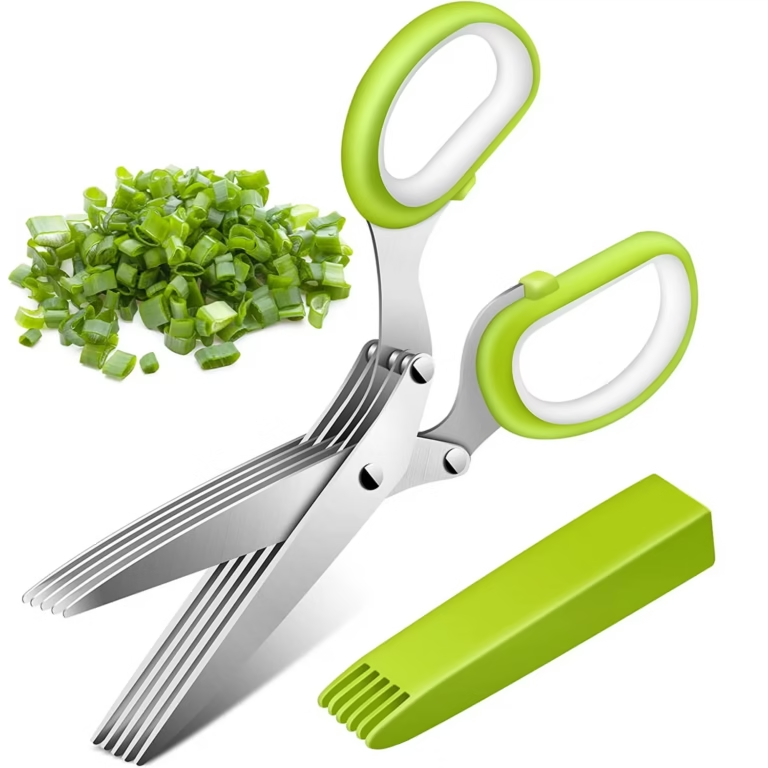
Before we compare, you need to understand what you're looking at. Herb scissors look like oversized scissors with multiple blades stacked side by side. The basic design hasn't changed much in decades, but the details matter.
Blade Count
Most models have either three or five blades. Some budget versions offer up to seven. More blades mean smaller pieces with each cut, but they also mean more surfaces for herb bits to get stuck between.
- 3-blade: Produces a fine chop, closer to what you'd get from mincing.
- 5-blade: Produces a very fine, almost fluffy cut. Good for garnishes.
- 7-blade: Rare and often impractical. The narrow gaps clog quickly.
Blade Gap
The space between blades determines how coarse or fine the final result is. A wider gap handles a thicker stem without grinding. A tighter gap gives a delicate mince but jams on anything fibrous.
Handle Design
Conventional scissor grips work fine, but some models feature a spring-loaded mechanism. That spring reduces hand fatigue if you're snipping for several minutes. It also adds a part that can break.
Material
Stainless steel blades are standard. Look for rust-resistant grades and a solid pivot screw. Handles are usually rubberized or silicone-coated.
Dishwasher-safe ratings vary, so check the manufacturer's instructions before loading them in.
For a closer look at which models hold up best in a home kitchen, our roundup of top-rated options goes through the details on blade gaps, handles, and cleaning.
Typical Specs
| Feature | Common Range |
|---|---|
| Blade count | 3 to 7 |
| Blade length | 4 to 5 inches |
| Price | $10 to $30 |
| Hand washing time | Roughly 10 seconds |
| Comfortable batch size | Up to 1/4 cup of loose herbs |
The takeaway is simple. These scissors are built for small, quick jobs, not marathon prep sessions. Keep that in mind as you compare them to a knife.
The Contenders: Herb Scissors vs. Chef’s Knife
This is the matchup that actually matters. Most cooks own a chef's knife. It handles nearly everything, including herbs, with the right technique.
The Chef's Knife Advantage
A chef's knife gives you control. You decide exactly how coarse or fine the cut ends up. The rocking motion lets you keep the blade tip on the board and chop at speed.
You can also process large bunches without stopping to empty the blades.
It's also multi-functional. That same blade slices onions, dices chicken, and crushes garlic. It earns its space on the counter every single day.
The Herb Scissors Advantage
Herb scissors do one thing, but they do it fast. For a small handful of parsley, you can snip directly into a bowl or over a simmering pot. No cutting board, no extra dirty dish, no washing the board afterward.
They're also easier on your hands. If you have arthritis or weak grip, a single squeeze of the scissors is gentler than repeated knife rocks. And because they're compact, you can use them with one hand while stirring with the other.

Image source: Web (Bing) / amazon.com (Web image (fair-use with source credit))
Side-by-Side
| Factor | Chef's Knife | Herb Scissors |
|---|---|---|
| Best batch size | Large and small | Small (up to 1/4 cup) |
| Cut consistency | Fully controlled | Fixed by blade gap |
| Cleanup | Board, knife, and hands | Just the scissors |
| Learning curve | Moderate | Almost none |
| Versatility | Extremely high | Very low |
| Hand fatigue | Higher over time | Lower for small jobs |
The verdict here is clear. If you're making a big batch of tabbouleh, use the knife. If you're finishing a bowl of soup with a sprinkle of dill, the scissors win.
Professional kitchens rarely rely on them, which says a lot about throughput. But your home kitchen isn't a busy restaurant line. It's your space, and speed for tiny tasks matters more there.
For a deeper look, we break down whether professionals really use these tools behind the line.
The Contenders: Herb Scissors vs. Kitchen Shears
Kitchen shears are the second tool that lives in most drawers. They're beefier than herb scissors, and they handle everything from cutting chicken joints to snipping parchment paper.
Where Kitchen Shears Excel
Kitchen shears are workhorses. Their heavy blades slice through cartilage, thin bones, and plastic packaging. They also open bottles and crack nuts on some models.
They're not precise, but they're tough.
Where They Fall Short
The problem is precision. Kitchen shears have two broad blades that tear rather than mince. If you try to chop chives with them, you'll get long, ragged strips, not uniform rings.
They also bruise soft herbs like basil because the wide blades crush the leaves before cutting them.
Head-to-Head
| Factor | Kitchen Shears | Herb Scissors |
|---|---|---|
| Blade style | Two wide blades | Three to five narrow blades |
| Best use | Heavy-duty cutting | Fine herb snips |
| Herb quality | Tears and bruises | Clean, even cuts |
| Cleaning | Easy, but food gets in pivot | Needs immediate rinse |
| Storage | Drawer or magnetic strip | Drawer, usually with latch |
For tough kitchen jobs, you'll still reach for kitchen shears. For a fine herb garnish, they're the wrong tool. Herb scissors fill that gap neatly, assuming you don't mind another gadget in the drawer.
If you're curious about using them every single day, our notes on daily use cover how often they actually earn their spot.
Side-by-Side: Which Tool Wins for Common Herb Tasks
We've compared the tools individually. Now it's time to compare them on the actual jobs you'll face. These are the moments that decide whether herb scissors earn their place.
Snipping Straight Into the Pan
This is the herb scissors' home turf. When your soup is simmering or your garlic is browning, you don't want to pause, dice, and wash a board. You grab the scissors, snip some parsley straight in, and keep stirring.
The chef's knife can't do that without dirtying a board. Kitchen shears will mangle the leaves. So for finishing touches, herb scissors are the clear winner.
Just remember to keep the blades over the pot and snip away from your fingers.
Chiffonade and Fine Mincing
Here's where the knife strikes back. For a proper basil chiffonade, you stack leaves, roll them tightly, and slice thin ribbons. Herb scissors shred the stack into torn pieces instead of clean ribbons.
Fine mincing also favors the knife. A chef's knife gives you full control over particle size. Herb scissors are locked into one gap width.
If that gap is too wide, your "mince" looks like confetti. If it's too narrow, the leaves jam between the blades.
| Task | Herb Scissors | Chef's Knife | Kitchen Shears |
|---|---|---|---|
| Snipping into a hot pan | Best | Messy | Poor |
| Chiffonade (basil) | Poor | Best | Terrible |
| Fine mincing | Fair | Best | Poor |
| Large batches | Poor | Best | Poor |
| Woody stems (rosemary) | Bad | Best | Bad |
Large Batches and Woody Stems
Batch size is the real limitation. In our research, herb scissors handle roughly a quarter cup of loose leaves before they need a clearing. For pesto, tabbouleh, or a big herb salad, the knife is faster and produces a more consistent cut.
Woody stems are also a problem. Rosemary, thyme, and oregano have thick, fibrous stalks. The tight blade gaps on most models crush instead of slice.
You end up wrestling the scissors and still get jagged bits. Strip those leaves first, or just use the knife.
Who Herb Scissors Are Really For
Herb scissors aren't for everyone. But for a specific set of cooks, they genuinely make life easier.
- Home cooks who finish dishes. If you constantly garnish soups, pastas, roasted vegetables, and omelets, these are worth trying.
- People with arthritis or weak grip. The single squeeze motion is gentler than rocking a knife. Many verified buyer reviews highlight this as the main reason for buying them.
- Beginner cooks and kids. There's almost no technique required. With supervision, children can snip herbs safely, which is likely a reason some parents add them for family cooking.
- Small kitchens and campers. No cutting board needed and minimal storage space. They feel great in tight quarters.
- You don't cook large batches. If you usually cook for one or two, the small capacity rarely becomes an issue.
If that sounds like you, the tool will probably stick around. If you regularly prep big bunches of cilantro for salsa, you'll likely find them frustrating. It all starts with your typical kitchen workflow.
Pros and Cons: At-a-Glance
We've covered a lot of ground, so let's boil it down to the essentials. Here's where herb scissors stand based on our research and verified buyer feedback.
| Pros | Cons |
|---|---|
| Faster than a knife for small tasks | Single-use tool taking up drawer space |
| Less hand fatigue and repetitive motion | Herbs get stuck between blades |
| Works one-handed, straight into the pan | Not practical for large batches |
| Easy for kids to learn | Can bruise soft herbs if pressed hard |
| Compact and easy to store | Blades dull quickly on woody stems |
| No cutting board to wash | Cleaning can be fiddly |
Look at that table honestly. The pros are all about convenience and ease. The cons are about versatility and maintenance.
A chef's knife wins on versatility, but that doesn't mean herb scissors are useless. They just fill a narrow niche.
Common Mistakes and How to Avoid Them
People often give up on herb scissors because of a few fixable mistakes. Avoid these and you'll have a much better experience.
1. Chopping thick, woody stems. Rosemary and thyme will dull your blades in a hurry. Stick to soft leaves like parsley, chives, cilantro, and dill.
That extends the blade life.
2. Pressing down too hard. Herb scissors work best with a gentle, straight-down squeeze. Crushing the handle with force bruises basil and mint, leaving dark, watery patches.
Let the blades do the work.
3. Loading up too much at once. A big wad of leaves clogs the blade gaps immediately. Work in small bundles, about the diameter of a pencil.
Shake the scissors between snips to release the bits.
4. Tossing them in the dishwasher carelessly. Check the manufacturer's care instructions. Many models claim dishwasher safety, but the high heat can warp plastic handles and dull cheaper steel over time.
Hand washing almost always extends their life.
5. Forgetting to clean them right away. Herb residue dries fast and gets stuck in the pivots. A quick rinse under warm water right after use takes ten seconds.
Leaving them on the counter means scrubbing later.
Cleaning and Maintenance: Getting the Most Out of Herb Scissors
Proper care keeps the blades sharp and the pivot working smoothly. It also prevents rust, which is the most common reason these tools end up in the trash.
How to Clean Them
Start by rinsing the blades under warm water immediately after use. Open and close them a few times to flush out stuck fragments. Then use a soft sponge with dish soap and scrub each blade carefully.
Pay extra attention to the gaps between blades, where bits of dill and chives love to hide.
Rinse again and dry with a dish towel right away. Air drying can leave water spots on the steel. A quick wipe keeps them looking like new.
Dishwasher Notes
Many buyers report that the dishwasher loosens the pivot screw over time. Hand washing is safer. If you do use the dishwasher, secure them in the silverware basket and let them air dry fully before storing.
Check the manufacturer's documentation before washing. As of 2026, most well-known brands like OXO and Kuhn Rikon provide clear care guidelines.
Storage and Long-Term Care
Store them locked or in a protected slot so they don't get banged around. A magnetic strip works well. A drawer organizer also protects the edges from contact with other utensils.
If the blades start to feel dull, sharpening is tricky with multi-blade designs. A honing rod can't reach every edge. You can try running the blades through a sharpening scissors tool, but replacement is often the easier route given the price point.
That's acceptable for a $15 gadget. And if you're still on the fence about the purchase, our longer answer on whether they're worth it covers the remaining angles.
Expert Tips: Using Herb Scissors Like You Mean It
A few habits separate a happy owner from a frustrated one. Start with clean, dry herbs. Wet leaves clump and jam the blade gaps.
A quick pat with a towel makes snipping smooth. That follows standard food safety guidance from the USDA.
Use a gentle, straight-down squeeze. Don't rock the scissors like a knife. Rocking bruises soft leaves and crushes their texture.
Work in small bundles. One pencil-thick bunch per snip keeps cuts clean and blades unclogged. Shake the scissors between snips to drop the pieces.
For help picking a pair, our guide to the best home cook options is a good start.
Final Verdict: Buy Them, Skip Them, or Just Know What They Do
Here's the decision guide.
If you often finish soups and pastas with a fresh-herb sprinkle, and you hate washing a board for a tiny task, buy them. If you have wrist pain or limited hand strength, these are genuinely worth it. If you prep huge bunches or cook with woody herbs like rosemary, skip them.
A chef's knife does those jobs better.
If you're still unsure, just know what they do. They're a convenience tool for small, soft, delicate herbs. Treat them as that, and they'll earn their drawer space.
Treat them as a knife replacement, and you'll be disappointed.
Frequently Asked Questions
Can herb scissors be sharpened?
Most herb scissors have multiple narrow blades. Reaching every edge with a standard sharpener is hard. Some models come with a sharpening tool, but most don't.
At typical prices, replacing a dull pair costs less than sharpening. Check the manufacturer's instructions for care guidance.
How many blades should herb scissors have?
Three blades offer the best balance. They cut finely without jamming too often. Five blades produce a fluffier garnish but clog more on soft leaves.
Seven blades are rarely worth it, mainly because the gaps are too narrow.
Are herb scissors safe for kids?
Yes, with adult supervision. The blades are sharp, but the motion is simple to learn. Show children how to hold the herb bundle away from their fingers.
Some parents prefer models with a locking latch. We've covered more on keeping kids safe in the kitchen.
Do herb scissors work on all herbs?
No. They work best on soft herbs like parsley, chives, cilantro, dill, and mint. They fail on woody stems like rosemary, thyme, and oregano.
For those, strip the leaves first or use a chef's knife.