Can Left-Handed People Use Herb Scissors? Find Out
If you're a lefty, you already know the struggle of using standard kitchen tools designed for a right-handed world. Can left handed people use herb scissors? The short answer is yes, but with a major catch.
You have to know exactly which mechanism you're picking up, or you'll end up bruising your basil.
Standard pivoting shears often fail lefties because the blade angle pushes greens outward instead of slicing them. Manufacturer specifications indicate that true ambidextrous designs must feature symmetric finger loops and a spring-loaded mechanism. Let's look at how these tools actually work so you don't waste your money.
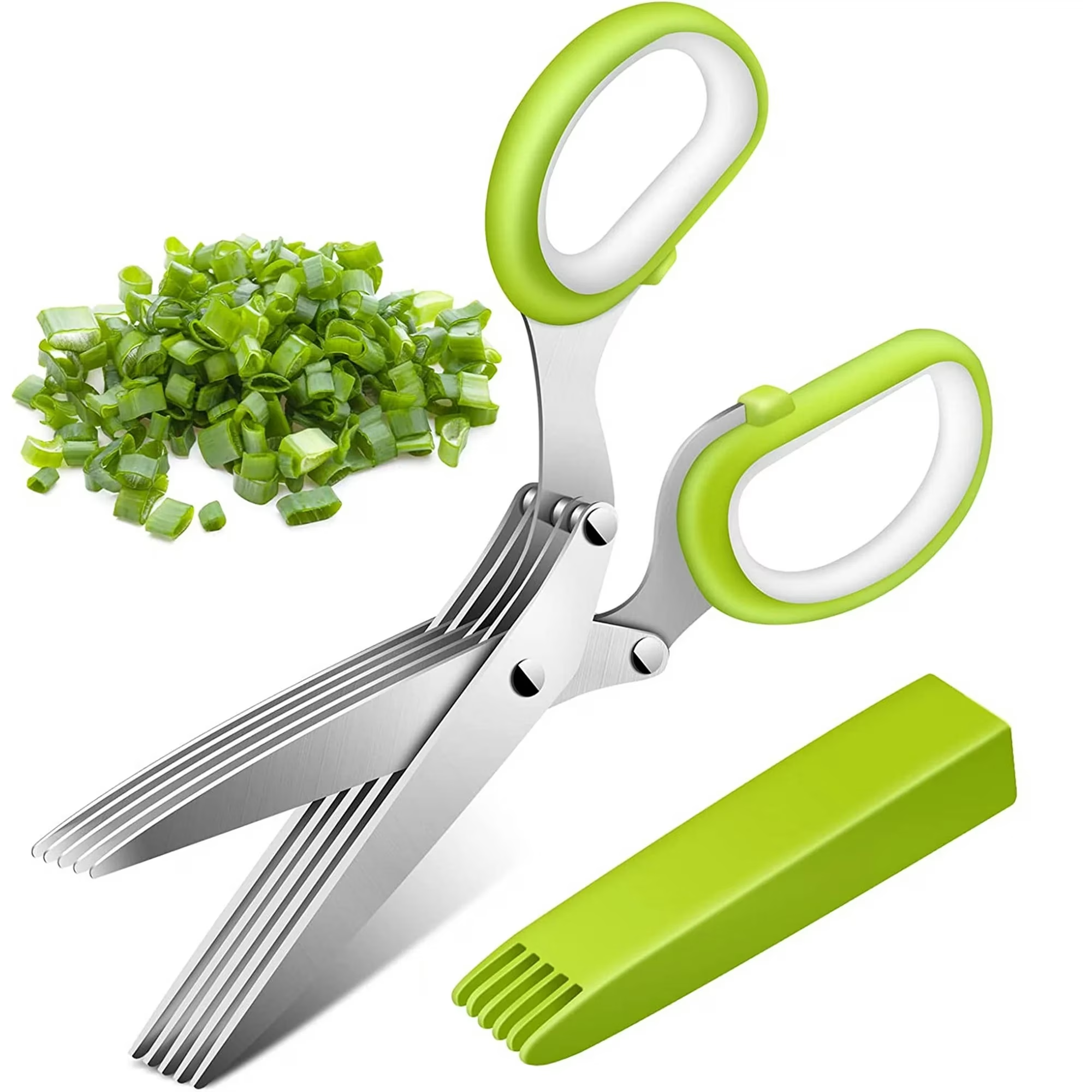
Image source: Web (Bing) / walmart.com (Web image (fair-use with source credit))
Quick Answer
Can left handed people use herb scissors? Yes, they can. You just need the right design.
Spring-loaded herb scissors work perfectly for lefties. Standard pivoting shears often fail left-handed users. The blades push apart and crush the herbs.
Look for symmetric handles and a center pivot. This ensures a clean chiffonade cut every time.
The Problem: Why Standard Scissors Fail for Lefties
Standard kitchen shears use a pivoting mechanism. The top blade pushes down while the bottom blade pushes up. When a righty cuts, the natural squeezing motion forces the blades tightly together.
When a lefty does the exact same motion, the blades are pushed apart.
This happens because of the lateral force applied by your thumb. Your thumb pushes the handle outward rather than inward. This separates the cutting edges and creates a gap.
Instead of slicing cleanly through your chives, the blades slide past each other.
The result is torn, bruised, and mashed herbs. Delicate greens like basil and mint turn brown quickly when their edges are crushed. You lose the fresh flavor and the clean visual appeal you want for your dish.
You also have to deal with awkward handle ergonomics. Many traditional shears feature an anatomical grip molded specifically for right-handed fingers. Lefties end up with hand cramps and poor control over the blade.
This makes precise cuts almost impossible.
The Core Mechanic: How Scissor Blade Orientation Works
Scissor mechanics are all about the meeting point of the blades. The pivot, or hinge, holds two sharpened edges that bypass each other to slice material. For this to work, the blades must maintain contact under pressure.
The direction of that pressure depends entirely on your hand dominance. Right-handed scissors are set up so the top blade sits on the right side of the bottom blade. This lines up with the natural inward roll of a righty's wrist.
It keeps the blades tight.
Left-handed scissors reverse this orientation entirely. The top blade crosses over from the left side. This matches the natural inward roll of a lefty's wrist.
It forces the edges back together instead of pushing them apart.
If you use right-handed pivoting scissors with your left hand, your thumb pushes the top blade to the left. Your fingers pull the bottom blade to the right. This creates a gap right at the pivot point where the herbs are trapped.
You end up pinching the greens rather than cutting them. That is why a pivoting mechanism is usually a hard pass for lefties. You are physically fighting the tool's engineering.
Decision Branch 1: Pivoting vs. Spring-Loaded Herb Scissors
Here is where we get into the decision tree. Not all herb scissors use the same hinge system. If you want a clean cut, you need to pick the right mechanism.
Your choice here makes or breaks the tool's usefulness.
Pivoting Shears
These look like regular kitchen scissors but feature three, five, or seven blades. They operate on a traditional center screw or rivet. You squeeze the two handles together to make the blades cross.
If you are a lefty, you should generally avoid pivoting herb shears. Even if the finger loops are perfectly round and symmetric, the physics of the pivot still work against you. You will push the blades apart and pinch the greens.
The only exception is if the pivot screw can be completely flipped. You would need to disassemble the scissors, flip the blades over, and reassemble them for left-handed use. Most multi-blade herb scissors do not allow this because the blades are permanently fixed.
Spring-Loaded Shears
These look more like a pair of pliers or a heavy-duty cutter. They feature a spring at the hinge that pushes the handles apart automatically. You squeeze to close them, and the spring does the work of opening them back up.
This is the winning design for lefties. Because the handles are pushed apart by a center spring, the lateral force of your thumb is largely neutralized. You are applying direct downward pressure to the cutting edges.
The blades meet head-on rather than crossing laterally. This means your hand dominance does not matter. The spring forces the blades to bypass each other cleanly regardless of which hand is doing the squeezing.
If you want to use multi-blade herb scissors, look for a spring-loaded design. This is the single most important feature to look for as a left-handed cook.
Decision Branch 2: Handle Ergonomics and Finger Loops
Even if you find a spring-loaded model, the handle design matters. You are going to be squeezing these tools repeatedly. Poor ergonomics will cause wrist fatigue and blisters.
Symmetric vs. Anatomical Loops
Look for symmetric finger loops. This means both the thumb hole and the finger hole are exactly the same size and shape. You should be able to swap the scissors between your right and left hands without any difference in feel.
Avoid anatomical handles. These are molded with a specific curve meant to fit right-handed fingers. If you put your left hand in there, your fingers will be forced into an unnatural, cramped position.
You will not have the leverage needed to cut through tougher herbs like rosemary.
Spring Tension and Grip
Check the tension on the spring. If it is too stiff, you will exhaust your hand after just a few snips. If it is too loose, the blades will not separate fast enough for a quick rhythmic cut.
Look for silicone or rubber overmold on the handles. Bare metal or hard plastic handles will dig into your skin during repeated use. A soft grip distributes the pressure evenly across your palm.
The angle of the handles also matters. Handles that are slightly angled upwards are easier on the wrist. You do not have to bend your hand backward to cut herbs resting on the cutting board.
This is a small detail that makes a huge difference in comfort.
Features That Actually Make a Scissors Ambidextrous
Marketing claims on packaging can be misleading. A box might say "ergonomic" or "universal design" without actually delivering on ambidextrous function. Here is exactly what you need to see in the specifications.
- A center pivot or spring mechanism where the blades meet head-on.
- Symmetric finger loops with no molded finger grooves.
- A detachable blade system that can be flipped for left-handed use.
- Soft-grip overmolds that are identical on both handles.
- A blade count of three to seven blades for efficient herb cutting.
Detachable Blades
Some high-end models feature blades that unscrew individually. This is a fantastic feature for lefties. You can actually flip the top and bottom blades to reverse the orientation.
This turns a right-handed pivoting shear into a left-handed one.
This also makes cleaning much easier. Herb scissors are notoriously difficult to clean. Bits of greenery get stuck between the blades and turn to mush.
Detachable blades let you scrub each one individually.
Built-in Herb Strippers
Many herb scissors come with a herb stripper built into the handle. This is a small hole with serrated edges meant to strip leaves off woody stems like thyme or rosemary. Make sure this feature is centered on the handle.
If it is offset to one side, it might be awkward for a lefty to use.
Here is a quick breakdown of what to look for versus what to avoid.
| Feature | Good for Lefties | Bad for Lefties |
|---|---|---|
| Mechanism | Spring-loaded center pivot | Fixed lateral pivot |
| Handle Shape | Symmetric round loops | Anatomical molded grip |
| Blade Assembly | Detachable and flippable | Permanently fixed rivet |
| Grip Material | Symmetric soft overmold | Hard plastic, right-hand curve |
Benefits and Drawbacks of Herb Scissors for Left-Handed Cooks
Herb scissors are a specialized tool. They do one job very well, but they are not perfect for every kitchen. Let's look at the pros and cons for left-handed users.
Pros
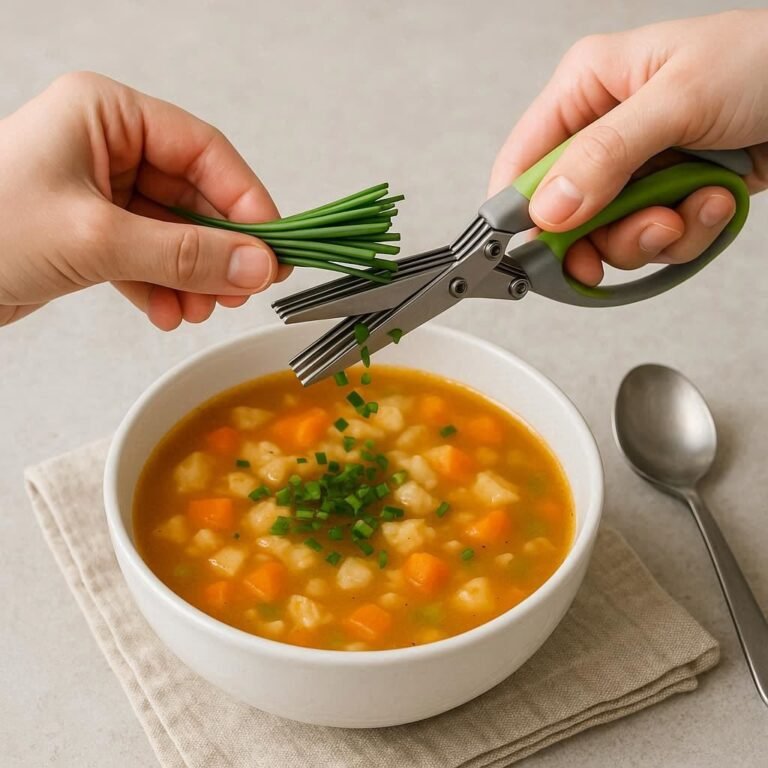
- They produce a perfect chiffonade cut. Slicing basil into thin ribbons is much faster with five blades than with a knife.
- Spring-loaded models are completely ambidextrous. You get the same clean cut as a righty.
- They keep your fingers away from the cutting board. This is safer than rocking a chef's knife if you are in a hurry.
- They reduce wrist fatigue if you have the right grip. You use a simple squeeze motion rather than a rolling chop.
Cons
- They are a one-trick pony. You cannot use them to cut meat or heavy vegetables. They are strictly for soft greens.
- Cleaning is a pain. Herbs get stuck between the multiple blades and can be hard to dig out.
- Pivoting models are useless for lefties. You have to be very careful when shopping to avoid buying a tool that will fail you.
- They take up drawer space. If you only cook with herbs occasionally, a good knife might be a better choice.
Step-by-Step Process: How to Test Herb Scissors as a Lefty
If you already own a pair of herb scissors or are looking at one in a store, you can run a quick test. This will tell you immediately if the tool will work for you.
- Pick up the scissors in your left hand. Insert your thumb and fingers naturally.
- Look at the blade orientation. Check if the top blade crosses over from the right side or the left side.
- Squeeze the handles gently in the air. Notice if the blades meet head-on or if they try to slide past each other laterally.
- Test them on a single piece of paper. If the paper folds or bends between the blades, the scissors are pushing apart. If the paper cuts cleanly, the blades are bypassing correctly.
- Try a fresh basil leaf. A clean cut will leave a sharp edge. A bad pair will pinch the leaf and leave a bruised, mashed edge.
If the scissors fail the paper test, they will fail the basil test. Put them back and keep looking for a spring-loaded model.
Common Mistakes: Splayed Blades and Torn Herbs
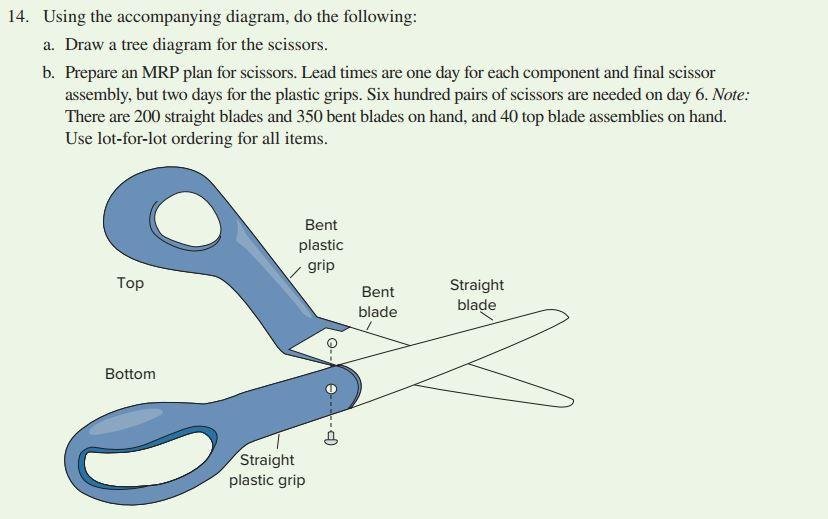
Image source: Web (Bing) / chegg.com (Web image (fair-use with source credit))
The most common mistake lefties make is assuming all scissors are the same. You pick up a pair of five-blade shears, give them a squeeze, and wonder why your chives look like mush. This happens because of blade splaying.
When you use a right-handed pivoting shear with your left hand, your thumb pushes the top blade outward. Your fingers pull the bottom blade inward. This creates a V-shape at the pivot point.
The blades separate, and the herbs get trapped in the gap.
Instead of slicing, the scissors pinch. The herb cell walls rupture. This releases chlorophyll and causes the edges to turn black.
It looks bad and tastes slightly bitter.
Another mistake is ignoring handle comfort. You might find a pair of scissors that technically cuts well, but the handles are molded for a righty. You try to force it.
After a few minutes of prep work, your hand is cramping.
Do not try to force a tool to work if the ergonomics are wrong. Kitchen work should not hurt. If the handles are cramped, you will end up with blisters and a poor grip.
This leads to slipping, which is how accidents happen.
Finally, do not use herb scissors for hard ingredients. These tools are meant for soft leaves. If you try to cut through tough rosemary stems or, worse, try to use them on packaging, you will bend the delicate blades.
Once the blades are bent, they will never align properly again.
Herb Scissors vs. Alternatives: What Works Best for Lefties
If you cannot find a good pair of left-handed herb scissors, you have other options. You do not absolutely need this specific tool to get a clean cut on your greens.
The Chef's Knife
A standard chef's knife is completely ambidextrous. The blade is flat and symmetrical. The rocking chop technique works identically for lefties and righties.
You just need a good cutting board and a sharp edge.
The downside is speed. Cutting a chiffonade with a knife takes longer than snipping with five blades. You have to roll the basil leaves, slice them, and then gather the ribbons.
Herb scissors do it all in one motion.
The Mezzaluna
A mezzaluna is a curved blade with two handles. You rock it back and forth over herbs on a cutting board. This is a fantastic tool for lefties.
The motion is entirely symmetrical. Both hands apply equal pressure, and the blade cuts cleanly.
The mezzaluna is great for chopping large batches of parsley or cilantro. It is not as good for delicate chiffonade cuts on basil. You get a rough chop rather than precise ribbons.
Rolling Herb Cutters
A rolling cutter looks like a small pizza wheel with multiple blades. You roll it over the herbs on your cutting board. This tool is also completely ambidextrous.
You just push it forward with your left hand.
The issue with rolling cutters is that they can crush the herbs if the board is not perfectly flat. The blades need to make full contact to slice. Any gap will pinch the greens.
They are also awkward to clean.
Here is how these tools compare for left-handed cooks.
| Tool | Left-Handed Friendly? | Best For | Speed |
|---|---|---|---|
| Herb Scissors | Yes, if spring-loaded | Chiffonade, small batches | Fast |
| Chef's Knife | Yes | All prep work, precise cuts | Medium |
| Mezzaluna | Yes | Large batches of chopped herbs | Fast |
| Rolling Cutter | Yes | Chives, flat herbs | Medium |
Maintenance: Cleaning Multi-Blade Units
If you do invest in a pair of herb scissors, you need to know how to clean them. This is the part most people hate. Those multiple blades trap bits of greenery fast.
First, never put them in the dishwasher. The high heat and harsh detergent will dull the blades and warp the pivot. You will ruin the alignment.
Hand wash them immediately after use. Use hot water and a drop of dish soap. The longer you let the herbs dry on the blades, the harder they are to remove.
Use the cleaning comb. Most good herb scissors come with a small plastic or metal comb that looks like a fork. Slide this comb down between the blades to pull out the stuck bits of herb.
If you do not have a comb, use a toothpick. A toothpick is the perfect size to dig out trapped basil or parsley from between the blades. Do not use a knife to dig out the bits.
You will slip and cut yourself, or scratch the blade coating.
Dry them thoroughly. Use a dish towel to get into the spaces between the blades. Leftover moisture will cause the stainless steel to rust, especially at the pivot point.
If you have a pivoting model, a drop of food-safe mineral oil at the hinge will keep it moving smoothly.
Specs and Pricing: What to Expect
Herb scissors are an affordable kitchen gadget. As of 2026, you can expect to spend between ten and twenty-five dollars for a decent pair. The price depends on the number of blades, the handle material, and the brand.
Blade Count
Most models feature either three or five blades. Five blades will give you a finer cut and process herbs faster. Three blades are slightly easier to clean because there is more space between the blades.
Material
Look for stainless steel blades. Stainless steel resists rust and holds a sharp edge well. Avoid ceramic blades.
While they are sharp, they are too brittle for the squeezing motion of herb scissors and will chip.
Included Accessories
Check what comes in the box. A good set should include a cleaning comb and a protective plastic sheath for the blades. The sheath is important for safety when storing them in a drawer.
Expert Tips for Clean Chiffonade Cuts
Getting a perfect chiffonade cut is about technique as much as it is about the tool. Even with the best spring-loaded scissors, you need to prep your herbs right.
First, wash and dry your herbs completely. Wet herbs will clump together between the blades. Use a salad spinner or pat them dry with a towel.
Second, remove the stems. Herb scissors are not meant to cut through woody stems. Strip the leaves off the stem first.
If you are cutting basil, stack the largest leaves on the bottom and smaller leaves on top.
Third, roll the leaves. Roll a stack of basil leaves into a tight cigar shape. This gives the blades something solid to bite into.
The scissors will slice the roll into perfect ribbons in one squeeze.
Finally, do not overfill the blades. Snip a small amount of herbs at a time. If you try to cut a huge handful, the blades will struggle.
You will end up with crushed edges instead of clean cuts.
Frequently Asked Questions
Can left-handed people use standard kitchen shears?
No, standard pivoting kitchen shears do not work well for lefties. The pivot mechanism is designed for right-handed lateral pressure. When a lefty squeezes them, the blades push apart and pinch the material instead of cutting it.
What is a chiffonade cut?
A chiffonade cut is a slicing technique used for leafy greens and herbs. You stack the leaves, roll them into a tight cylinder, and slice them crosswise into thin ribbons. It is a French term that translates to "made of rags."
Are spring-loaded herb scissors better than pivoting ones?
For lefties, yes. Spring-loaded scissors neutralize the lateral force that causes standard shears to fail. The spring pushes the handles apart, allowing you to apply direct downward pressure that keeps the blades aligned.
How do you clean five-blade herb scissors?
Use the small cleaning comb that comes with the scissors to pull trapped bits out from between the blades. If you lost the comb, use a toothpick. Wash them by hand with hot water and dry them immediately to prevent rust.
Can you sharpen herb scissors?
Yes, but it is difficult. You can use a standard scissor sharpener, but the multiple blades make it awkward. It is usually easier to replace a cheap pair of herb scissors than to pay for professional sharpening.
Final Recommendation: Which Tool Should You Buy?
If you are a lefty, your best bet is a spring-loaded herb scissor with symmetric handles. Avoid traditional pivoting models entirely. They will frustrate you and ruin your fresh herbs.
Look for a model with five stainless steel blades and a soft-grip handle. Make sure it comes with a cleaning comb. This combination gives you the speed and precision you want without fighting the tool's engineering.
If you cannot find a good spring-loaded model, stick to your chef's knife. A sharp knife is always ambidextrous. It might take a few seconds longer, but it will give you the clean cut you need.
Maintenance: Cleaning Multi-Blade Units
Keep your herb scissors out of the dishwasher. High heat warps the fine blades and ruins the pivot tension. Hand wash them immediately with warm soapy water.
Always use the included cleaning comb. Slide it down the blade gaps to pull out trapped bits of basil or chives. If you lost the comb, a toothpick works perfectly.
Dry the tool completely before storing it. Leftover moisture causes rust on the stainless steel pivot. A drop of food-safe mineral oil keeps the spring mechanism smooth.
Specs and Pricing: What to Expect
Herb scissors are an affordable gadget. Most models cost between ten and twenty-five dollars. Premium spring-loaded versions might push slightly higher.
Look for five stainless steel blades. Five blades give you a fine chiffonade cut quickly. Three-blade models are easier to clean but cut slower.
Ensure the box includes a cleaning comb and a blade sheath. The sheath protects your fingers when digging through a kitchen drawer. Soft silicone grips are worth the extra dollar for comfort.
Expert Tips for Clean Chiffonade Cuts
Dry your herbs completely before snipping. Wet leaves clump together and slide between the blades. A salad spinner gets rid of excess moisture fast.
Remove the woody stems first. Herb scissors are meant for soft leaves only. Trying to cut through rosemary stems will bend the delicate blades.
Roll your basil leaves into a tight cylinder. This gives the blades something dense to bite into. One squeeze yields perfect ribbons every time.
Frequently Asked Questions
Are spring-loaded herb scissors better than pivoting ones?
Yes, for lefties they are much better. The spring neutralizes the lateral force that pushes pivoting blades apart. This ensures a clean cut instead of crushed herbs.
Can you sharpen five-blade herb scissors?
You can use a standard scissor sharpener, but the multiple blades make it awkward. It is usually easier to replace a cheap pair than to pay for professional sharpening.
What is a chiffonade cut?
It is a slicing technique for leafy greens. You stack the leaves, roll them into a tight cylinder, and slice them into thin ribbons.
Final Decision Guide: Which Tool Should You Buy?
If you are a lefty, buy a spring-loaded herb scissor with symmetric handles. Avoid traditional pivoting models entirely. They will frustrate you and bruise your herbs.
Look for five stainless steel blades and a soft-grip handle. Make sure it comes with a cleaning comb. This setup gives you speed without fighting the engineering.
If you cannot find a spring-loaded model, stick to your chef's knife. A sharp knife is always ambidextrous. It might take a few seconds longer, but it will never fail your left hand.
Frequently Asked Questions
Can left-handed people use standard kitchen shears?
No, standard pivoting kitchen shears do not work well for lefties. The pivot mechanism is designed for right-handed lateral pressure. When a lefty squeezes them, the blades push apart and pinch the material instead of cutting it.
What is a chiffonade cut?
A chiffonade is a slicing technique for leafy greens and herbs. You stack the leaves, roll them into a tight cylinder, and slice them into thin ribbons. It is a French term that translates to made of rags.
Are spring-loaded herb scissors better than pivoting ones?
For lefties, spring-loaded scissors are much better. The spring neutralizes the lateral force that causes standard shears to fail. The blades meet head-on, ensuring a clean cut instead of crushed herbs.
How do you clean five-blade herb scissors?
Use the small cleaning comb that comes with the scissors to pull trapped bits out from between the blades. If you lost the comb, use a wooden toothpick. Wash them by hand with hot water and dry them immediately to prevent rust.
Can you sharpen herb scissors?
You can use a standard scissor sharpener, but the multiple blades make it awkward. It is usually easier to replace a cheap pair of herb scissors than to pay for professional sharpening.
Final Decision Guide: Which Tool Should You Buy?
If you are a lefty, your best bet is a spring-loaded herb scissor with symmetric handles. Avoid traditional pivoting models entirely. They will frustrate you and ruin your fresh herbs.
Look for a model with five stainless steel blades and a soft-grip handle. Make sure it comes with a cleaning comb. This combination gives you the speed and precision you want without fighting the tool's engineering.
If you cannot find a good spring-loaded model, stick to your chef's knife. A sharp knife is always ambidextrous. It might take a few seconds longer, but it will give you the clean cut you need.