Best Apples for Using an Apple Corer: Top Picks
Finding the Best Apples for Using an Apple Corer comes down to texture, shape, and core fit. A crisp apple holds its cylinder while the corer pushes straight through. A soft or mealy apple collapses, tears, or jams the barrel.
Most handheld tube corers remove a core about 3/4 inch, or 19 mm, across. That means the apple needs enough firm flesh to survive a clean cut. Variety choice matters more than brand choice.
That leads to the quick answer.
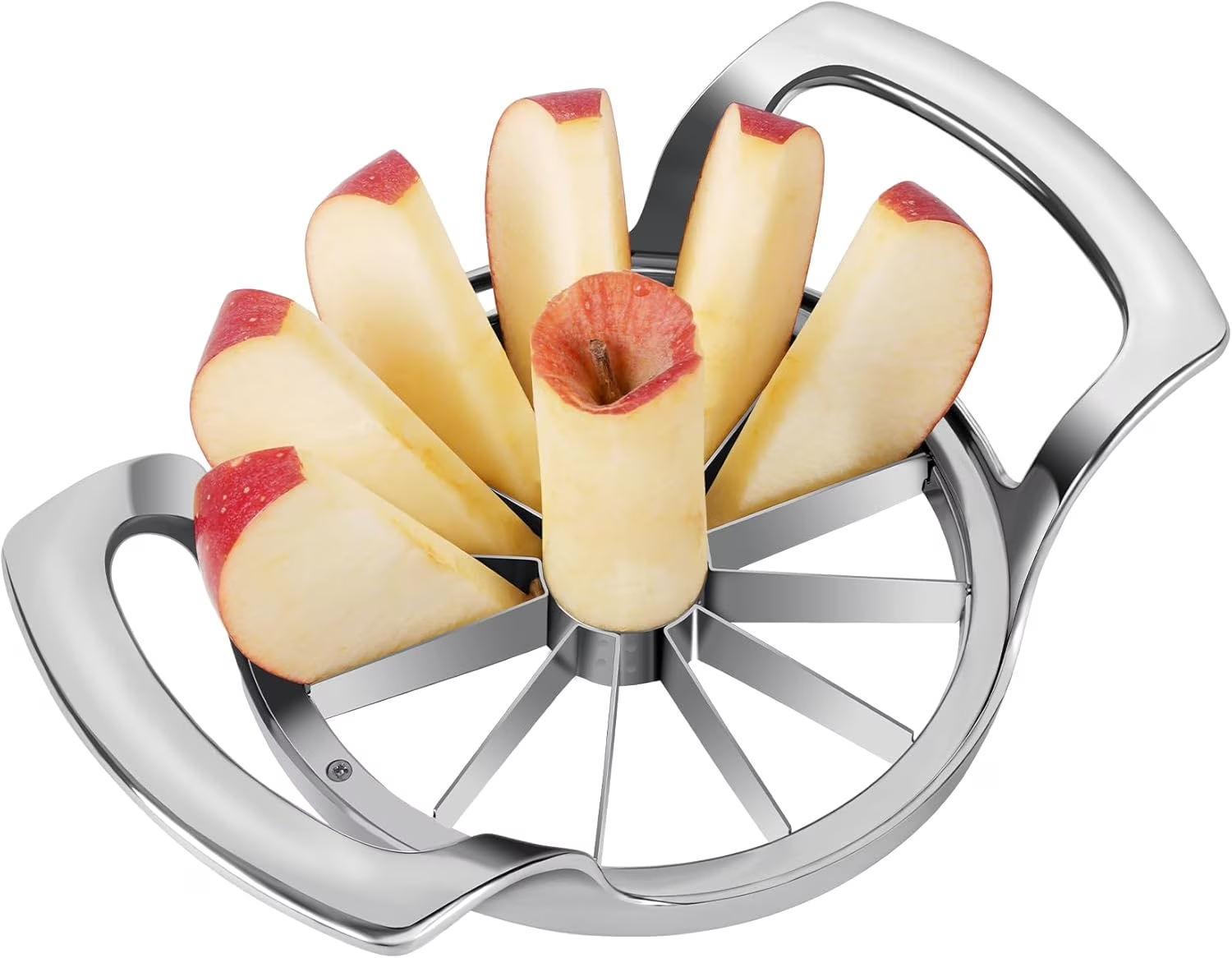
Image source: Bing (Web (fair-use with source credit))
Quick Answer
The Best Apples for Using an Apple Corer are firm, crisp, straight varieties. Honeycrisp, Fuji, Granny Smith, Braeburn, and Cosmic Crisp work well. Their dense flesh cuts cleanly.
A straight core fits the corer barrel. Soft apples bruise and collapse.
Why Apple Variety Changes How Well an Apple Corer Works
An apple corer works by shearing a narrow cylinder from stem to calyx. If the flesh is dense, the cut stays smooth. If the flesh is soft, the core smears and the tool plugs.
Apple structure is not just taste. The U.S. Department of Agriculture tracks apple composition, and variety affects sugar, acid, and cell structure.
That matters when a metal tube forces its way through the fruit.
A good coring apple gives you three things.
- Clean shearing with little crushing
- A core that ejects in one piece
- A ring or whole apple that keeps its shape
- Less wasted flesh around the seed cavity
The right apple also changes how much fruit you waste. A clean core leaves a smooth hole. A crushed core creates ragged edges and lost flesh.
Use case changes the pick too.
- For whole baked apples, choose round, firm apples like Granny Smith or Braeburn.
- For rings, choose large apples like Fuji or Honeycrisp.
- for lunch prep, choose slower browning apples like Cosmic Crisp or Envy.
- For stuffing, choose sturdy apples with a neat cavity.
Storage changes the result as well. A firm apple can soften after weeks in air or a warm bowl. That is why the same variety can behave differently from one month to the next.
What Makes an Apple Good for Coring
The best candidates share physical traits. They are firm, symmetric, and not too small. They also have a core path that lines up with the tool.
Flesh Firmness and Texture
Firmness is the top factor. Dense flesh resists the corer just enough to cut cleanly. Mealy flesh separates into soft chunks instead of a smooth cylinder.
Crisp apples also recover better from pressure. They bruise less around the cut edge. That gives you nicer rings for baking, drying, or fresh serving.
Texture changes with freshness. A firm apple at harvest may become soft after storage. Aggregate buyer feedback reports that dull corers crush soft apples more than firm ones.
Core Size, Shape, and Alignment
A straight core path makes the job easy. The corer should enter at the stem and exit at the calyx. Crooked fruit can leave seeds behind.
Core diameter matters too. A very wide core may need a larger corer. A narrow core can leave more flesh behind, but it is usually easier to manage.
Manufacturer specifications commonly list cutting diameters from about 5/8 inch to 7/8 inch, or 16 mm to 22 mm.
| Corer diameter | Best for | Tradeoff |
|---|---|---|
| 5/8 inch or 16 mm | Small apples | May miss wide cores |
| 3/4 inch or 19 mm | Most medium apples | Balanced waste and fit |
| 7/8 inch or 22 mm | Large apples | Removes more flesh |
Skin, Bruising, and Browning
Tough skin can help the apple hold together. Thin skin may split or bruise under hand pressure. Browning is a separate issue, but it affects prep speed.
If you are prepping ahead, choose slower browning varieties. You can also hold cut apples in cold water with a little lemon juice. Dry them before baking or dehydrating.
A simple hold mix is 1 tablespoon lemon juice per cup of cold water. This helps for short prep windows. It is not a substitute for refrigeration.
Best Apple Varieties for Coring: Honeycrisp, Fuji, Granny Smith, Braeburn, and Cosmic Crisp
As of 2026, these five varieties are common in many supermarkets and farm stands. They are not the only good choices, but they are reliable starting points.
| Apple | Texture | Coring result | Best use |
|---|---|---|---|
| Honeycrisp | Very crisp and juicy | Clean cut with low jamming | Fresh rings and snacking |
| Fuji | Dense and sweet | Smooth cylinder, strong shape | Rings, salads, baking |
| Granny Smith | Firm and tart | Very clean, sturdy ring | Baked apples and pies |
| Braeburn | Firm with balanced sweetness | Holds shape well | Baking and stuffing |
| Cosmic Crisp | Very firm and slow browning | Excellent cylinder retention | Make ahead prep |
Honeycrisp is a safe pick for beginners. It is widely available and usually firm enough for a tube corer. Very large fruit may need a second pass or a wider corer.
Fuji works well when you want sweet rings. Its dense flesh handles pressure better than many softer dessert apples. Look for fruit that feels heavy and hard, not spongy.
Granny Smith is a classic baking apple for a reason. It holds a clean hole and keeps a neat outline. That makes it useful for stuffed apples.
Braeburn gives firm flesh with a balanced flavor. It cores cleanly when fresh. Older fruit can lose snap, so buy firm stock.
Cosmic Crisp is a strong modern option. It stays firm and browns slowly. That helps when you core several apples ahead of time.
Other firm options can work well. Cripps Pink, Jazz, Envy, Rome, Northern Spy, and Arkansas Black may core cleanly when fresh. Availability varies by region.
If you see a firm baking apple with straight sides, it is worth trying.
What if my favorite apple is not listed?
It can still work if it is firm. Press the shoulder of the apple. It should feel hard, not soft or wrinkled.
The shape should be fairly straight from stem to base.
What about club varieties?
Club varieties can be excellent. Jazz, Envy, and Cosmic Crisp are bred for crisp texture and storage life. That often helps coring performance.
Which apples fight your corer?
Avoid soft, mealy, or badly misshapen apples. McIntosh often turns soft and can collapse. Red Delicious tends to have a weaker texture and a broad core.
Gala can work when very firm, but it bruises more easily than the apples above.
Overripe fruit is the biggest problem. Even a good variety can fail after long storage. If the apple yields easily to thumb pressure, use a knife instead.
How to Core an Apple Cleanly Every Time

Image source: Bing (Web (fair-use with source credit))
A clean result comes from alignment and steady pressure. Rushing causes splits. Here is the simple method.
- Wash the apple and remove any sticker.
- Place it on a stable cutting board.
- Line up the corer with the stem and calyx.
- Press down while twisting slightly.
- Stop if the apple cracks and reset the angle.
- Pull the corer out and eject the core.
- Check the cavity for seeds.
If the core sticks, twist the corer gently before pulling. If the apple is very large, use a corer with a wider barrel. If the apple is small, a narrow corer gives you more usable flesh.
Troubleshooting is usually quick.
- Core stuck in the barrel: twist, tap the corer, or use an ejector model.
- Seeds left behind: make a second pass slightly off center.
- Apple splits: use a sharper corer and choose firmer fruit.
- Too much flesh removed: switch to a smaller diameter corer.
- Ragged edges: slow down and keep the tool straight.
Basic stainless corers usually cost about $5 to $10. Models with ejectors often cost $10 to $20. A countertop peeler, corer, and slicer machine can cost $25 to $60, but it takes more setup and cleanup.
For make ahead prep, core the apples first. Slice if desired. Dip them in acidulated water.
Dry them well. Refrigerate until use.
Food handling matters once the fruit is cut. University of Minnesota Extension notes that cut fruit should be kept cold and handled cleanly. Do not leave cored apples at room temperature for long.
Keep fingers away from the cutting edge. Use a cut resistant glove for large batches. Wash the corer soon after use and dry it fully to prevent rust.
Side-by-Side Comparison: Firmness, Core Fit, Shape Retention, and Best Use
This table gives a fast way to compare common choices. Firmness and core fit matter most for the tool. Shape retention matters most if you bake or serve rings.
| Apple | Firmness | Core fit | Shape retention | Best for |
|---|---|---|---|---|
| Honeycrisp | High | Good | Good | Fresh rings |
| Fuji | High | Very good | Very good | Sweet rings and salads |
| Granny Smith | Very high | Very good | Excellent | Baked apples |
| Braeburn | High | Good | Very good | Stuffing and baking |
| Cosmic Crisp | Very high | Very good | Excellent | Make ahead prep |
If you want one safe all purpose apple, choose Fuji or Granny Smith. If you prep early, Cosmic Crisp is hard to beat. If you like tart baked apples, Granny Smith is still a classic.
Best Apples by Use Case: Baking, Rings, Snacking, and High Volume Prep
The best apple depends on what happens after coring. A baking apple needs to hold a cavity. A snacking apple needs pleasant fresh texture.
High volume prep needs consistency and low browning.
- Whole baked apples: Granny Smith, Braeburn, Rome, Northern Spy
- Apple rings: Fuji, Honeycrisp, Cosmic Crisp
- Fresh snacking: Honeycrisp, Envy, Jazz
- Stuffing: Braeburn, Granny Smith, Mutsu
- Dehydrating: Fuji, Granny Smith, Cosmic Crisp
- Lunch boxes: Cosmic Crisp, Envy, Jazz
For baking, choose apples that are round and firm. They hold the filling and do not collapse. A clean cored hole also helps the heat travel evenly.
For rings, size matters. Large apples give wider rings and fewer pieces. Fuji and Honeycrisp are often large enough to make neat slices.
For high volume prep, slow browning saves time. Cosmic Crisp and Envy can stay appealing longer after cutting. You still need cold storage and clean handling.
How Apple Corer Size Changes the Result
Corer diameter changes both waste and success. A small corer saves flesh but may leave seeds. A large corer removes more fruit but clears wide cores more reliably.
| Apple size | Suggested corer size | Why |
|---|---|---|
| Small apples | 5/8 inch or 16 mm | Less flesh lost |
| Medium apples | 3/4 inch or 19 mm | Best balance |
| Large apples | 7/8 inch or 22 mm | Better seed removal |
If your corer is too narrow, you may need a second pass. That can make the hole look rough. If it is too wide, you lose good flesh.
Measure your corer if you are unsure. Many basic models sit near 3/4 inch. That size works for most medium supermarket apples.
Common Coring Mistakes and Simple Fixes
Most problems come from soft fruit, poor alignment, or the wrong tool size. The fixes are usually simple.
- Mistake: Coring at an angle. Fix: Line up stem and calyx first.
- Mistake: Using soft apples. Fix: Choose firm fruit or use a knife.
- Mistake: Pressing too fast. Fix: Press and twist slowly.
- Mistake: Ignoring corer size. Fix: Match barrel size to apple size.
- Mistake: Letting cut apples sit out. Fix: Chill them and use acidulated water.
If the apple splits, the fruit may be too brittle or the corer may be dull. A sharper edge reduces cracking. A steadier board also helps.
If seeds remain, do not force the tool sideways. Make a second straight pass or remove seeds with a small spoon. That keeps the ring intact.
Tool Comparison: Hand Corer vs Knife vs Countertop Peeler Corer Slicer
The right tool depends on volume and kitchen space. A hand corer is simple and cheap. A knife gives control but takes more skill.
A countertop machine is best for big batches.
| Tool | Best for | Strength | Limit |
|---|---|---|---|
| Hand tube corer | A few apples | Fast and compact | Can jam with soft fruit |
| Paring knife | Odd shapes | Full control | Slower and less uniform |
| Countertop peeler corer slicer | Large batches | Uniform results | Takes setup and storage space |
For most home cooks, a hand corer is enough. It works best with firm apples and a stable board. If you make apple rings often, a machine may save time.
A knife is still useful for misshapen fruit. You can quarter the apple and remove the core. This is less elegant but very reliable.
Safety, Prep, and Storage Tips
Safe prep keeps the job quick and clean. Wash apples before coring. Remove stickers so they do not clog the tool.
Use a stable cutting board. Keep your supporting hand away from the blade path. For many apples, a cut resistant glove is a sensible choice.
After coring, handle cut fruit like any fresh produce. Keep it cold. Use clean water and clean tools.
Dry rings before baking or dehydrating.
For short holding, place cut apples in cold water with lemon juice. Use about 1 tablespoon lemon juice per cup of water. Refrigerate if the wait is longer than a few minutes.
Clean the corer right away. Apple acid and sugar can stick to the blade. Dry it fully before storage to prevent rust.
Frequently Asked Questions
What are the best apples for using an apple corer?
Firm, straight apples work best. Honeycrisp, Fuji, Granny Smith, Braeburn, and Cosmic Crisp are reliable choices. They cut cleanly and hold their shape.
Soft or mealy apples are more likely to crush, jam the corer, or leave a ragged hole.
Should I peel apples before coring?
No, you usually do not need to peel first. The skin helps the apple hold together during coring. Peel after coring if your recipe needs it.
This is especially helpful for baked apples and stuffed apples. It also reduces bruising on the outer edge.
Why does my apple corer get stuck?
The core can stick if the apple is soft or the corer is dull. It may also jam if the tool is too small for the core. Twist gently before pulling.
An ejector model can make this easier. Rinse the barrel soon after use.
What size apple corer is best for most apples?
A 3/4 inch or 19 mm corer fits most medium apples well. It removes the core without taking too much flesh. Use a smaller size for small fruit.
Use a larger size for very large apples. Measure the barrel if you are unsure.
Can I core apples ahead of time?
Yes. Core them, slice if needed, and place them in cold water with a little lemon juice. Dry them before cooking.
Keep them refrigerated and use them the same day for best texture. Do not leave cut fruit at room temperature.
Are soft apples unsafe to core?
They are not unsafe, but they are harder to core cleanly. Very soft apples can collapse and make messy rings. If the fruit is only slightly soft, use a knife.
Discard apples with mold or deep rot. Wash firm fruit before cutting.
Final Recommendation: Which Apples to Buy for Clean Coring
Buy firm apples with straight shapes and fresh skin. Fuji and Granny Smith are the easiest all around picks. Honeycrisp is great for fresh rings.
Cosmic Crisp is the best choice for make ahead prep.
Match the apple to your recipe. Use tart firm apples for baking. Use large crisp apples for rings.
Use slow browning apples when you prep early.
Match the corer to the apple size too. A 3/4 inch corer covers most needs. Keep the tool sharp, clean, and dry.
That combination gives you clean cores, neat rings, and less wasted fruit.
If you buy only one variety, start with Fuji.
It is widely available, firm enough for most corers, and forgiving if your technique is still new.
Grab a few, line up that corer with the stem, and press. Clean rings in seconds. That is the whole trick.
Apples That Fight Your Corer: McIntosh, Red Delicious, Gala, and Overripe Fruit
Soft apples plug the barrel. McIntosh collapses fast.
Red Delicious often has a wide core. Gala bruises easily, so use a knife if the fruit yields to pressure.
Seasonal Buying Tips for Firm Coring Apples
Fall harvest apples usually feel hardest. Storage fruit softens over time.
Buy small amounts often. Choose apples that feel heavy, smooth, and free of wrinkles.
Regional Varieties Worth Trying
Orchard regions carry different baking apples. Northern Spy, Rome, and Arkansas Black can core well.
Ask growers for firm, straight fruit. Club varieties may vary by market.
When to Skip the Corer Entirely
Use a knife for crooked or soft apples. Quarter the fruit and cut out the core.
This method saves flesh. It also avoids splitting delicate apples.
Quick Storage Reminder Before Coring
Keep apples cold until prep. Warm fruit bruises more easily.
Dry the skin before coring. A secure grip helps you keep the tool straight.
Quick Buying Checklist
Pick apples that feel hard and heavy. Skip fruit with soft shoulders, wrinkles, or broken skin.
Filling Pairing Shortcut
Tart apples balance sweet fillings. Sweet apples suit light cinnamon, oats, or nut mixtures.
Batch Prep Timing
Core apples close to serving time. Chill rings in cold lemon water if you need a short hold.
Corer Maintenance Basics
Rinse the tool right after use. Dry the blade fully to prevent rust and stuck residue.
Simple Decision Shortcut
- Firm and straight: use the corer.
- Soft or crooked: use a knife.
- Very large: use a wider corer.