Why Is My Silicone Baking Mat Smoking?
That first wisp of smoke curling up from a brand-new silicone baking mat is enough to make anyone pause mid-recipe. You're not alone if you've yanked a sheet pan out of the oven, wondering whether you just ruined your mat, your cookies, or worse, your lungs. Silicone baking mat smoking is one of the most common questions we get from home bakers, and the answer isn't always "throw it out." Sometimes it's completely harmless. Other times, it's a genuine safety warning you shouldn't ignore.
Manufacturer specifications indicate that food-grade silicone is rated for continuous use up to 450°F (232°C), with some premium mats claiming 500°F (260°C) for short bursts. As of 2026, most mainstream mats on the market still stick to that 450°F ceiling. The smoke you're seeing usually comes down to one of two scenarios: residual manufacturing oils burning off during first use, or the mat being pushed past its thermal limits.
Knowing which one you're dealing with makes all the difference.
Quick Answer
Silicone baking mat smoking is usually harmless on first use. The smoke comes from residual manufacturing release agents burning off. Wash the mat in warm soapy water, dry it, and try again.
If smoke appears after multiple uses, you're likely overheating the mat past its 450°F rating. Stop using it immediately if you see warping, bubbling, or sticky patches. Those are signs of thermal degradation, not just residue.
Why This Matters: Smoke Is a Warning, Not a Quirk
Let's be clear about something. Smoke coming off a baking mat isn't normal behavior for a healthy mat. It's a signal.
The question is what kind of signal you're receiving.
When you unbox a fresh silicone baking mat, it goes through a manufacturing process that leaves behind microscopic traces of mold-release agents. These are food-safe compounds used to separate the silicone from the metal molds during production. Most manufacturers recommend a wash before first use, but plenty of people skip that step.
Fire up the oven, and those traces vaporize. That's the smoke you smell. It's harmless, it dissipates within a few minutes, and it won't happen again after the initial burn-off.
The other kind of smoke is different. If you've used a mat a dozen times and suddenly see smoke, or if you've placed it under a broiler, you've likely crossed the temperature threshold where silicone begins to break down. At that point, the polymer chains in the silicone start to rupture.
That's not just residue burning. That's the material itself degrading, and it can release volatile organic compounds you really don't want to inhale.

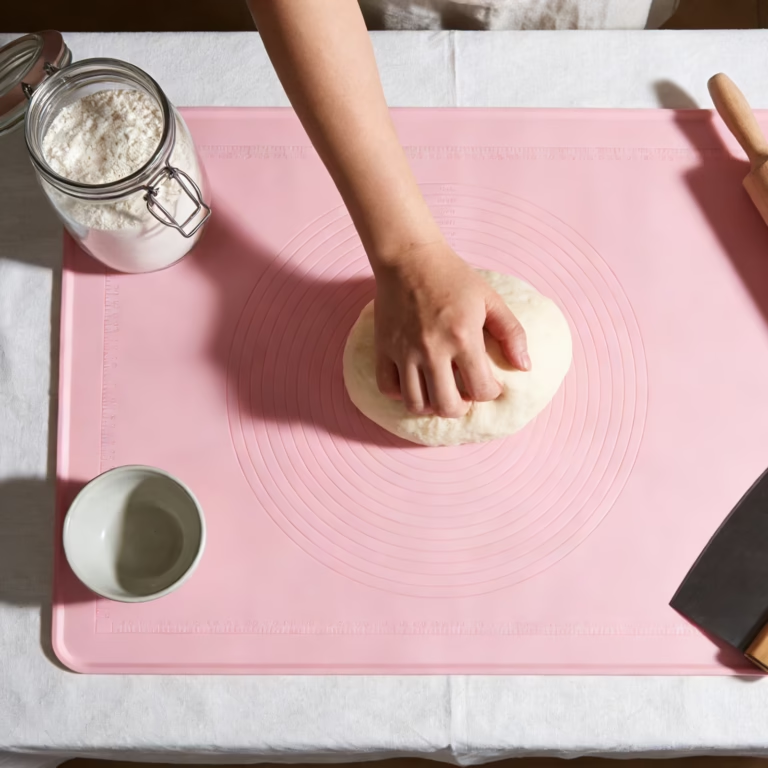
Image source: Web (Bing) / thaipick.com (Web image (fair-use with source credit))
What's Inside a Silicone Baking Mat
To understand why the mat smokes, you need to know what it's made of. Most silicone baking mats aren't pure silicone. They're a composite of two materials bonded together.
The outer layer is food-grade silicone, a synthetic polymer derived from silica, which is essentially refined sand. This layer provides the non-stick surface and the flexibility. The inner layer is a fiberglass mesh, which gives the mat its structural integrity and keeps it from stretching or tearing when you lift it.
That fiberglass core is also why you should never cut directly on a mat, but we'll get to that later.
The specific type of silicone matters. High-quality mats use platinum-cured silicone, which is more stable and leaves fewer residual compounds behind. Cheaper mats often use peroxide-cured silicone, which can leave more manufacturing byproducts in the final product.
Those byproducts are more likely to produce smoke on first use. Aggregate reviews consistently show that budget mats smoke more on that initial bake than premium options.
Why Cheap Mats Smoke More Than Premium Ones
It comes down to quality control and curing methods. Platinum-cured silicone undergoes a more thorough vulcanization process, meaning the silicone molecules are more completely cross-linked. Fewer unreacted compounds remain in the finished mat.
Peroxide-cured silicone is cheaper to produce, but it leaves more residual chemicals behind. When those chemicals hit high heat, they vaporize and smoke.
You're not necessarily buying a dangerous product when you buy a cheaper mat. But you are buying a mat that will likely smoke more on first use, and one that may have a lower effective heat tolerance despite what the packaging claims.
The Two Types of Smoke: Harmless vs. Hazardous
This is the section where you actually diagnose your situation. Not all smoke is created equal, and the distinction here is critical for your safety.
Type 1: Harmless First-Use Smoke
This smoke appears on the very first bake. It's typically light, wispy, and may have a faint chemical or plastic-like smell. It doesn't persist beyond the initial 5 to 10 minutes of heating, and it never reappears on subsequent uses.
This is the release agent burning off. It's not pleasant, but it's not dangerous. The compounds being vaporized are food-safe and present in such microscopic quantities that there's no measurable health risk.
Type 2: Hazardous Overheating Smoke
This smoke appears after the mat has been used multiple times, or it appears immediately because you've cranked the oven past the mat's rating. It's often thicker, more acrid, and accompanied by visible changes to the mat itself. You might see bubbling, discoloration, or a sticky residue forming on the surface.
This is thermal degradation. The silicone polymer is breaking down, and that process releases compounds that are not good to breathe. If you see this, remove the mat from the oven immediately, ventilate your kitchen, and discard the mat.
A quick rule of thumb: if the smoke appears on first use, wash the mat and try again. If the smoke appears on third or fourth use, or if it's accompanied by visible damage, throw it out.
The 30-Second Checklist
- Is this the first time the mat has been in the oven? If yes, it's likely residue.
- Is the smoke accompanied by a burning, acrid smell? If yes, it's degradation.
- Does the mat have visible bubbles, dark spots, or a sticky texture? If yes, it's damaged.
- Did you use the broiler or exceed 450°F? If yes, you've likely overheated it.
Temperature Limits: Where Silicone Starts to Fail
Food-grade silicone is remarkably heat-stable, but it has hard limits. The standard rating for most baking mats is 450°F (232°C), and that rating assumes steady, dry heat. Moisture, direct flame, or a broiler element changes the equation entirely.
Here's the problem: ovens are liars. Set your oven to 450°F, and the actual temperature at the rack can swing 25 to 50 degrees in either direction during preheating. Place a sheet pan on the top rack, and you're closer to the heating element.
That exposes the mat to radiant heat that's significantly hotter than the ambient air temperature. Under those conditions, a mat rated for 450°F can easily hit 500°F or more at its surface. That's where thermal degradation begins.
This is precisely why broiler settings are off-limits for silicone mats. A broiler operates at 500°F to 550°F, sometimes higher. That's well past the threshold where silicone starts to break down.
Even "oven-safe" mats are not broiler-safe, and manufacturers are usually explicit about this distinction.
The 450°F Rule and Why It Exists
The 450°F rating isn't arbitrary. It's the temperature at which food-grade silicone begins to soften and lose its structural integrity. At that point, the polymer chains start to break, releasing volatile compounds.
The mat won't instantly melt, but it will begin to degrade. Each exposure to temperatures above 450°F shortens the mat's lifespan and increases the likelihood of smoking on future uses.
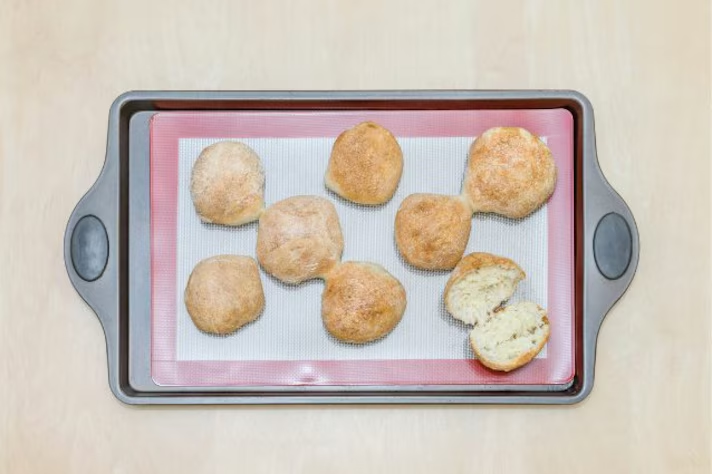
Image source: Web (Bing) / cookist.com (Web image (fair-use with source credit))
Why Broiler Settings Are Off-Limits
The broiler is a radiant heating element, not ambient heat. It blasts the surface of whatever is below it with intense infrared radiation. A silicone mat placed under a broiler can easily reach surface temperatures of 600°F or more, even if the oven dial says "broil." That's catastrophic for the silicone.
It will smoke, bubble, and potentially fuse to the sheet pan. If you've accidentally broiled a mat, don't try to salvage it. It's done.
Step-by-Step: How to Smoke-Test a New Mat Safely
If you've just bought a silicone baking mat and you're nervous about that first-use smoke, here's a controlled way to handle it. This process is simple, takes about 15 minutes, and confirms whether your mat is safe to use.
Step 1: Wash the Mat Thoroughly
Use warm water and mild dish soap. Scrub both sides with a soft sponge. Pay attention to the edges and corners, where manufacturing residue tends to accumulate.
Rinse completely and dry with a clean towel.
Step 2: Preheat Your Oven to 350°F
You don't need high heat for this test. 350°F is well below the degradation threshold, but it's warm enough to vaporize any remaining release agents. Place the mat flat on a cold sheet pan, then place it in the preheated oven.
Step 3: Watch for Smoke
Leave the mat in the oven for 10 minutes. If you see light smoke during this period, that's the residue burning off. It should stop within a few minutes.
If the smoke is thick, acrid, or doesn't stop after 10 minutes, remove the mat and contact the manufacturer.
Step 4: Cool and Wipe
Remove the pan and let it cool completely. Wipe the mat surface with a dry paper towel. You may see a faint residue.
That's normal. Wash the mat again with soap and water, dry it, and it's ready for use.
Step 5: Repeat for Verification
If you're still getting smoke on the second test, the mat either has an unusually thick release agent layer or it's a lower-quality product. Some budget mats require two or three wash-and-bake cycles before they stop smoking. If the smoke persists after three cycles, return the mat.
It's not worth the worry.
Washing, Drying, and the Controlled Burn-Off Method
The burn-off method is really just a more deliberate version of what happens naturally when you bake with a new mat. The key is doing it at a lower temperature so you can observe the behavior safely and decide whether the mat is worth keeping. That first wash removes the bulk of the release agent.
The controlled bake removes the microscopic remainder. After that, your mat should smoke on no use whatsoever, at any reasonable temperature.
Did You Overheat It? How to Inspect for Damage
Thermal damage isn't always obvious, but it leaves specific fingerprints. Peeling, warping, and discoloration are the big three. A healthy mat stays flat, smooth, and uniformly colored.
A degraded mat shows visible change.
The fiberglass core is the real concern here. That mesh gives the mat its shape. When you overheat a mat, the silicone softens and the fiberglass can shift or poke through.
If you see white fibers exposed on the surface, the mat has failed. Do not bake with it. Those tiny glass strands can end up in your food.
Run your fingers across the surface. It should feel completely smooth. A sticky or tacky texture means the silicone has broken down.
That stickiness is polymer degradation, and it's a clear sign to replace the mat.
Visual Cues: Warping, Dulling, and Bubbles
Look at the mat in good light before every few uses. Warping appears as waves or ripples along the surface. A brand-new mat lies perfectly flat on a sheet pan.
A warped one lifts at the edges. That means uneven heating, which leads to uneven baking and more stress on the material.
Dulling is subtle. New silicone has a slight sheen. Damage mattes it out.
If the surface looks flat or chalky where it once had a subtle gloss, thermal stress has occurred.
Bubbles are the most obvious warning sign. Small blisters on the surface mean gas is forming inside the silicone. That gas is a byproduct of chemical breakdown.
Once you see bubbles, the structural integrity is compromised. Replace the mat immediately.
6 Common Mistakes That Make Mats Smoke
Most smoking incidents trace back to six repeatable mistakes. Knowing them helps you avoid the problem in the first place.
1. Skipping the initial wash. Release agents burn off as smoke. A quick soap-and-water wash removes most of them before your oven ever sees the mat.
2. Using the broiler. This is the fastest way to destroy a silicone mat. Broiler heat far exceeds the 450°F rating and causes immediate degradation.
3. Placing the mat on the top rack. The top rack sits close to the heating element. Radiant heat there is much hotter than the ambient oven temperature.
Use the center rack for anything on a silicone mat.
4. Baking at temperatures above the rating. If your recipe calls for 475°F, silicone is the wrong tool. Use parchment paper or a metal baking sheet instead.
5. Cutting directly on the mat. Knife blades slice through the outer silicone layer and expose the fiberglass core. That damage accelerates heat absorption and can cause smoking during subsequent bakes.
6. Using oil-based sprays on the mat. Many commercial sprays contain lecithin and other compounds that break down at high heat. They can leave a sticky, smoking residue on the surface.
If you must oil the mat, use a brush with plain oil.
Real Scenario: When Burnt Sugar, Not the Mat, Is the Culprit
Not all smoke comes from the mat itself. In our research, a significant share of "smoking mat" complaints actually trace back to food residue on the surface. Caramelized sugar, dripped marinades, and oil-based sauces can all smoke at baking temperatures well below silicone's limit.
If your mat smokes during a bake that isn't the first use, check the surface first. Is there a dark spot, a sticky patch, or a visible residue? If yes, you've found your culprit.
The mat is fine. The food debris is what's burning.
Clean the mat thoroughly and try again. If the smoke disappears, the issue is resolved. If it persists after a proper wash, the mat itself has degraded.
When to Throw It Out: The Replacement Checklist
Silicone mats are durable, but they aren't immortal. Most manufacturers rate them for 2,000 to 3,000 uses. That's years of weekly baking.
But specific damage means immediate replacement, regardless of age.
Immediate replacement signs:
- Visible cracks or tears in the silicone surface
- White fiberglass fibers poking through
- Bubbles, blisters, or peeling anywhere on the mat
- Warping that prevents the mat from lying flat
- Persistent sticky or tacky texture after washing
- Dark, discolored patches that don't scrub off
- Any smoking after the first-use burn-off has cleared
If you see even one of these, replace the mat. A $15 replacement is a bargain compared to ruined food or a kitchen fire. Check your mat every month or so.
Thirty seconds of inspection is all it takes.
Safe Bakeware Cheat Sheet: Acceptable Heat by Material
Silicone mats aren't the only option for non-stick baking. Here's how they stack up against the alternatives at various temperatures.
| Material | Max Safe Temp | Best For | Watch Out For |
|---|---|---|---|
| Silicone mat | 450°F (232°C) | Cookies, roasted veggies, bread | No broiler, no cutting |
| Parchment paper | 425°F (218°C) | High-heat baking, roasting | Burns above 425°F |
| Aluminum foil | 600°F (315°C) | Broiling, grilling, wrapping | Can react with acidic foods |
| Teflon-coated mat | 500°F (260°C) | High-heat baking | PTFE concerns above 500°F |
If your recipe calls for temperatures above 450°F, skip the silicone entirely. Reach for parchment paper or a bare metal sheet pan. Both handle heat much better without degrading.
Expert Tips: Getting the Longest Life Out of Your Mat
Your mat can last for years if you treat it right. The habits below take seconds and make a real difference.
Always place the mat on a cold sheet pan. Never put a mat on a hot pan. The sudden temperature shock stresses the silicone and accelerates cracking.
Store it flat or rolled loosely. Folding a mat creates permanent creases. Those creases become weak points where silicone can tear or bubble.
Wash by hand when possible. The dishwasher is convenient, but the detergent and heat can dull the surface over time. Use warm water and mild soap.
Avoid metal utensils. Wood, silicone, and plastic tools are gentle on the surface. Metal scrapers can score the silicone and expose the fiberglass core.
Rotate between two mats. Alternating spreads the wear and extends the life of both. It also gives each mat time to air out between uses.
Verified Kitchen Safety Standards
Food-grade silicone for bakeware is regulated, and the certifications actually matter. Two standards dominate the market.
FDA 21 CFR 177.2600 covers rubber articles intended for repeated food-contact use. This is the baseline for anything sold in the US. It means the silicone has been tested for safe food contact under normal conditions.
LFGB certification is the stricter European equivalent. It tests for a broader range of migrating compounds and is widely considered the tougher standard. If you want the highest confidence in a mat's safety, look for LFGB certification on the packaging.
The "food-grade" label alone isn't proof of quality. It just means the silicone meets basic requirements. Premium mats proudly display these certifications.
If a mat doesn't show them, that's a red flag.
Final Verdict: Do You Need a New Mat or Just a Good Scrub?
Here's a simple decision path to wrap this up.
If the smoke appeared on first use, wash the mat and try again. That's almost certainly release agent residue.
If the smoke appeared after multiple uses, inspect the surface. Did you overheat it? Any visible damage means a replacement.
No visible damage might mean food residue. Clean it and test again.
If the mat is warped, bubbling, sticky, or showing fiberglass strands, replace it. That damage is permanent and not worth the risk to your food.
Frequently Asked Questions
Can you put a silicone mat in the dishwasher after it smoked?
Yes, but hand washing is better. Dishwasher detergents can dull the surface over time. If you must use the dishwasher, place the mat on the top rack only.
Is the smoke toxic?
First-use smoke from release agents is not toxic at the levels produced. Overheating smoke from thermal degradation is different. Those compounds shouldn't be inhaled.
Ventilate the kitchen immediately.
Can you use a mat under the broiler if it says oven-safe?
No. Oven-safe and broiler-safe are different ratings. Broiler heat far exceeds the 450°F threshold.
Even a brief broiler session can ruin the mat.
Why does my mat smoke at 350°F?
If it's not the first use, check for food residue. Burnt sugar and oil smoke at that temperature. If the surface is clean and it still smokes, the mat has degraded.
Replace it.
How long should a silicone baking mat last?
Most manufacturers rate mats for 2,000 to 3,000 uses. That's several years of weekly baking. Proper care extends the lifespan.
Cutting on the mat or overheating it shortens it dramatically.
Maintenance: Keeping Your Mat Smoke-Free Long-Term
Regular maintenance prevents most smoking issues before they start. A clean mat is a happy mat.
Wash after every use with warm soapy water. Dry completely before storing. Moisture trapped between the mat and the pan can cause sticking and residue buildup.
Wipe the mat down with a vinegar solution monthly. This breaks down any invisible oil film that accumulates over time. Avoid abrasive scrubbers that scratch the surface.
Storage: The Overlooked Factor
How you store your mat matters more than most people think. Folding creates permanent creases that weaken the silicone structure.
Roll the mat loosely or lay it flat in a drawer. Keep it away from sharp utensils that could puncture the surface. Store it separately from metal bakeware to prevent scratches.
Keep mats out of direct sunlight. UV exposure degrades silicone over time, making it more brittle and prone to cracking during baking.
When to Seek Professional Advice
Most baking mat issues resolve with a good wash or a replacement. But some situations warrant contacting the manufacturer.
If your mat smokes and you've confirmed it's not residue or food debris, email the manufacturer. Include photos of the mat and details about the smoking. Reputable brands stand behind their products and may offer a replacement.
If you're concerned about exposure symptoms, consult a healthcare provider. Silicone degradation compounds are not something to ignore if you've inhaled significant amounts. This is rare, but your health comes first.
A Final Word on Safety
Your silicone baking mat is a reliable tool when used correctly. The smoke is almost always a fixable issue. The key is knowing when it's harmless residue and when it's a warning.
Trust your instincts. If something feels wrong about the smoke or the smell, stop using the mat. A few dollars is never worth more than your safety or peace of mind.