Frozen Cherries Too Hard to Pit? Try This Easy Fix
Frozen Cherries Too Hard to Pit usually means the fruit is still below the safe, workable pitting window. The flesh is icy, the pit is locked in place, and a pitter can crush the skin instead of pushing the stone out. You do not need to thaw the whole bag.
You need a short tempering step.
Most home freezers hold fruit near 0°F, which keeps cherry flesh rigid and full of ice crystals. That hardness is useful for storage, but it fights every pitting tool. The fix is to warm the cherries just enough to give slightly under pressure, then choose the branch that matches your recipe.
Frozen Cherries Too Hard to Pit? Try This Easy Fix
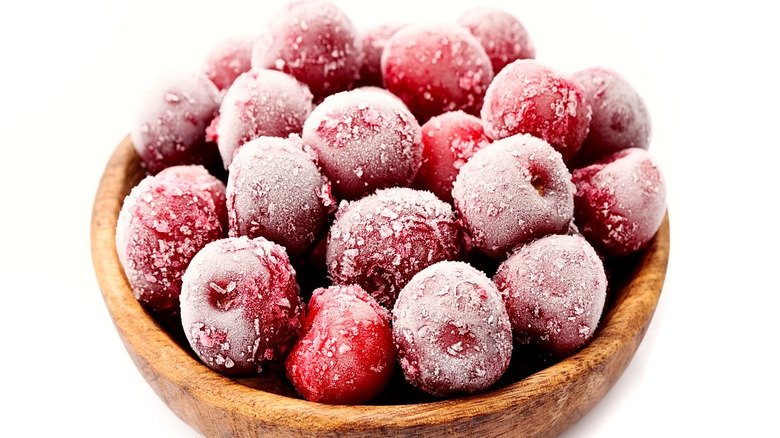
Image source: Bing (Web (fair-use with source credit))
Quick Answer
Frozen Cherries Too Hard to Pit should be tempered, not fully thawed. Let them sit at room temperature for 10 to 30 minutes. Stop when they yield slightly to gentle pressure.
Pit semi-frozen cherries over a deep bowl. Fully thawed fruit often turns mushy.
Why Frozen Cherries Become Too Hard to Pit Safely
Frozen cherries are hard because the water inside the fruit turns to ice. The pit stays cold even longer than the flesh. That makes the center act like a frozen stone core.
A cherry pitter needs the fruit to compress a little, so rock hard fruit fights the tool.
If you force a pitter, the skin can split. If you use a knife, the cherry can skid. The pit may also crack instead of popping out whole.
That creates sharp fragments and a bitter taste around the stone.
Freezing also changes texture. Ice crystals stretch cell walls. When fruit thaws, it releases juice.
That is why fully thawed cherries often look wet and collapse quickly.
The problem is worse with small frozen tart cherries. They can shift in the pitter. Frozen sweet cherries are larger, but they still need some give.
The goal is not warm fruit. The goal is controlled firmness.
- Rock hard cherries crush under pressure.
- Slightly tempered cherries pit cleanly.
- Over-thawed cherries leak juice and lose shape.
- Cracked pits are harder to remove from soft fruit.
The Quick Fix: Temper Frozen Cherries Instead of Fully Thawing Them
Tempering means warming frozen fruit just enough to make it yield slightly. It is not the same as thawing. Full thawing releases a lot of juice and leaves the flesh soft.
As of 2026, many frozen tart cherries are still sold unpitted, so this comes up often during baking season. The fastest safe method is a short room temperature rest.
- Measure only the cherries you need.
- Spread them in a single layer in a shallow bowl or rimmed tray.
- Let them sit at room temperature for 10 to 30 minutes.
- Test one cherry every few minutes.
- If you need speed, seal the cherries in a leakproof bag and set the bag in cold water for 15 to 45 minutes.
| Method | Time | Best when |
|---|---|---|
| Room temperature | 10 to 30 minutes | You want close control |
| Cold water in sealed bag | 15 to 45 minutes | You need speed |
| Refrigerator | 1 to 4 hours | You want slow, even softening |
Do not use hot water. It can warm the outside too fast and leave the pit frozen. Per the USDA Food Safety and Inspection Service, perishable fruit should not stay above 40°F for more than two hours.
The U.S. Food and Drug Administration publishes the Food Code guidance behind that rule.
If your kitchen is warm, shorten the rest time. If the cherries start to pool juice, move them to the fridge or cook them soon.
How to Tell Whether Frozen Cherries Are Ready to Pit
Temperature and Texture Cues
They are ready when they feel firm but slightly compressible. The skin should lose its glassy frost. A gentle thumb press should leave a small dent.
The cherry should not feel slushy. A paring knife should meet slight resistance, not a hard crunch. The pit should shift when you press from the stem end.
A thermometer is not essential. Touch is more useful. You are looking for a cold fruit that gives just a little.
If juice runs out right away, the fruit is too soft for neat pitting. If the cherry feels like an ice cube, give it more time. Small cherries temper faster than large ones.
Recipe Requirements That Change the Method
Your recipe sets the target texture. For pie, you want the cherries to hold their shape. For jam, softer fruit is fine.
- Pie and crumble: pit while semi-frozen.
- Compote and sauce: pit when slightly soft.
- Jam: you can let them soften more.
- Smoothies: use pitted cherries only.
If the fruit will be cooked down, you have more room for error. If the fruit needs to look whole, stop tempering earlier.
Decision Guide: Pit Now, Thaw Longer, or Skip Pitting Entirely
This is where a simple workflow helps. The right move depends on texture, tool, and final dish.
| What you see | What to do | Why it works |
|---|---|---|
| Rock hard, no give | Temper longer | Prevents crushed fruit |
| Slight give, still cold | Pit now | Best shape and control |
| Soft, leaking juice | Cook or strain | Pitting will be messy |
| Needed for blending | Use pitted fruit | Pits risk teeth and blades |
For Pie, Crumble, and Other Baked Desserts
You want structure. Pit the cherries while they are still firm. They will release less juice and keep a clean shape.
If they release too much liquid, drain some before mixing. You can reduce the drained juice and add it back for flavor. Toss the fruit with sugar close to bake time.
For Jam, Compote, and Sauces
You have more slack here. Pit softer cherries over a bowl to keep the juice. That juice is useful for sauces.
If a pit cracks, remove the fragments. For a smooth sauce, cook the fruit and press it through a sieve. Do not rely on blending to hide pit pieces.
For Smoothies, Purées, and Ice Blends
Do not blend unpitted cherries. Pits can damage teeth and blender blades. Buy pitted frozen cherries or thaw the fruit enough to pit it safely.
If you only have unpitted cherries, cook and strain them first. That is safer than blending and hoping. It also gives you a smoother result.
Step-by-Step Workflow for Pitting Partially Frozen Cherries
This workflow works for both sweet and tart frozen cherries. It keeps the batch cold enough to handle.
- Sort the cherries. Remove stems, ice chunks, and damaged fruit.
- Temper the amount you can pit within two hours.
- Test one cherry before committing the whole bowl.
- Set up a stable station. Put a damp towel under your cutting board or bowl.
- Place a deep bowl under the work area to catch juice.
- If using a cherry pitter, set the cherry stem end up and press evenly.
- If using a paring knife, cut to the pit, twist the halves, and lift the pit out.
- Check each cherry for pit fragments.
- Drain excess juice if the fruit is going into pastry.
- Refrigerate pitted cherries or return them to the freezer quickly.
Work in small batches. Keep the unworked cherries cold while you pit the rest. That prevents the whole batch from turning soft and wet.
If the cherries softened at room temperature for more than two hours, cook them or discard them. Do not refreeze fruit that stayed warm too long. Quick handling protects both texture and food safety.
Best Tools for Pitting Semi-Frozen Cherries Without Crushing Them
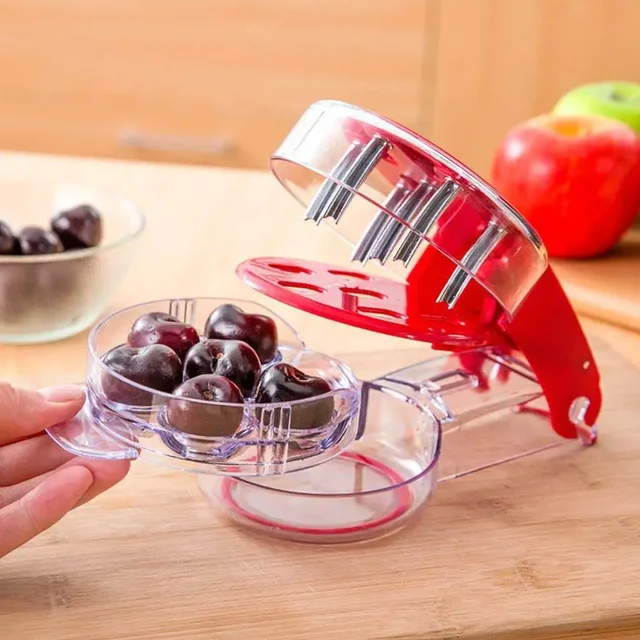
Image source: Bing (Web (fair-use with source credit))
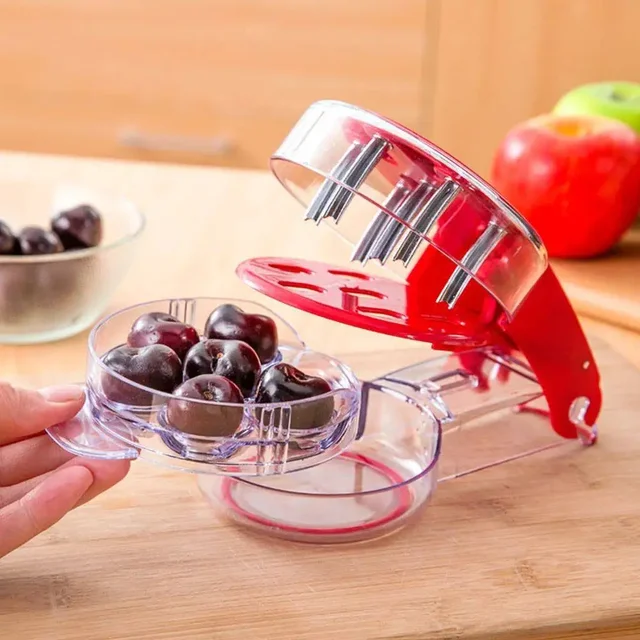
The right tool reduces force and improves accuracy. A cherry pitter is the best choice for batches. A paring knife works for small amounts.
Manufacturer specifications indicate most handheld pitters work best with fresh or slightly softened fruit. They are not designed for rock hard frozen cherries. A countertop lever pitter can handle larger batches with less hand fatigue.
| Tool | Best for | Watch for |
|---|---|---|
| Handheld cherry pitter | Small batches | Needs careful alignment |
| Countertop lever pitter | Large batches | Takes more space |
| Paring knife | Few cherries | Requires more control |
| Olive pitter | Small olives | Often too small for cherries |
Look for stainless steel parts or BPA-free plastic. A catch tray helps with juice. A non-slip base matters more than fancy design.
Aggregate buyer feedback reports that suction-base models are steadier for high-volume pitting. Clean the tool soon after use. Cherry juice stains and dries sticky.
How to Pit Frozen Cherries Without a Cherry Pitter
A paring knife is the most reliable backup. It gives control and works well on semi-frozen fruit.
Knife method
Set the cherry on a stable cutting board. Cut around the pit along the natural seam. Twist the halves and lift the pit out.
Skewer method
A wooden skewer or chopstick can push the pit out from the stem end. This works best with small tart cherries that have tempered slightly. If the pit does not move, stop and warm the fruit longer.
Straw method
A sturdy straw can pop pits from soft cherries. It is less useful for frozen fruit. The straw can bend or tear the skin.
- Best for small batches: paring knife
- Best for small tart cherries: skewer or chopstick
- Best for very soft fruit: sturdy straw
- Avoid: dull knives and hard force
Work over a deep bowl. Frozen cherries can still release juice once the skin breaks. If you feel the pit cracking, pause and let the cherries temper a little more.
Thawing Methods Compared: Fridge, Counter, and Cold Water
The method changes speed, juice loss, and safety margin. Choose based on how soon you need the fruit.
| Method | Typical time | Texture result | Best use |
|---|---|---|---|
| Refrigerator | 1 to 4 hours for partial thaw | Even firmness | Planned prep |
| Counter | 10 to 30 minutes | Quick surface softening | Same day baking |
| Cold water in sealed bag | 15 to 45 minutes | Faster but can soften outer flesh | Tight schedule |
A solid block of cherries takes longer. Break it apart first. Single layers temper faster.
Counter thaw is fine for short prep. Do not let fruit sit above 40°F for more than two hours. Cold water is faster, but the cherries need to stay in a sealed bag.
If the cherries start to feel warm or leak heavily, move them to the fridge or cook them soon. Warm fruit loses shape fast.
Common Mistakes That Cause Broken Pits, Mushy Fruit, and Juice Messes
Most failures come from rushing the temper. Hard pits crack under pressure. Soft flesh tears.
- Pitting straight from the freezer. The tool crushes the skin.
- Thawing the whole bag. The bottom fruit turns wet.
- Using a dull knife. It slips on icy skin.
- Ignoring cherry size. Small tart cherries need more alignment.
- Letting juice sit on counters. Cherry pigment stains quickly.
Mess control matters too. Work over a rimmed tray. Wipe juice quickly because cherry pigment stains counters and cutting boards.
Another issue is refreezing without a plan. If fruit thawed too long, texture drops. If it stayed cold and was handled fast, you can cook or freeze it with expected softness.
Food Safety Rules for Thawed, Partially Thawed, and Refrozen Cherries
Frozen fruit is safe while frozen. Thawing starts the clock. Bacteria grow faster above 40°F.
- Partially thaw only what you can pit soon.
- Keep the room temperature window under two hours.
- Refrigerate pitted cherries if you are not cooking right away.
- Cook fruit that warmed too long instead of refreezing it raw.
Refreezing is not always a safety problem if the fruit stayed cold. Quality suffers more. Ice crystals rupture cells again.
Expect more juice and softer fruit after refreezing. If fruit smells fermented, feels slimy, or sat out too long, discard it. Do not taste test to check spoilage.
Cost and Time Tradeoffs: Pitting Unpitted Frozen Cherries vs Buying Pre-Pitted
Unpitted frozen cherries often cost less per pound. Pre-pitted cherries save labor. The right pick depends on batch size and recipe.
| Option | Cost tendency | Time cost | Best for |
|---|---|---|---|
| Unpitted frozen cherries | Lower price | Tempering and pitting | Large baking batches |
| Pre-pitted frozen cherries | Higher price | Almost none | Quick desserts and smoothies |
For one pie, the price gap may not matter. For frequent jam making, labor adds up. A lever pitter can make unpitted fruit worthwhile.
If you only bake once a season, pre-pitted may be the simpler buy. It also reduces pit fragment risk. Check the bag label because some pre-pitted fruit may still contain an occasional pit.
Frozen Cherry Pitting FAQs
Can you pit cherries straight from the freezer?
Not usually. Rock hard cherries crush under a pitter and can crack the pit. Let them temper 10 to 30 minutes.
They should yield slightly but still feel cold. If they release juice immediately, they are too soft for neat pitting. Cook them instead.
Do frozen cherries need to be thawed before baking?
Not fully. For pies and crumbles, semi-frozen cherries hold shape better. Thaw only until a pitter or knife can work.
If the recipe cooks them down, you can add softer fruit. Drain excess juice for pastry so the filling does not turn soupy.
Are cherry pits dangerous if left in?
Yes. They are a choking and dental hazard. Cracked pits can leave sharp fragments.
Cherry pits contain amygdalin. Cracked or chewed pits should not be eaten in quantity. Always check pitted fruit before blending, baking, or serving children.
This matters most for smoothies.
Can you refreeze cherries after pitting?
You can if they stayed cold and were handled quickly. Expect softer texture and more juice.
If the fruit sat above 40°F for over two hours, cook it or discard it. For best quality, freeze pitted cherries in a single layer first.
Quick Pitting Decision Checklist
Use this before you start.
- If the cherry dents slightly under thumb pressure, pit it now.
- If it feels like an ice cube, temper it longer.
- If juice pools in the bowl, cook the fruit soon.
- If the pit cracks, let the batch warm a little more.
- If the fruit will be blended, make sure every pit is out.
Storage and Refreezing Guidelines
Freeze pitted cherries fast to limit texture loss. Spread them on a lined tray, then transfer to a freezer bag once firm. Press out extra air to reduce freezer burn.
Label bags with the date. Frozen cherries keep best for about 8 to 12 months at 0°F. If they smell fermented or show heavy frost clumps, use them only in cooked dishes or discard them.
Troubleshooting Frozen Cherry Pitting
| Problem | Likely cause | Fix |
|---|---|---|
| Skin splits, pit stays in | Fruit too hard | Temper longer |
| Cherries mash during pitting | Fruit too soft | Chill briefly or cook |
| Pit breaks into pieces | Excess force or very cold pit | Use slower pressure |
| Too much juice | Over thawed batch | Drain and reduce juice |
| Stained counter | Cherry pigment | Wipe immediately with warm soapy water |
Small adjustments fix most batches. Keep the fruit cold, work slowly, and match the method to the final dish.
Match the Method to Your Cherries, Tools, and Recipe
Choose the branch that protects texture and safety. If the cherries must stay whole, pit them semi-frozen. If they will become sauce, softer fruit is fine.
| Situation | Best move |
|---|---|
| Rock hard cherries for pie | Temper 10 to 30 minutes, then pit |
| Soft leaking cherries | Cook, strain, or make compote |
| Smoothies or purées | Use pitted fruit, or cook and strain |
| Large batch | Use a lever pitter and work in small batches |
Keep unworked cherries cold while you pit the rest. This keeps the batch firm and reduces juice loss.