Different Types of Apple Corers: Which Should You Use?
Different Types of Apple Corers can look similar, but they handle very different kitchen jobs. A tiny tube tool suits one pie. A crank machine suits a bushel.
The wrong choice creates slow prep and wasted fruit.
Most handheld corers remove a core about 3/4 to 1 inch wide. That size matters because seed pockets left behind ruin baked slices. Manufacturer specifications also show crank units need more counter space and longer cleanup.
So the real question is prep volume.
Quick Answer
Different Types of Apple Corers include handheld tubes, lever presses, and crank machines. Handheld tube corers suit a few apples. Lever presses suit faster medium batch prep.
Crank machines peel, core, and slice. Choose by fruit volume and storage space.
Different Types of Apple Corers: Which Should You Use?
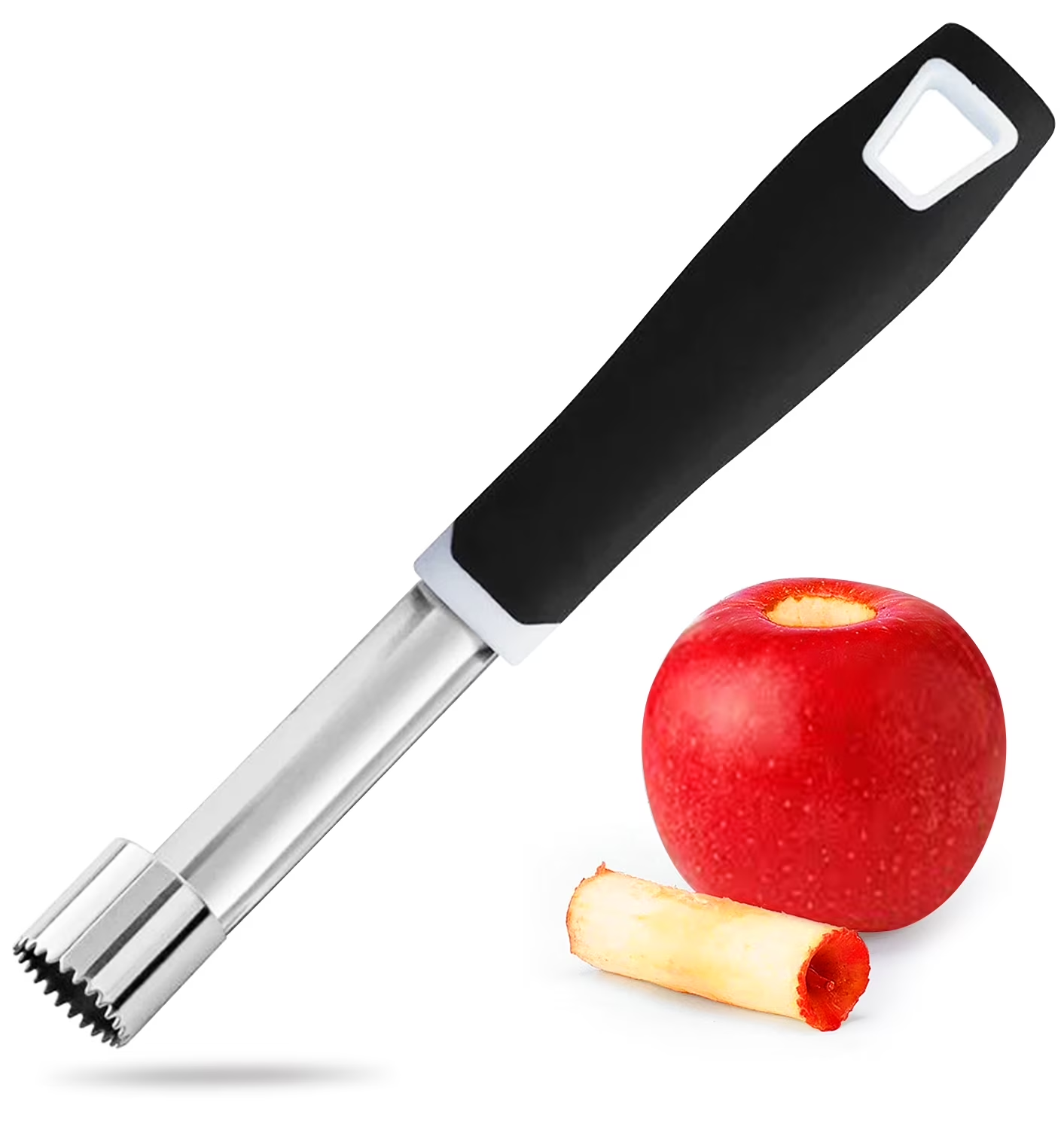
Image source: Bing (Web (fair-use with source credit))
Why Apple Corer Type Matters More Than Brand
Brand names matter less than tool geometry. A corer has to match apple size, fruit firmness, and batch size. A small handheld tube can be perfect for two apples.
The same tool becomes slow and awkward for a full crate.
In our research, common complaints are dull blades, poor ejection, and cores with seeds. Those problems usually come from the wrong style. A good fit also reduces waste.
An oversized barrel removes extra flesh. A narrow barrel leaves seeds. Choose the mechanism first, then pick a sturdy maker.
Handheld Tube Apple Corers: Best for Light, Everyday Use
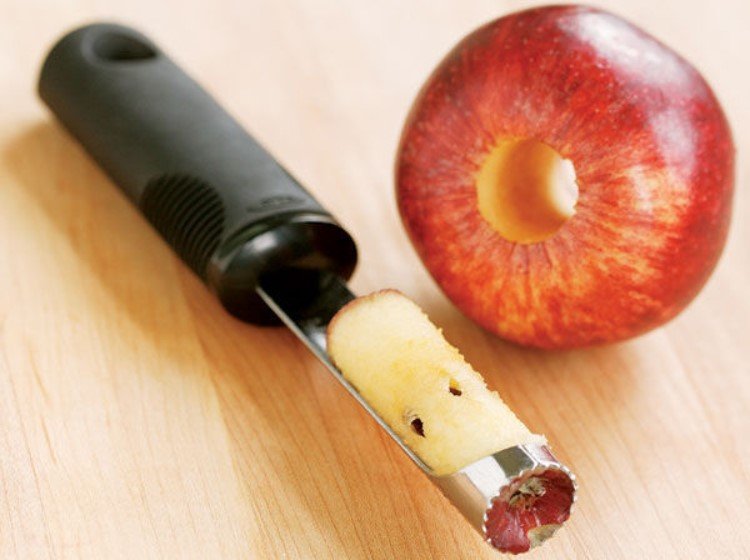
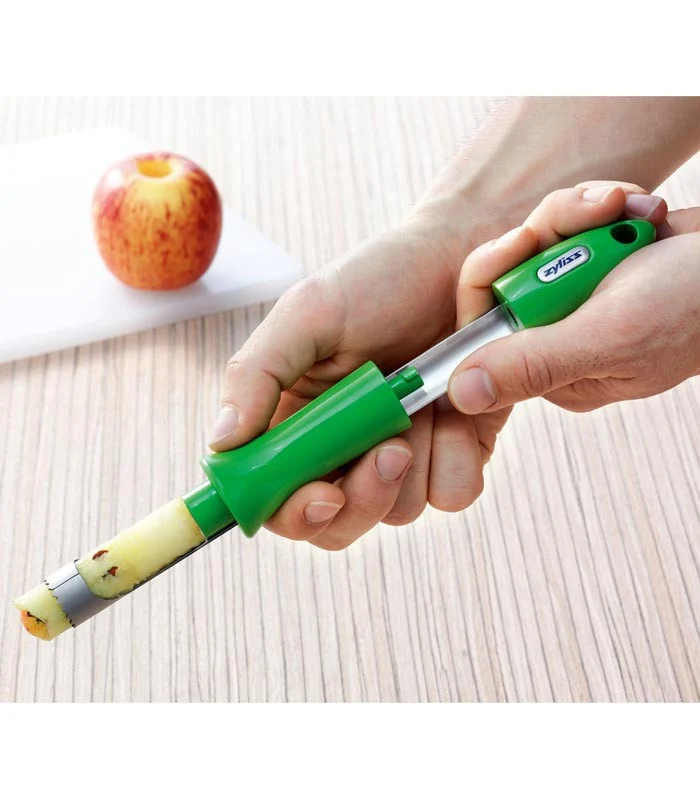
A handheld tube corer is a straight cylinder with a cutting edge. You push it through the apple from stem to base. The core slides out through the tube or with a push cap.
It's cheap, compact, and easy to store.
It works best for a few apples, lunch boxes, and quick pie prep. Aggregate reviews report that stainless steel tubes hold an edge better than thin plated metal. Look for a smooth inner wall.
That helps the core eject without sticking.
Pros and Cons
Inexpensive and easy to store
Fast for one or two apples
Simple to rinse clean
Safer than digging with a knife
Slow for large batches
Can jam on very firm apples
Small barrels may leave seeds
Plastic caps can crack over time
Lever-Action and Press Apple Corers: Best for Faster Batch Prep
A lever-action apple corer presses a cutting head through the fruit with a handle. The apple sits on a base, and you pull the lever down. This style is faster than a handheld tube and needs less grip strength.
It suits medium batches for crisps, canning, and freezing.
Manufacturer specifications indicate many lever corers use heads around 7/8 to 1 inch wide. Check stability before you buy. Suction feet can slip on wet counters.
A clamp base is more secure but needs a table edge.
Pros and Cons
Faster than handheld tools
Good for people with limited hand strength
More consistent core removal
Works well for repeated baking prep
Takes more counter or storage space
Cheap bases can shift during use
Often costs more than a tube corer
May struggle with very small apples
Crank Apple Peeler, Corer, and Slicer Machines: Best for Big Batches
A crank apple peeler, corer, and slicer clamps or suctions to the counter. You turn a handle while the apple spins against blades. It can peel, core, and slice in one motion.
This is useful for drying rings, pie filling, and applesauce prep.
Aggregate buyer feedback says setup takes longer than using a handheld tool. The machine also needs more storage space. It works best with firm, round apples.
Very soft fruit can shred.
Pros and Cons
Handles large volumes quickly
Peels, cores, and slices at once
Great for drying and canning prep
Reduces hand fatigue during long sessions
Bulky and harder to store
Needs counter space and setup
Works best with uniform firm apples
Takes longer to clean
Corer and Divider Combo Tools: Best for Snacks and Rustic Baking
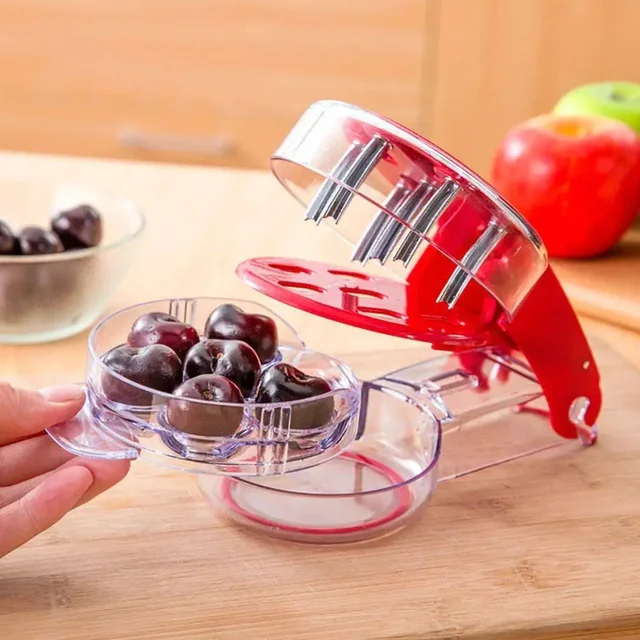
A corer and divider combo cuts the apple into segments while removing the center. Think of it as a round cutter with blades that core and quarter. This is handy for snacks and rustic baking.
It does not make perfect rings.
It also struggles on very large or misshapen apples. If you want lunchbox slices, this can be faster than separate tools. If you need whole rings for drying, skip it.
Using a Paring Knife Instead of an Apple Corer: When It Still Works
A paring knife is the simplest alternative. It costs nothing and works on any shape. You cut around the core, then trim seeds.
This method gives control for odd heirloom apples.
It's slower and less consistent. It also requires better knife skills. For one or two apples, a knife may be enough.
For repeated baking, a dedicated corer saves time.
Side-by-Side Comparison of Apple Corer Types
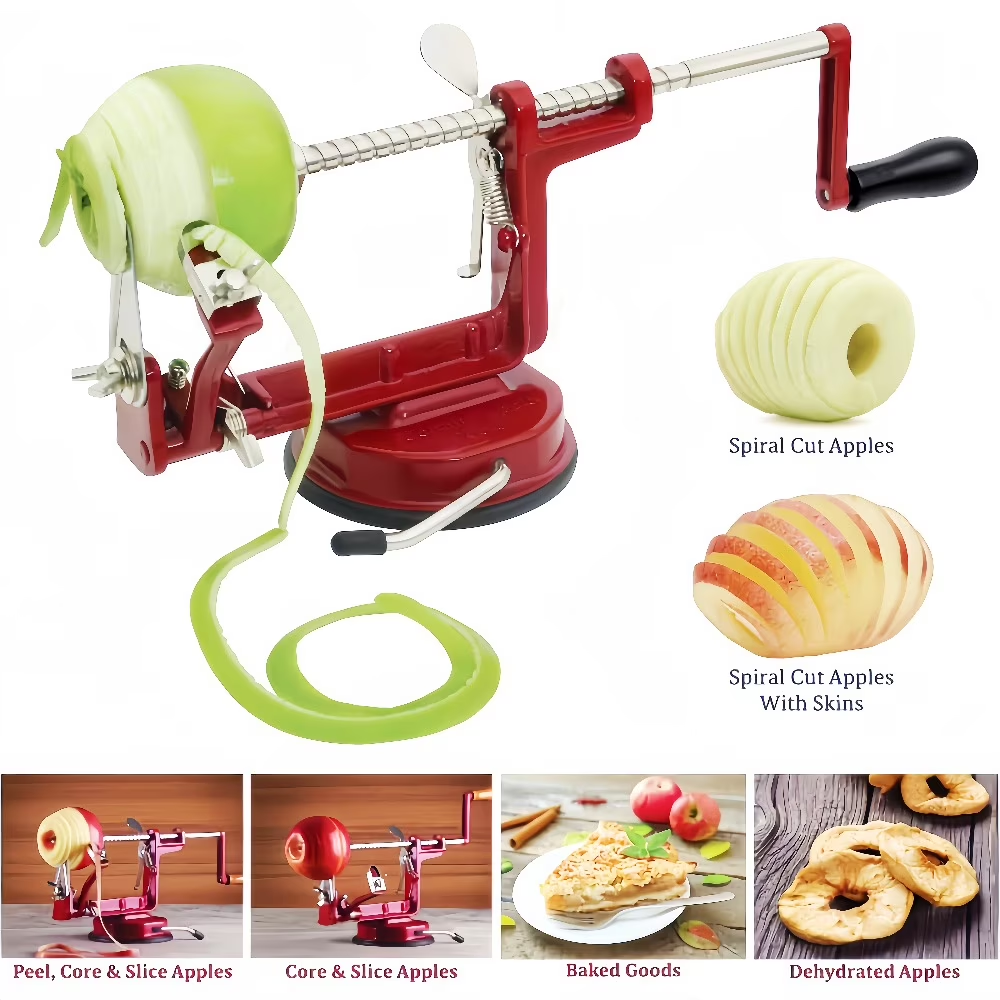
Image source: Bing (Web (fair-use with source credit))
The photo above shows how much space a crank unit can take. Handheld tools stay small. Press tools sit between.
Use this table to compare the main styles.
| Corer Type | Best For | Speed | Storage | Main Limit |
|---|---|---|---|---|
| Handheld tube | A few apples | Moderate | Very easy | Slow for batches |
| Lever press | Weekly baking | Fast | Medium | Needs stable base |
| Crank machine | Large batches | Very fast | Hard | Bulky and costly |
| Corer divider | Snacks | Fast | Easy | No neat rings |
| Paring knife | Occasional prep | Slow | None | Less consistent |
Best Apple Corer Type by Use Case
Match the tool to the job. Here are the best fits.
- One or two apples: handheld tube corer
- Weekly pies or crisps: lever-action press
- Orchard surplus: crank peeler, corer, and slicer
- Tiny kitchen: handheld tube or paring knife
- Apple rings for drying: crank machine
- Kids snacks: corer and divider combo
- Limited grip strength: lever press
- Occasional use: paring knife
Key Features That Separate a Good Apple Corer From a Bad One
Small design details decide whether the tool gets used or forgotten. Pay attention to the cutting head first.
- Blade diameter: choose 3/4 inch for small apples and 1 inch for large baking apples
- Blade material: stainless steel resists rust and holds sharpness better
- Ejection design: open frames and smooth tubes clear cores more easily
- Handle grip: soft, wide handles reduce slipping
- Base stability: suction and clamp bases must stay firm on wet counters
- Cleaning access: avoid deep crevices where pulp collects
- Apple compatibility: very small or very large apples need the right barrel width
Common Apple Coring Mistakes That Waste Fruit or Feel Frustrating
Most coring problems are fixable. They usually come from poor matching or rushed technique.
- Using a barrel that is too narrow and leaving seeds behind
- Using a barrel that is too wide and removing good flesh
- Pressing at an angle instead of aligning with the stem and base
- Coring very soft apples with a crank machine
- Letting apple residue dry on the blade
- Ignoring a loose suction base
- Storing carbon steel parts while damp
Pricing, Sizes, and What You Actually Get for the Money
As of 2026, prices vary by style more than by brand. Simple tools can work well. Heavy machines cost more because they add peeling and slicing.
| Corer Type | Typical Price | What You Get |
|---|---|---|
| Basic handheld tube | $5 to $15 | Simple coring and small storage footprint |
| Stainless handheld tube | $15 to $25 | Better edge retention and cleaner finish |
| Lever press | $25 to $60 | Faster batch coring with less hand effort |
| Crank machine | $30 to $80 | Peeling, coring, and slicing in one pass |
| Commercial unit | $80 and up | Higher volume prep and sturdier build |
Safety and Maintenance Tips for Longer-Lasting Apple Corers
Most home apple corers are simple tools, but blades are sharp. Keep fingers clear during ejection. Store tools with blade guards if children can reach drawers.
The U.S. Food and Drug Administration sets rules for food-contact materials. See its Food Contact Materials program before using unknown coatings.
Rinse acidic fruit residue soon after use. Dry metal parts to prevent rust.
Dishwasher heat can dull plastic handles. Check manufacturer care notes. Sharpen or replace a corer when it starts tearing instead of cutting.
Final Decision Guide: Which Apple Corer Should You Buy?
If you prep fewer than five apples at a time, buy a handheld tube. If you bake weekly, choose a lever press. If you dry fruit or process orchard surplus, choose a crank machine.
If storage is tight, keep a paring knife as backup.
For most home kitchens, a stainless handheld tube is the safest first buy. It's inexpensive and solves the common seed problem. Add a crank machine only when batch size makes it worthwhile.
Frequently Asked Questions
What is the easiest apple corer to use?
A handheld tube corer is usually the easiest. You press it through the apple and twist once. It needs little setup and almost no storage space.
Lever models can feel easier for larger batches. Crank machines take more setup, but they reduce effort when you process many apples.
Do I need an apple corer if I have a knife?
No, but a corer is faster and more consistent. A paring knife works for a few apples and costs nothing. It also gives you control over odd shapes.
For pies or drying, a corer makes cleaner rings and lowers the chance of leaving seeds behind.
What size apple corer should I buy?
Choose a barrel width based on your usual apple size. Small apples often work best with a 3/4 inch corer. Large baking apples may need a 1 inch or slightly wider tool.
If the corer is too narrow, seeds remain. If it is too wide, you lose good fruit.
Are crank apple peelers worth it?
They are worth it for big seasonal batches. They peel, core, and slice in one pass. That saves time during canning or freezing.
They are not ideal for tiny kitchens. You also need counter space and more cleaning time. They suit orchard gluts best.
Can an apple corer work on pears?
Yes, many apple corers also work on firm pears. The tool removes the core and seeds cleanly. Very soft pears may bruise or collapse.
A narrow tube corer gives more control. Work slowly and chill soft fruit first. It helps with neat slices.
Corer and Divider Combo Tools: Best for Snacks and Rustic Baking
A corer and divider combo works best when speed matters more than perfect rings. It removes the center and cuts the apple into segments in one press. That makes it useful for lunch boxes, fruit trays, and quick crumble prep.
The main limit is apple shape. Very wide apples may not fit the cutter head. Very small apples can slip or crack unevenly.
Who should choose it?
Choose this tool if you want ready-to-eat segments and do not need full rings. Skip it if you dry apple rings or want uniform baking slices.
- Best for snacks, fruit salads, and rustic pies
- Less precise than a tube corer
- Works best with medium round apples
Using a Paring Knife Instead of an Apple Corer: When It Still Works
A paring knife still works when the fruit is irregular or the batch is tiny. It gives full control around bruises, odd cores, and soft heirloom apples.
The tradeoff is consistency. Knife coring takes longer and leaves more variation. For pie slices, that can mean uneven baking.
Best knife method
Use a short paring knife and cut the apple into quarters. Remove the seed pocket with a shallow V cut. This wastes less fruit than a wide corer barrel.
If you only core one or two apples a week, a knife may be enough. If you bake often, a dedicated corer saves time.
Side-by-Side Comparison of Apple Corer Types
The biggest differences are speed, storage, and fruit compatibility. Handheld tubes win on simplicity. Lever presses win on speed and comfort.
Crank machines win on volume.
| Tool type | Best situation | Cleanup effort | Main risk |
|---|---|---|---|
| Handheld tube | Small daily jobs | Low | Seeds left behind |
| Lever press | Weekly baking | Medium | Base slipping |
| Crank machine | Large seasonal batches | High | Soft fruit shredding |
| Divider combo | Snacks and salads | Low | Uneven segments |
If counter space is tight, favor a handheld tool. If you process orchard fruit, favor a crank machine.
Best Apple Corer Type by Use Case
The right choice follows the job. Match the tool to the outcome you want.
Baking pies and tarts
Use a handheld tube or lever press. You want whole cored apples that can be sliced evenly.
Drying apple rings
Use a crank peeler, corer, and slicer. It creates uniform spirals that dry at a more even rate.
Quick snacks
Use a corer and divider. It produces segments fast and keeps prep simple.
Very small kitchens
Use a stainless tube corer or a paring knife. Both store easily and cost little.
If you only buy one tool, choose based on volume. Low volume means handheld. High volume means crank.
Key Features That Separate a Good Apple Corer From a Bad One
A good corer feels stable and clears the core cleanly. The cutting edge should stay sharp through firm fruit.
Cutting diameter
A 3/4-inch barrel suits small apples. A 1-inch barrel suits large baking apples. The wrong size causes waste or leftover seeds.
Build quality
Stainless steel resists rust better than plated carbon steel. Smooth inner walls help the core eject. Loose hinges and weak suction bases shorten tool life.
Cleaning design
Avoid tools with deep seams around the blade. Apple pulp dries quickly and traps bacteria. Dishwasher-safe parts help, but hand washing often keeps edges sharper.
Common Apple Coring Mistakes That Waste Fruit or Feel Frustrating
Most mistakes come from forcing the tool. Align the corer with the stem and base. Press straight down.
Twisting too early can tear soft flesh.
Another issue is ignoring apple firmness. Firm dessert apples suit tube and lever tools. Very mealy fruit needs a knife.
Clean blades right away. Dried pulp makes ejection sticky.
Quick fixes
- If seeds remain, use a wider barrel.
- If flesh loss is high, use a narrower barrel.
- If the base slips, dry the counter first.
Pricing, Sizes, and What You Actually Get for the Money
Price tracks mechanism, not magic quality. Simple tube corers often cost $5 to $15. Lever presses usually run $25 to $60.
Crank machines often cost $30 to $80 as of 2026.
| Type | Typical price | Practical value |
|---|---|---|
| Tube corer | $5 to $15 | Cheap, easy storage |
| Lever press | $25 to $60 | Faster medium batches |
| Crank machine | $30 to $80 | Best for large prep |
Spend more only for volume. A sturdy $18 stainless tube can beat a flimsy $40 press.
Safety and Maintenance Tips for Longer-Lasting Apple Corers
Keep fingers away from the cutting edge. Use the ejection cap, not a fingertip. Store sharp tools in a drawer guard or blade sheath.
Rinse acidic apple residue soon. Dry carbon steel parts fully to reduce rust. Manufacturer care guides often warn that dishwasher heat can dull plastic handles.
For crank units, check suction feet before each session. Loose bases cause slips. Follow USDA produce handling basics by washing fruit before prep.
See USDA food safety guidance for safe fruit handling.
Final Decision Guide: Which Apple Corer Should You Buy?
Buy based on batch size first. If you core fewer than five apples, choose a handheld tube. If you bake weekly, choose a lever press.
If you dry fruit or process a bushel, choose a crank machine.
For most homes, a stainless tube corer is the safest first buy. Add a crank unit later if seasonal volume justifies it. Keep a paring knife for odd fruit.
Frequently Asked Questions
What apple corer works best for small apples?
A narrow tube corer works best. Look for a 3/4-inch barrel. It removes seeds without taking too much flesh.
If the apples are very irregular, a paring knife gives more control. Always align the tool with the stem and base.
Are apple corers safer than knives?
They can be safer for routine coring. The tool guides the cut and keeps fingers farther from the blade. A knife still works well for odd fruit.
Use a stable board and cut away from your hand. Store it with a blade guard.
Do crank apple peelers save time?
They save time during large prep. They can peel, core, and slice one apple in a single motion. Setup and cleaning take longer.
They suit canning, drying, and big pie batches. Small jobs are faster with a handheld tool. Choose one for volume.
Can one corer fit all apple sizes?
No single corer fits every apple perfectly. Adjustable crank machines handle more sizes. Fixed tube corers work best within a narrow size range.
Check the barrel diameter before buying. Measure your usual fruit if you bake often. It prevents seed pockets.