
Best Herb Scissors for Home Cooks
Chopping soft herbs with a chef's knife often bruises the leaves and leaves you with a wet, green mess on your board. If you've ever tried to mince basil or cilantro only to watch it turn black, you know the frustration. Figuring out which herb scissors are best for home cooks usually comes down to blade count, handle comfort, and how easily the tool cleans.
Manufacturer specifications indicate that most quality herb shears use 400-series stainless steel to resist corrosion while holding a sharp edge. In our research, we have found that 5-blade models offer the best balance of cutting speed and maintenance for everyday meal prep. Let's look at how to evaluate these tools for your own kitchen.
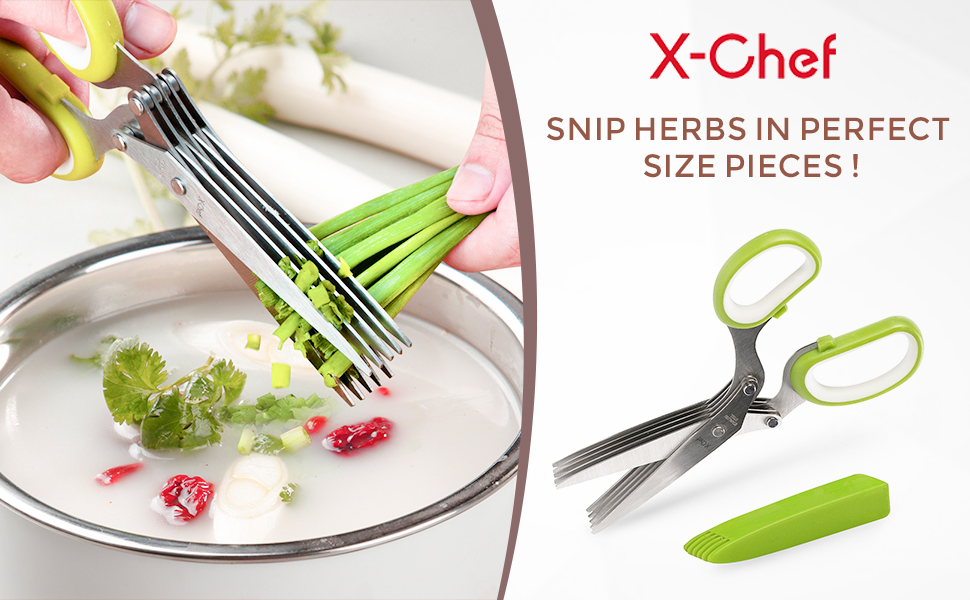
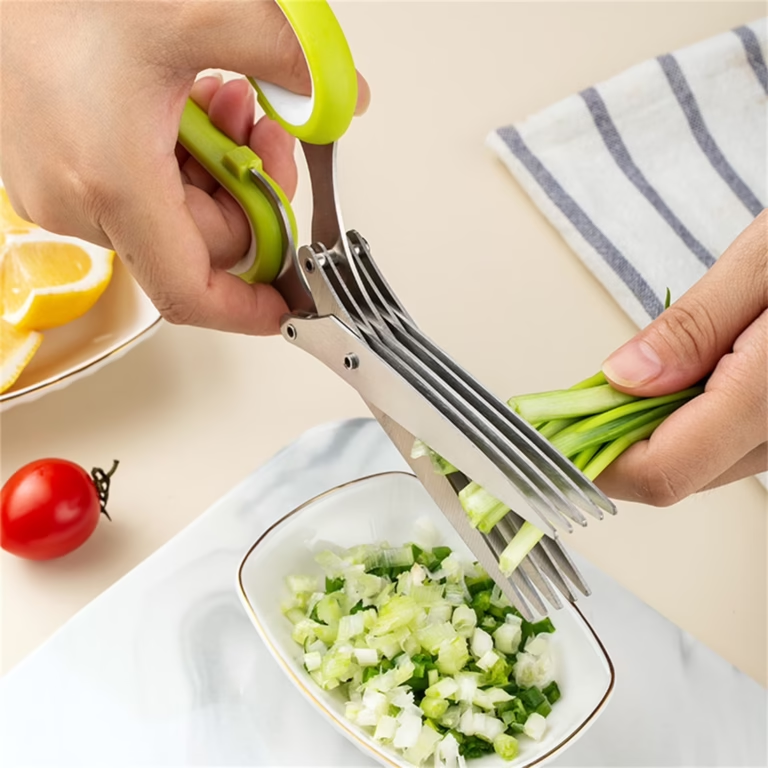
Image source: Web (Bing) / amazon.ca (Web image (fair-use with source credit))
Quick Answer
The best herb scissors for home cooks feature five sharp stainless steel blades, soft grip handles, and an included cleaning comb. Three blade models are easier to clean but cut slower. Five blade models deliver uniform chiffonade strips in seconds.
Avoid seven blade models because food jams easily between the tight blades. Choose a pair with a disassembling hinge for deep cleaning.
Why Home Cooks Actually Need Herb Scissors
Standard kitchen shears work well for spatchcocking a chicken or snipping parchment paper. They fail miserably when you try to cut delicate greens. The wide gap between two thick blades crushes soft herbs before it cuts them.
Herb scissors solve this by stacking three to five thin blades parallel to each other. This design creates a scissor-like cutting action but distributes the pressure across multiple edges at once. You get a clean, uniform chiffonade in a single snip.
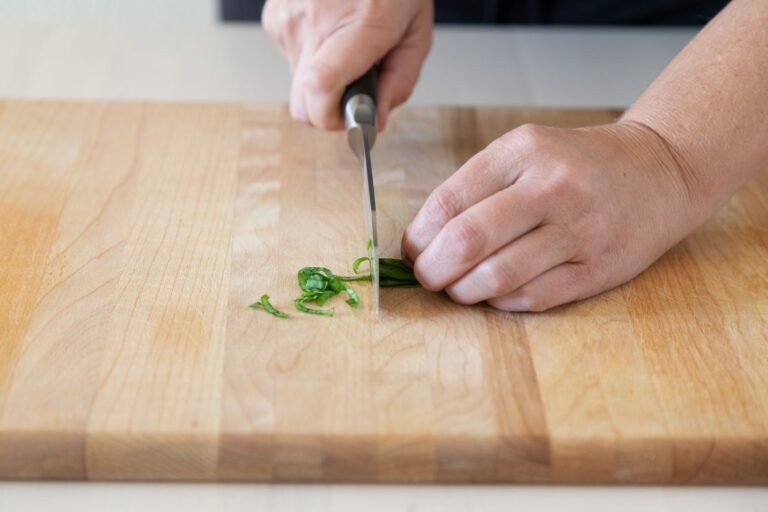
A chiffonade is a culinary technique where leaves are stacked, rolled, and sliced into fine strips.
If you cook with fresh herbs regularly, this tool saves real time. Mincing a bunch of scallions with a knife takes a few minutes. Snipping them with a 5-blade shear takes seconds.
The tool also keeps your fingers away from the cutting edge, which is a nice safety bonus for quick prep work.
The Quick Answer: Which Herb Scissors Are Best?
We covered the short answer above, but let's look at the specific traits that make one pair superior to another. The market is flooded with cheap imitations that look identical to good shears but fail within weeks.
In our research, the best models share four distinct features. They use 400-series stainless steel, which offers decent corrosion resistance without becoming too brittle to sharpen. They have soft grip handles that reduce hand fatigue during extended prep.
They include a dedicated cleaning comb that fits perfectly between the blade gaps. Finally, they feature a pivot screw that can be tightened or loosened. A loose pivot joint bends the blades apart under pressure, so adjustability is mandatory.
If you want to avoid rusty blades and jammed greens, look for those four traits. We will break down exactly how these features function in the next section.
How Herb Scissors Work (And Why Blade Count Matters)
Understanding the mechanics helps you choose the right configuration. Not all multi-blade shears perform the same way, and the blade count dictates exactly what the tool can do.
3-Blade vs. 5-Blade vs. 7-Blade Designs
Three-blade scissors function much like heavy-duty standard shears. They have a wider gap between the blades, making them incredibly easy to wipe out. They are best for tough, woody herbs like rosemary or thyme.
However, they cut less per snip, so you will be working a bit longer.
Five-blade scissors are the sweet spot for home cooks. They slice through delicate basil, dill, and chives in one motion. The spacing is tight enough to create fine strips but wide enough to clean without specialty tools.
This is the configuration most users prefer for general meal prep.
Seven-blade scissors look impressive but present a major functional flaw. The gap between blades is too narrow for herbs to pass through cleanly. Soft leaves compress into a wet paste between the tight metal.
Stick to the five-blade models for the best results.
Micro-Serrated vs. Straight Edge Blades
Blade edge type matters more than you might think. Micro-serrated edges grip the leaf as you squeeze. This prevents the herb from sliding out from the blades before the cut finishes.
They are excellent for round, slick leaves like basil or sage.
Straight edges provide a cleaner slice but require a tighter grip. If the tension on the pivot joint is too loose, straight blades will slide right off tough herbs. If you choose straight edges, ensure the pivot screw is tight before you start cutting.
Side-by-Side Comparison: Top Herb Scissor Styles
Let's compare the two most common configurations side by side. This will help you decide which style fits your cooking habits.
| Feature | 3-Blade Shears | 5-Blade Shears |
|---|---|---|
| Best For | Tough herbs, scallions | Delicate herbs, chives |
| Cutting Speed | Slower, more snips required | Fast, single snip cuts |
| Ease of Cleaning | Very easy, wide gaps | Requires a cleaning comb |
| Blade Spacing | Wide, prevents jamming | Tight, prone to trapping debris |
| Pivot Tension | Less critical | Critical to prevent bending |
As of 2026, 5-blade shears dominate the market for home cooks because they handle the most common kitchen herbs efficiently. However, if you primarily cook with hardy herbs, the 3-blade option remains a solid, low-maintenance choice.
The Real-World Pros and Cons of Herb Scissors
No kitchen tool is perfect, and herb scissors come with distinct trade-offs. Understanding these strengths and weaknesses helps you decide if they deserve space in your drawer.
What We Love
- Speed: They slice through a dense bunch of cilantro in seconds. A chef's knife simply cannot match that pace for repetitive mincing.
- Uniform Cuts: The fixed blade spacing ensures every piece is the exact same width. This gives you a professional chiffonade without needing advanced knife skills.
- Less Bruising: Because the thin blades slice rather than crush, delicate herbs like basil stay green and fresh-looking on the plate.
- Safety: Your fingers stay nowhere near the cutting edges. This makes them a great option for cooks who feel uncomfortable with a traditional mezzaluna or rocking knife.
The Drawbacks
- Cleaning Frustrations: Food inevitably traps between the tight blades. Without the included cleaning comb, getting herb paste out of the gaps is a frustrating chore.
- Blade Bending: If you try to cut a thick stem or root vegetable, the blades will separate or bend. They are strictly for tender greens.
- Hinge Rust: The pivot joint traps moisture. If you do not dry it immediately, standard 400-series steel will rust.
How to Choose the Right Pair for Your Kitchen
Choosing the right pair comes down to what you cook most often. Use this quick guide to match the tool to your specific cooking habits.
Best for Delicate Herbs (Basil, Cilantro, Chives)
If you make a lot of pesto, fresh salsas, or Asian noodle dishes, you need a 5-blade pair with micro-serrated edges. The serrations grip those slippery, tender leaves. Look for soft-grip handles to prevent hand fatigue when processing large bunches of soft greens.
Best for Tough Herbs (Rosemary, Thyme)
If you cook roasts or hearty stews, a 3-blade pair is your best bet. The wider spacing accommodates woody stems without jamming. Straight edges work well here because you will be cutting fibrous material that needs a clean slice.
Step-by-Step: How to Use Herb Scissors Without Bruising Your Herbs
Using these shears is straightforward, but proper technique ensures your herbs stay vibrant and unbruised. Follow these steps for the best results.
- Wash and Dry Thoroughly: Wet herbs stick to the blades and clump together. Pat them completely dry with a towel before snipping. Wet leaves slide around and create a messy paste.
- Bunch the Stems: Gather the herbs into a tight bundle. Hold them from the stem end, leaving the leaves exposed at the top. You want to hold the stems firmly so the leaves do not shift during the cut.
- Snip From the Tips: Start cutting from the leaf tips and work your way down. Never try to cut through the main stem with multi-blade shears. The thick stem will bend the blades apart.
- Use Short, Quick Snips: Do not squeeze the handles all the way down in one slow motion. Use quick, short bursts to let the cut herbs fall cleanly into your prep bowl.
Common Mistakes to Avoid When Using Herb Shears
Even with the right tool, a few bad habits will ruin your herbs and your scissors. Avoid these common errors.
- Cutting Over a Hot Pan: Steam rises and instantly wilts the herbs on the blades. It also condenses on the metal, leading to rust in the pivot joint. Always cut over a cutting board or bowl.
- Using Them as General Kitchen Shears: Never use herb scissors to open plastic packaging or cut parchment paper. These actions dull the precision edges quickly. Reserve them strictly for greens.
- Putting Them in the Dishwasher: The high heat and harsh detergent damage the pivot joint and promote oxidation. Even if the manufacturer claims they are dishwasher safe, hand washing is always the better practice. The NSF Foundation highlights proper cleaning and drying of food prep tools to prevent cross-contamination, which directly applies to keeping blade crevices free of trapped organic matter.
Cleaning and Maintenance: Keeping Your Blades Sharp and Rust-Free
Proper maintenance extends the life of your herb scissors indefinitely. The biggest complaint about these tools is the cleaning process, but it is manageable if you do it right.

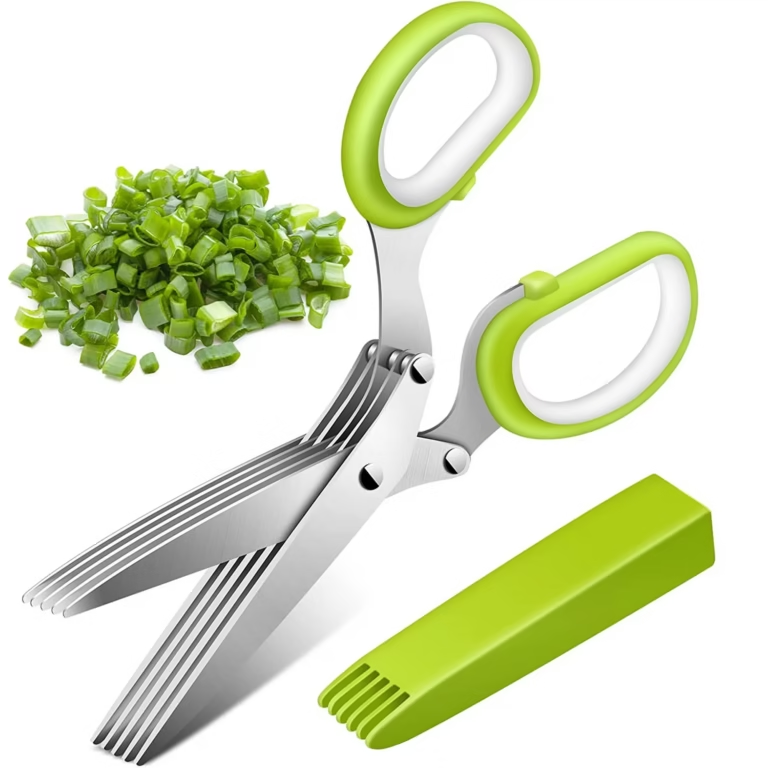
Image source: Web (Bing) / amazon.co.uk (Web image (fair-use with source credit))
First, use the included plastic cleaning comb immediately after you finish cutting. Slide the comb through the blades from the pivot to the tip while holding the scissors open under running water. This pushes trapped greens out before they dry and harden.
If your model lacks a comb, use a wooden skewer or a stiff bottle brush. Never use a metal knife to pick out debris, as it will scratch the blade faces and create crevices for future food to stick.
Next, dry the blades entirely. Shake out the excess water, then wipe the blades down with a dry towel. Pay special attention to the pivot joint, where moisture hides.
Leave them open to air dry completely before putting them away.
If your scissors have a disassembling hinge, take them apart once a week for a deep clean. Wash each blade individually, dry them, and reassemble. A drop of food-grade mineral oil on the pivot screw keeps the action smooth and prevents oxidation.
Herb Scissors vs. A Chef's Knife: When to Use Which
You might wonder if you really need another kitchen gadget. Let's compare herb scissors directly to a standard chef's knife.
| Feature | Herb Scissors | Chef's Knife |
|---|---|---|
| Prep Speed | Very fast for soft herbs | Slower, requires rocking motion |
| Skill Required | Zero, just squeeze | Requires proper claw grip technique |
| Cuts Woody Stems | No, will bend blades | Yes, easily slices through stems |
| Cleaning | Moderate, requires a comb | Simple, quick wipe and rinse |
| Versatility | Only for tender greens | Infinite kitchen uses |
Use herb scissors when you have large quantities of soft herbs to process quickly. They shine during meal prep or when finishing a dish with fresh garnish.
Use a chef's knife when you need to chop a mirepoix or when you are cutting through thick, woody stems. A good knife remains the most versatile tool in your kitchen. Herb scissors are a specialized complement, not a replacement.
Cost vs. Value: What Should a Good Pair Cost?
You do not need to spend a fortune to get a reliable pair of herb shears. In our research, the sweet spot for a quality 5-blade model sits between $10 and $25.
Cheaper models under $10 often use softer, lower-grade steel. They bend easily and the pivot joints fail quickly. You will end up replacing them within a year.
Models over $25 often add premium handle materials like silicone or come with elaborate storage blocks. While they look nice on the counter, the cutting performance rarely justifies the price jump. The blades on a $15 pair and a $40 pair function almost identically.
Look for a mid-range option that includes a cleaning comb and features a standard stainless steel construction. If you lose the comb, replacements are cheap or you can use household items like skewers.
Expert Tips for Getting Perfect Chiffonade Cuts
A few professional habits will elevate your herb prep. Follow these tips for flawless results every time.
Chill your herbs first. Wash the herbs, dry them, and pop them in the fridge for ten minutes before cutting. Cold leaves are slightly stiffer, making them easier to slice cleanly without folding or bruising.
Keep the tension tight. Check the pivot screw before you start. If the blades feel loose, the scissors will separate and tear the leaves instead of slicing them. Tighten the screw until the blades meet firmly.
Rotate your bowl. As you snip, the cut herbs pile up in one spot. Rotate your collection bowl as you work to distribute the herbs evenly. This prevents a large mound from blocking your view of the blades.
Frequently Asked Questions About Herb Scissors
Can I use herb scissors to cut green onions?
Yes, you can. Green onions, also known as scallions, are actually one of the best foods to cut with these shears. Their hollow, tubular shape fits perfectly between the blades, and the scissors slice them into uniform rounds much faster than a knife.
Are herb scissors dishwasher safe?
Most manufacturers claim their scissors are dishwasher safe on the top rack. However, high heat and harsh detergents degrade the pivot joint and promote rust over time. We recommend hand washing them immediately after use to keep the blades sharp and the hinge rust-free.
What is the best way to sharpen herb scissors?
Sharpening multi-blade scissors is difficult because of the tight spacing. You can run a sharpening rod through the gaps, but it is imprecise. It is often better to use a dedicated knife sharpener on the flat outside edge of the blades if the hinge disassembles completely.
Do herb scissors work on all types of herbs?
They do not work on all herbs. They excel on soft, leafy greens like basil, cilantro, and dill. They fail on herbs with thick, woody stems like rosemary or mature thyme.
Trying to cut woody stems will bend the blades and ruin the tool.
How do I stop herbs from turning black when cutting?
Herbs turn black when they are bruised by crushing rather than slicing. To prevent this, ensure your blades are sharp and your pivot joint is tight so the blades meet cleanly. Also, always wash and thoroughly dry the herbs before cutting, as wet leaves bruise much faster.
Frequently Asked Questions About Herb Scissors
Can herb scissors cut green onions or scallions?
Yes, they are excellent for green onions. The hollow, tubular shape of scallions fits perfectly between the thin blades. You get uniform rounds in seconds without the veggies rolling away.
Will a 5-blade shear work on thick kale stems?
No, you should never use them on thick, fibrous stems. Trying to cut woody greens will bend the thin metal. Stick to a chef's knife for tough produce.
Do herb scissors dull quickly?
They dull faster than standard kitchen shears because the blades are much thinner. Cutting only soft greens keeps them sharp longer. Avoid using them on paper or plastic packaging.
Is a 7-blade shear better than a 5-blade shear?
No, 7 blades is usually too many for home prep. The gap between the blades is too narrow, and soft herbs jam into a paste. A 5-blade model gives you the best balance of speed and clearance.
Can I put herb scissors in the dishwasher?
You should avoid the dishwasher even if the package says they are safe. High heat and harsh detergent degrade the pivot joint. Hand wash and dry them immediately to prevent rust.
Frequently Asked Questions About Herb Scissors
What is the best way to store herb scissors?
Keep them in a dry drawer or on a magnetic knife strip. Always store them with the included blade cover if your model came with one. This protects the sharp edges from dulling against other utensils.
Can I use herb scissors to shred lettuce for salads?
You can, but a chef's knife works much better. Lettuce leaves are thick and hold a lot of water. Snipping them with multi-blade shears will cause the leaves to bruise and turn brown quickly.
Are spring-loaded herb scissors better than standard handles?
Spring-loaded handles reduce hand fatigue if you process huge batches of herbs. However, they have more moving parts that can trap food and rust. Standard scissor handles are easier to clean thoroughly.
How do I fix stiff or stuck pivot joints on herb shears?
Pivot joints get stiff when herb residue dries inside the hinge. Soak the joint in warm water for ten minutes. Scrub the area with a stiff brush, dry it completely, and add a drop of food-grade mineral oil.
Do herb scissors work well for garnishing plates?
They are excellent for finishing dishes with fresh greens. Snipping a few chives or dill sprigs directly over a plate gives you a precise, professional garnish. Just keep the blades dry to prevent wilting the leaves.
Final Recommendation: The Best Pick for Home Cooks
Based on our research, a 5-blade stainless steel shear with a soft-grip handle is the best pick for home cooks. It strikes the perfect balance between cutting speed and maintenance. You get fast, uniform chiffonade cuts without the jamming issues of 7-blade models.
Make sure the pair you choose includes a cleaning comb and features an adjustable pivot screw. These two details separate a useful kitchen tool from a frustrating gadget. Stick to the $15 to $25 price range for reliable 400-series steel that resists rust.
If you primarily cook with woody herbs, opt for a 3-blade pair instead. The wider gaps handle tough stems easily without bending. For everyone else, the 5-blade model is the ideal addition to your prep routine.