
Cut Through Confusion: Choose Perfect Herb Scissors
You know the frustration. You're mid-recipe, the cilantro needs chopping, and out comes the cutting board, the chef's knife, and ten minutes of fiddly mincing that leaves bruised leaves and a mess. Or worse, you grabbed a cheap pair of "herb scissors" online, and they crushed the basil, rusted after three washes, and now live in the back of a drawer.
Learning how to choose the right herb scissors is the difference between a tedious chore and a two-second snip.
The market is flooded with options, from $8 impulse buys to $50 professional tools. As of 2026, the range is wider than ever, but the core decision boils down to a few non-negotiable factors. Manufacturer specifications and aggregate reviews point to blade count, steel quality, handle ergonomics, and cleaning ease as the four pillars that separate a useful tool from a waste of drawer space.
Let's break down what actually matters, so you can buy once and never look back.
Quick Answer
Choose 5-blade, stainless steel herb scissors with a comfortable, non-slip handle and a locking mechanism. Prioritize models you can fully disassemble for cleaning. Hand-washing extends the life of any pair.
Avoid multi-blade designs with tight, impossible-to-clean gaps between blades.
Why Your Current Herb Scissors Are Probably Wrong for You
Most people don't buy herb scissors; they receive them as a gift or grab the cheapest option on a whim. That's how you end up with a frustrating tool. The biggest complaint across thousands of user reviews isn't sharpness.
It's the nightmare of cleaning. Food gets trapped between the blades, dries into a green crust, and no amount of rinsing gets it out.
Another silent killer is rust. Many budget pairs use low-grade stainless steel that pits and browns within weeks. The handle matters too.
Hard, slippery plastic becomes a pain point when your hands are wet or you're cutting a large batch. And let's not forget the crushing problem. If the blade gap is too narrow or the geometry is wrong, soft herbs like basil and mint get squashed instead of sliced, which ruins both texture and flavor.
The good news? These are all avoidable. You just need to know what to look for before you click "add to cart." The hidden pitfalls are predictable, and the fixes are simple once you understand the design.
Blade Count and Design: Straight vs. Curved vs. Rotary
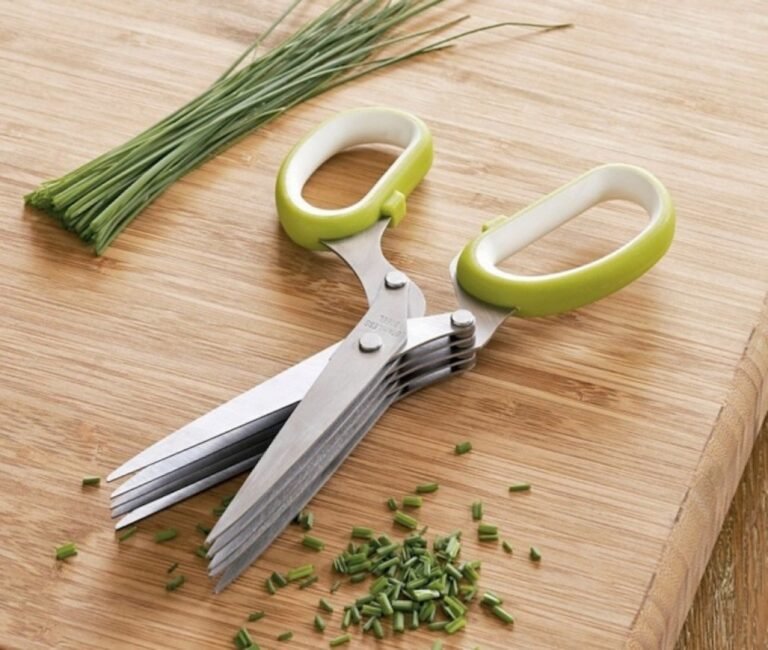
Let's start with the business end. Standard kitchen shears have two blades. Herb scissors typically have three, five, or even seven.
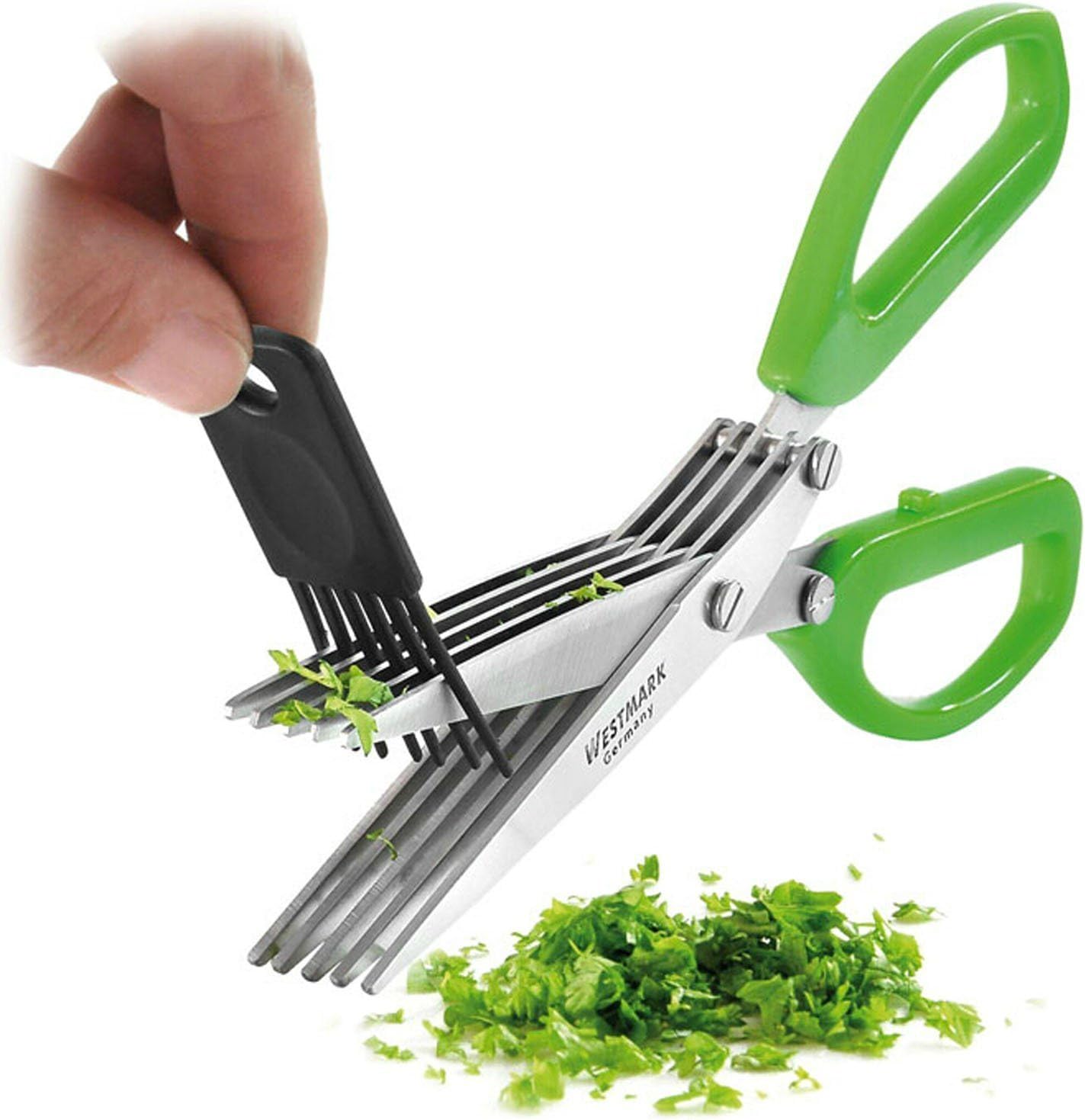
More blades mean more cuts per squeeze. A 5-blade pair produces four strips of herb in a single snip. That's the efficiency boost you're paying for.
But more blades also mean more surface area for herbs to stick to, and more gaps to clean.
As for shape, you've got three main options:
Straight blades are the workhorse. They're easiest to clean, simplest to sharpen, and ideal for snipping directly over a pot. The straight edge lines up perfectly with the edge of a cutting board, which is great for uniform pieces.
If you only buy one pair, make it a straight 5-blade model.
Curved blades rock back and forth like a mini mezzaluna. This motion gives you a gentle rocking cut that some cooks find more natural, especially for larger batches. The curve also helps guide herbs toward the center, reducing scattering.
However, curved blades can be trickier to clean and sometimes struggle with thicker stems.
Rotary herb scissors are the wild card. They feature a circular blade that spins as you rock the tool back and forth, slicing herbs continuously. They're efficient, but they're also bulkier, harder to sharpen, and more expensive.
Reviews are polarized. Some users love them; others find them gimmicky.
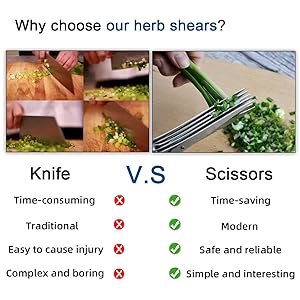
For most home cooks, straight 5-blade scissors are the sweet spot. They deliver speed without complexity.
Handle Ergonomics and Grip: The Difference Between Pleasure and Pain
Blades get the glory, but handles determine whether you'll actually use the tool. A poorly designed handle causes hand fatigue within minutes. That's not an exaggeration.
Repetitive strain is real, especially if you're prepping herbs daily.
Look for handles made from TPR or silicone. These materials provide a soft, grippy surface even when wet. Hard ABS plastic gets slippery fast.
The shape matters too. Finger loops offer a secure fit but can feel restrictive if they're too small. Open, straight handles are more forgiving and easier to grip for people with larger hands or arthritis.
Weight distribution is another hidden factor. A well-balanced pair of scissors feels almost weightless in your hand. If the pivot point sits toward the back, the tool feels blade-heavy and tiring.
If it's centered, you get better control. A light pair (under 5 ounces) is generally easier to maneuver for extended periods.
The locking mechanism is worth checking as well. A good lock keeps blades covered during storage and protects your fingers when reaching into a drawer. Spring-loaded handles with a built-in tension adjuster are a bonus, since they reduce effort and let you dial in the cutting action.
Blade Material and Build Quality: What's Worth Paying For
Now we get to longevity. Blade material dictates rust resistance and how long the edge holds. The most common options are 420 stainless steel, 440 stainless steel, and high-carbon steel.
420 stainless steel is the budget standard. It's rust-resistant and cheap, but the edge dulls faster. It's fine for occasional use, but don't expect years of heavy-duty performance.
Most sub-$20 herb scissors fall into this category.
440 stainless steel is a step up. It's harder, holds an edge longer, and offers better corrosion resistance. This is the sweet spot for most home cooks.
You can find 440 steel in mid-range models between $20 and $40.
High-carbon steel takes sharpness seriously. It can achieve a razor edge and stays sharp for a long time. The trade-off?
It requires more maintenance. High-carbon steel rusts more easily if you don't hand-wash and dry it immediately. It's the choice for professionals who value cutting performance above all else.
Ceramic-coated blades are a newer trend. The coating reduces sticking and fights rust. It's a nice feature, but the coating can chip over time, which weakens the blade.
If you go this route, treat the scissors gently.
The pivot joint matters too. Screw-based pivots let you tighten the action as it loosens. Riveted pivots can't be adjusted and often fail after a year or two.
When you're comparing models, check whether the joint is a screw or a rivet. It's a small detail that affects the tool's lifespan significantly.
Cleaning and Maintenance: The Real Test of Any Herb Scissors
Here's the honest truth. No matter how good the blades are, if you dread cleaning them, you won't use them. Herb scissors with five blades have tight gaps that trap parsley and basil like a magnet.
If you can't get the bits out, the tool becomes a bacteria haven and a smell magnet.
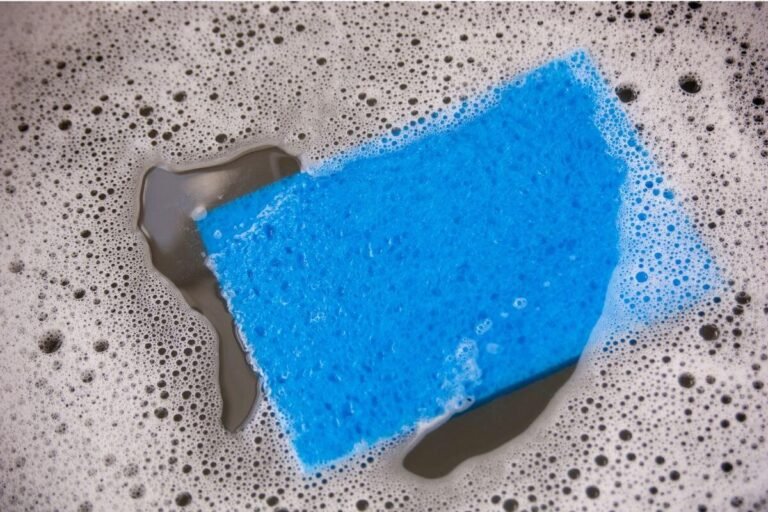
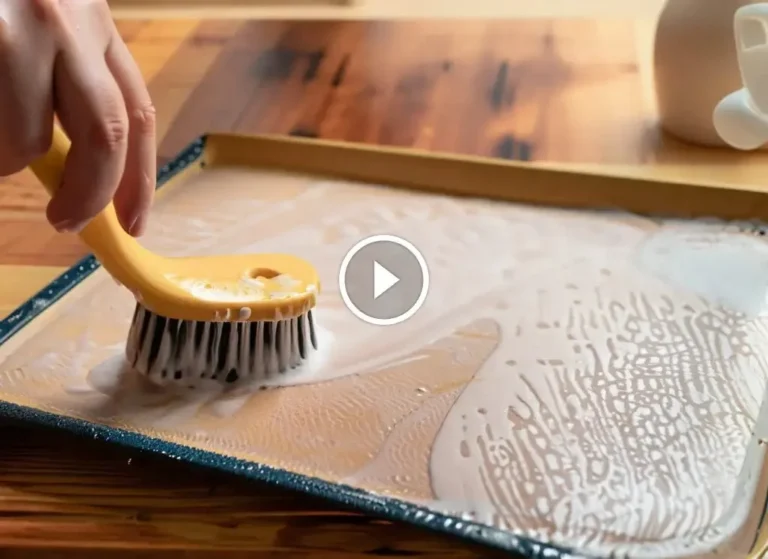
Hand-washing is the gold standard. Rinse immediately after use, then wash with warm soapy water. A soft brush, like a baby bottle brush, works wonders for dislodging stuck pieces. Dry thoroughly with a towel.
This routine takes about two minutes and preserves both the steel and the pivot joint.
The dishwasher is risky. Even models labeled "dishwasher-safe" degrade faster in the wash cycle. The high heat and harsh detergents strip coatings and accelerate rust. If you value your scissors, hand-wash them.
That's the simplest piece of maintenance advice you'll get.
Deep cleaning tip: Loosen or remove the pivot screw (if it's a screw type) to separate the blades. This gives you full access to every surface. Most food debris lodges at the base of the blades, right near the pivot.
Rust, when it appears, starts at the edges. If you see brown spots, scrub them with a mild abrasive pad and dry the blades immediately. For dull blades, you have a few options.
Some brands sell replacement blades. Others can be sharpened with a fine whetstone, though it's tricky with multi-blade designs. You might just replace the scissors if they're in the budget range.
Regular maintenance extends a pair from 2 years to 10 years easy. It just takes a little discipline.