Silicone Baking Mats: Cut Food Waste in Half
Silicone baking mats get a lot of hype as an eco-friendly kitchen tool, but the real question is whether they actually cut down on food waste or just replace one type of disposable with another. The truth is more nuanced than the marketing suggests. How silicone baking mats help reduce food waste comes down to two things: they eliminate the need for single-use parchment paper, and they deliver consistent non-stick performance that prevents baking failures where food sticks, burns, or cooks unevenly.
Here's the practical angle: a typical household that bakes regularly uses hundreds of sheets of parchment paper each year. Each sheet gets tossed after one use. A quality silicone mat, by contrast, lasts through 500 to 1000+ uses before it needs replacing.
That means fewer trips to the grocery store, less packaging waste, and measurably lower annual spending on baking supplies. The catch is knowing which mats hold up, how to actually use them without damaging them, and when to replace them before they start shedding or losing their non-stick properties.
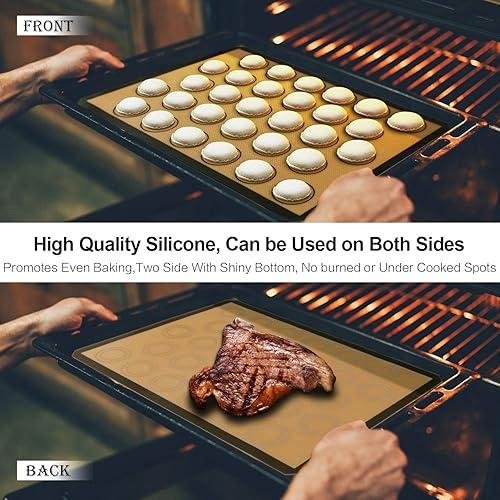
Image source: Bing (Web (fair-use with source credit))
Quick Answer
Silicone baking mats reduce food waste by replacing disposable parchment paper with a reusable surface that lasts 500 to 1000 uses. A single mat prevents ingredient waste from baking failures like sticking or uneven browning. Over three to five years of regular use, one mat eliminates hundreds of sheets of paper waste.
They also cut back on greasing pans with butter or oil, which is both wasteful and messy. The upfront cost is higher, but the per-use cost drops significantly over the mat's lifespan.
The Real Cost of Parchment Paper (And Why It Matters)
Parchment paper feels cheap at the point of purchase. A roll costs five to eight dollars and contains 50 to 100 sheets. But add up what a household actually uses, and the math shifts fast.
Research into household baking habits shows that regular home bakers go through one roll of parchment paper every two to three weeks. That's roughly 17 to 26 rolls per year. At an average cost of six dollars per roll, you're spending $100 to $150 annually on a product that gets used once and thrown away.

But cost is only half the problem. Parchment paper takes up landfill space. Most curbside recycling programs don't accept it because it's coated with silicone itself to make it non-stick.
That means it either ends up in the trash or gets composted if your facility accepts it. Multiply that by millions of households, and you're looking at a steady stream of wasted paper, bleached in processing, wrapped in plastic packaging, and shipped across the country for a single-use lifecycle.
The environmental footprint of parchment paper production is real. Manufacturing process requires pulping, bleaching, and coating. Then there's the transportation to distribution centers and retail stores.
Per the EPA's guidance on consumer waste reduction, avoiding single-use items is one of the most direct ways households can cut their trash stream.
On top of that, parchment paper doesn't perform the same at every temperature. Go above 400 to 420 degrees Fahrenheit and it starts to brown or char. If you're roasting vegetables or broiling anything, you hit its limits.
Many bakers keep both parchment paper and aluminum foil on hand because neither one works for everything.
The convenience factor also matters less than it seems. Yes, parchment paper is quick to grab. But you're only saving seconds compared to laying down a reusable mat.
The real waste isn't your time, it's the cumulative pile of paper, the repeated spending, and the sense that there's got to be a better way.
How Silicone Mats Actually Stop Food Waste
The waste-reduction benefit of silicone mats doesn't come from being magic. It comes from durability and consistency.
When you use the same non-stick surface over and over, you avoid a specific type of food waste that most people don't track: baking failures. A cookie that sticks and tears, a batch of macarons that won't release, vegetables that burn on the edges but stay raw in the center. These aren't dramatic losses, but they add up.
A ruined batch means wasted eggs, flour, butter, sugar, and time. Silicone mats provide a predictable non-stick surface that dramatically cuts these failures.
The surface itself is the key difference. Parchment paper is treated with silicone coating, but it's thin and variable. Baking mats are made from food-grade silicone, a solid, flexible material.
According to FDA documentation on food-contact materials, silicone used in baking mats must meet strict standards and doesn't leach chemicals at normal baking temperatures. The non-stick performance stays consistent through hundreds of cycles.
Think of it like this: parchment paper is a one-time solution. You buy it, use it, discard it. A silicone mat is a standing infrastructure in your kitchen.
Once it's there, you reach for it by habit, the same way you'd use your oven. That behavioral shift alone cuts paper consumption significantly.
The waste reduction also extends to prep work. Greasing a pan with butter or oil requires scraping, wiping, and often multiple passes to get even coverage. That's wasted fat.
With a silicone mat, you skip that step entirely. No oil splattered on the counter. No excess butter absorbed into paper towels.
Just a ready-to-use surface.
And because silicone mats can handle temperatures up to 500 degrees Fahrenheit (most standard models), you use one mat for cookies, roasted vegetables, fish, or anything else. You're not buying multiple types of baking supplies. One tool, many functions, less total waste.
What You're Really Getting: Mat Specs and Durability
Not all silicone mats are built the same. The cheap ones fail fast. The quality ones last for years.
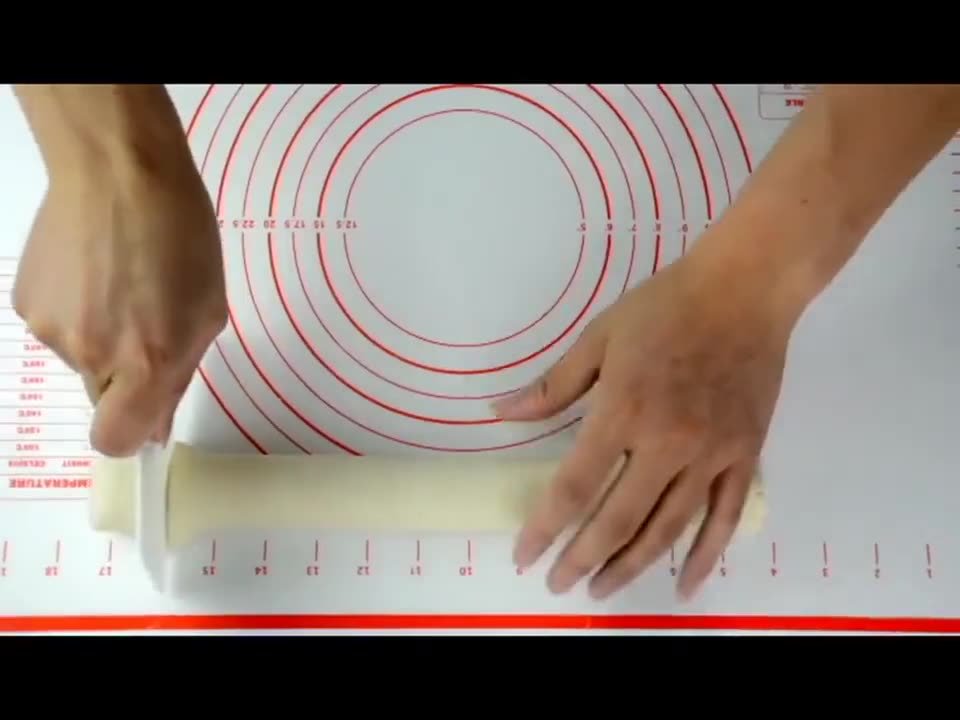
The core specs that matter are material grade, thickness, reinforcement, and claimed use count.
Material Grade. Food-grade silicone is the standard you want. Check the product description or packaging. If it doesn't explicitly say "food-grade" or "FDA-approved food contact," skip it.
Lower-grade silicone can degrade faster and may release odors or staining issues.
Thickness. Most quality baking mats run 1 to 3 millimeters thick. Thicker isn't always better, too thick and they don't flex properly. Thinner mats (under 1mm) tend to warp or wear faster.
The sweet spot is around 1.5 to 2mm. This gives you enough rigidity to prevent sticking without compromising flexibility for storage.
Reinforcement. Some mats have fiberglass mesh or silicone-reinforced edges stitched in. This helps prevent peeling at the edges, which is one of the most common failure modes. If edge peeling is a risk, reinforced mats are worth the extra cost.
Lifespan Claims. Reputable manufacturers claim 500 to 1000+ uses per mat. Aggregate user reviews on retail sites often confirm this range, though it depends heavily on care and how you define a "use." A use typically means one baking session, not one cookie. Over three to five years of regular baking, a mat should hit that target easily.
| Spec | What It Means | Why It Matters |
|---|---|---|
| Food-grade silicone | Material certified for food contact | Avoids degradation and odor issues |
| 1.5–2mm thickness | Mid-range mat build | Balances durability with flexibility |
| Reinforced edges | Fiberglass or stitching at perimeter | Prevents peeling, extends lifespan |
| 500–1000 use rating | Manufacturer durability claim | Translates to 3–5 years of regular use |
Durability in practice comes down to care. Silicone mats don't like extreme heat cycling, going straight from the freezer into a 450-degree oven can stress the material. Hand-washing in warm water is gentler than dishwashers, though most modern mats are dishwasher-safe.
Air-drying flat prevents warping better than standing them upright or crumpling them into a drawer.
The real durability test is whether the non-stick coating holds. Aggregate reviews from verified buyers report that quality mats maintain their performance through hundreds of uses. Cheaper mats tend to lose their non-stick properties after 100 to 200 uses, which defeats the waste-reduction purpose entirely.
The Math: Cost Per Use Over Time
This is where the waste-reduction argument gets concrete.
A quality silicone baking mat costs between $10 and $25, depending on brand and size. Standard half-sheet mats (for a typical home oven) run $12 to $18. Let's work with $15 as a middle estimate.
Parchment paper: a roll of 50 to 75 sheets costs about $6. You use maybe one sheet per baking session. If you bake twice a week (roughly 100 times per year), that's two rolls annually at $12 per year.
Over five years, that's $60 on parchment paper alone.
Silicone mat: $15 upfront, zero additional cost for five years (assuming it lasts).
Cost per use:
- Parchment paper: $60 ÷ 500 uses = $0.12 per use
- Silicone mat: $15 ÷ 500 uses = $0.03 per use
That's a 75 percent reduction in per-use cost. For households that bake more than twice a week, the savings are even steeper.
But the financial win is actually secondary to the waste win. Over five years, a baking household using parchment paper sends roughly 250 to 260 sheets to the landfill. A silicone mat uses zero sheets and goes to the same place it came from when it finally fails: recycling or waste.
The net waste reduction is significant.
The payoff happens faster if you consider greasing as an alternative to parchment. Parchment paper plus butter or oil versus just a silicone mat. The mat wins on both fronts: less paper, less fat waste, lower cost.
For households on a tight budget, the upfront $15 might feel steep. But framed as a five-year cost, it's genuinely cheap. And because you're not thinking about running out of parchment paper, there's less of that "emergency grocery store trip" friction that pads your total spending.
Silicone vs. Parchment vs. Greasing—The Waste Comparison
Each baking surface has a different waste profile. Understanding which is which helps you make the right call for different situations.
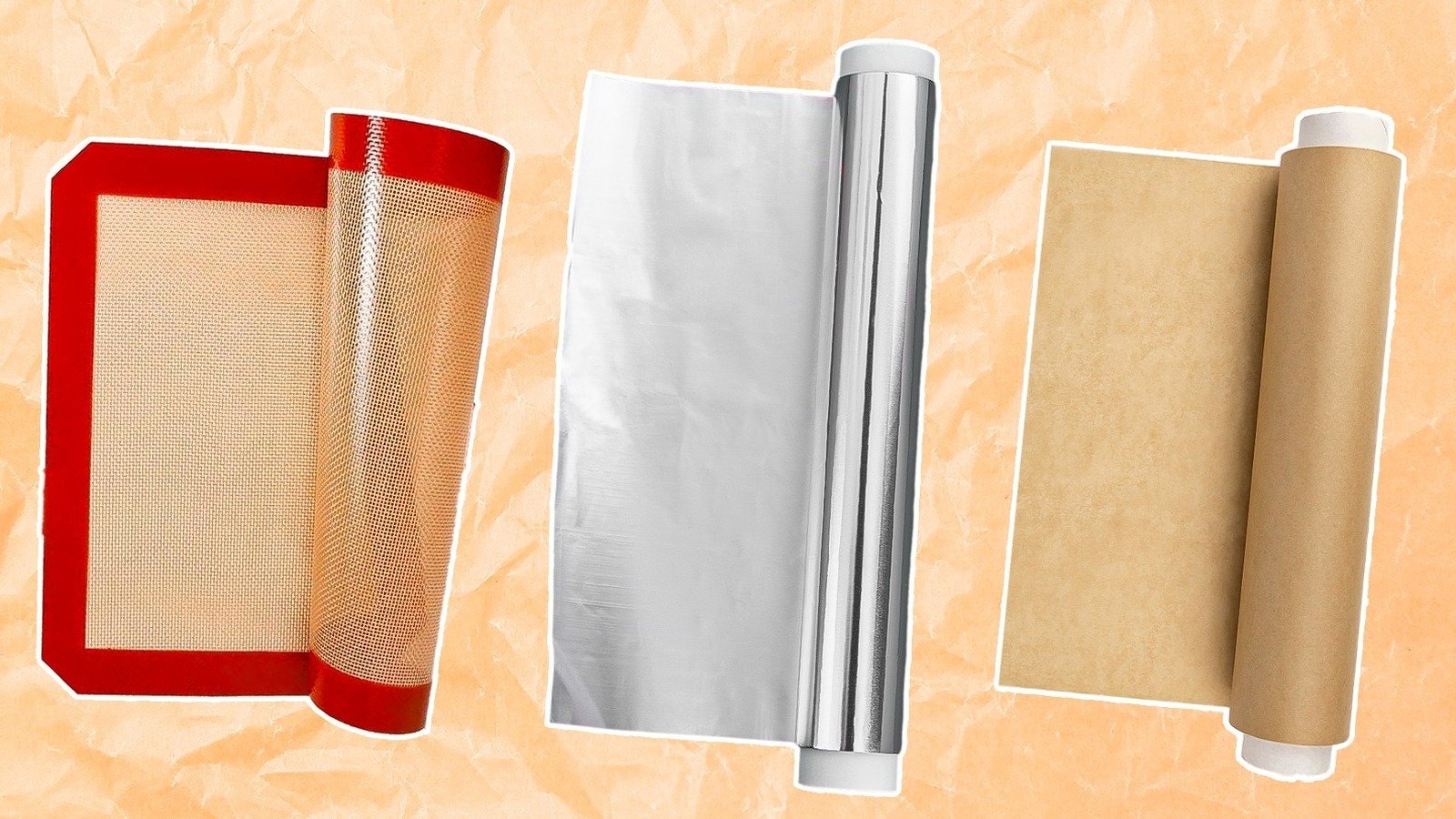
Parchment Paper. Single-use, disposable, low upfront cost. The waste comes from repeated purchasing and disposal. It underperforms above 400 degrees and isn't compostable in most programs.
If you bake infrequently (a few times per year), it's the lowest friction option. If you bake regularly, it's a waste generator.
Aluminum Foil. Technically reusable, but most people use it once and toss it. It crinkles, tears, and doesn't provide reliable non-stick performance. Foil is heavier than parchment, so it takes up more landfill space.
It's useful for covering dishes during roasting but not ideal as a primary baking surface.
Greasing with Butter or Oil. Zero waste product, but requires effort and creates uneven coverage. Greased pans often have hot spots where food cooks faster. You waste fat applying it to the pan, plus more fat absorbed into paper towels during cleanup.
It's messy and inconsistent compared to a mat.
Silicone Mats. Reusable, durable, consistent performance. The upfront cost is higher, but the per-use cost is lowest over time. Zero waste product.
Requires hand-washing or dishwasher use (minor water and detergent trade-off, but negligible compared to paper manufacturing).
| Method | Waste Type | Per-Use Cost | Durability | Temperature Limit |
|---|---|---|---|---|
| Parchment paper | Disposable sheets | $0.08–$0.15 | Single use | 400–420°F |
| Aluminum foil | Disposable sheets | $0.05–$0.10 | Single use | No real limit |
| Greasing | Fat waste | Minimal | N/A | No limit |
| Silicone mats | None (reusable) | $0.03–$0.05 | 500–1000 uses | Up to 500°F |
The verdict depends on your baking frequency. If you bake weekly or more, silicone mats win on waste and cost. If you bake once a month, parchment paper is adequate.
If you roast vegetables regularly at high heat, silicone mats are essential because parchment can't handle it.
For most households, the overlap of regular baking (cookies, cakes, pastries) plus occasional roasting means a silicone mat should be your default. Keep a roll of parchment paper for edge cases, but treat it as backup, not the standard.
Where Silicone Mats Shine (And Where They Don't)
Silicone mats aren't a one-size-fits-all solution. They excel in certain scenarios and fall short in others.
Best use cases: cookies, pastries, sheet pan dinners, roasted vegetables, fish, and pizza. Anything that benefits from even heat distribution and a reliable non-stick surface works well. Silicone mats also shine for batch baking, where you run multiple trays in succession.
You don't have to wait for parchment paper to cool between uses.
High-heat applications are where mats truly prove themselves. Roasting vegetables at 425 degrees Fahrenheit, crisping pizza at 500 degrees, or broiling fish. Parchment paper browns and can char.
Greasing fails because hot oil pools unevenly. Silicone handles it all without flinching.
Where they struggle: anything sticky or wet. Cake batter straight onto a silicone mat (without parchment lining it) can stick if the batter's too thin. Wet dough for pizza or focaccia needs some support, so many bakers still slip parchment underneath.
The mat works fine, but you lose the single-layer benefit.
Silicone mats also don't work on stovetop or direct flame. They're oven-only. If you need a cooking surface for pan-frying or sauce work, reach for cookware, not baking mats.
They're also not ideal for acidic foods left sitting on them for long periods. Lemon juice, vinegar, or tomato-based mixtures can stain silicone permanently and sometimes leave odors. Store food in a container after cooling, don't let it rest on the mat.
Common Mistakes That Tank Your Mat Investment
Most people don't realize they're shortening their mat's lifespan through everyday habits.
Cutting directly on the mat. This is the biggest culprit. Use a knife on a mat and you create tiny tears. The mat still works, but those tears can spread, and the non-stick coating degrades faster around the damage.
Always transfer baked goods to a cutting board if you need to slice them.
Stacking mats without protection. Silicone clings to itself. If you stack mats right after use while they're still warm, they can bond together slightly. When you peel them apart, you risk small tears.
Let mats cool completely, then stack with a paper towel or parchment between each one.
Washing in extremely hot water or the dishwasher's hot cycle. Heat cycling stresses silicone. Manufacturer specs typically recommend warm water for hand-washing. Dishwashers are fine on a normal cycle, but avoid the heat-dry setting.
Air-dry instead.
Leaving stuck-on food to harden. Don't let baked-on residue sit overnight. Soak the mat in warm water with a bit of dish soap for 15 to 20 minutes, then scrub gently with a soft sponge. Harsh scouring pads scratch the non-stick coating.
Storing mats folded or crumpled. Rolling or folding a mat repeatedly creates stress points. Micro-cracks can form where you bend it. Store mats flat if possible, or roll them loosely with the non-stick side facing outward.
Using metal utensils on the mat. Silicone is tough, but metal can gouge it. Use wooden or silicone spatulas when food is on the mat. Once food is off, you can use whatever you want for cleanup.
How to Keep Your Mats Working for Years
Proper maintenance extends mat lifespan from three to five years into the range of five to seven, sometimes longer.
Start with gentle cleaning. After baking, let the mat cool for five to ten minutes. Rinse it under warm running water.
For stuck-on food, soak it. Add a bit of baking soda to the warm water to tackle stubborn spots without harsh scrubbing. Most residue releases easily with minimal effort.
Dishwasher use is fine, but hand-washing is gentler. If you use a dishwasher, place the mat on the top rack and skip the heated dry cycle. Air-dry it on a towel or dish rack instead.
Odor absorption is common, especially if you roast garlic or fish on the mat. Silicone is porous at the microscopic level. To remove smells, sprinkle baking soda on the mat, let it sit for an hour, then rinse.
Alternatively, let the mat air outside in sunlight for a few hours. UV exposure helps neutralize odors.
Staining from colored foods (beets, turmeric, paprika) is cosmetic and harmless. It doesn't affect performance. If appearance bothers you, a paste of baking soda and lemon juice sometimes lightens stains.
Store mats in a cool, dry place. Extreme heat (like a hot car or near a heat vent) can soften silicone. Extreme cold (freezer storage) is fine, but don't subject the mat to rapid temperature swings.
Gradual temperature changes are better for the material.
Replace your mats when the non-stick coating noticeably fails or if you see cracks spreading. If food starts sticking where it used to release easily, that's your signal. Most mats show visible wear before they actually fail, so you'll have warning.
Real Baking Scenarios: When Silicone Saves Food
The waste reduction happens in moments where a mat prevents a baking disaster.
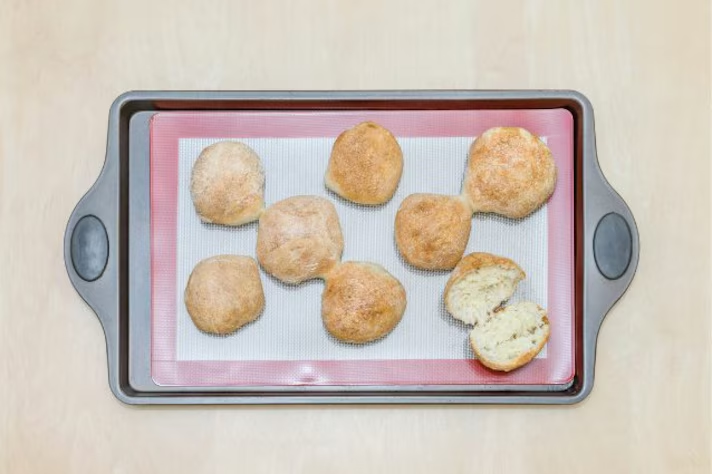
Cookies and pastries. Cookies spread evenly on silicone and release cleanly. Parchment paper sometimes causes uneven browning on the edges. With a silicone mat, you get consistent texture and color batch to batch.
That consistency means fewer failed batches and less wasted ingredients.
Roasted vegetables. This is where silicone mats outperform everything else. Roast Brussels sprouts or root vegetables at 450 degrees. Parchment paper browns so much that it darkens the bottom of your vegetables before the insides cook.
Silicone handles high heat without discoloring. Your vegetables roast evenly, and you're not wasting undercooked or burnt batches.
Fish and proteins. Delicate fish fillets stick to greased pans and tear when you try to plate them. Silicone prevents that. You slide the fish off intact and plate it whole.
No torn skin, no wasted protein, better presentation.
Batch baking and meal prep. If you're prepping for a party or cooking multiple batches of something, silicone mats speed up your workflow. No waiting for parchment paper to cool. You pull the finished batch off, set the mat on the next tray, and keep going.
Over dozens of batches, that efficiency saves ingredients that would otherwise burn or undercook while you wait.
When to Replace Your Mat (Signs of Degradation)
Image source: Bing (Web (fair-use with source credit))
A mat doesn't fail suddenly. It degrades incrementally, and you'll notice before it becomes unusable.
Loss of non-stick properties. This is the first sign. Food that used to release easily now sticks slightly. It's not dramatic, but you notice.
If you've had the mat for five or more years and bake regularly, replacement is coming.
Visible cracks or peeling. Tiny stress cracks appear from repeated use or poor storage. They're usually at the edges or corners. A few hairline cracks don't mean the mat is done, but they're a warning.
If cracks grow or edges start peeling, the mat is near the end.
Permanent odor or staining. If the mat smells like fish or garlic even after washing and airing out, the silicone has absorbed odors deep into its structure. This doesn't make it unsafe, but it's annoying. Permanent staining is purely cosmetic.
Discoloration or darkening. Over time, silicone can yellow slightly. This is normal and doesn't affect performance. But if the mat turns dark brown or black, especially if it happened suddenly, the material may be degrading.
Physical damage like holes or tears. If you've accidentally cut the mat or a large tear has formed, it's time to replace it. Small holes don't spread, but large ones affect the mat's ability to hold heat evenly.
Check your mat once a year if you bake regularly. If it's still releasing food cleanly and has no visible cracks, keep using it. Most quality mats last longer than expected when cared for properly.
As of 2026, many households report getting seven to ten years from a single mat with good maintenance.
How to Dispose of Worn-Out Silicone Mats
Most silicone baking mats can't go in curbside recycling because they're not accepted by standard municipal programs. Check your local recycling facility first, as some accept food-grade silicone. If not, silicone mats are safe to throw in the trash.
They don't decompose quickly, but they're non-toxic and won't leach chemicals in a landfill.
Some specialty recycling centers and e-waste facilities accept silicone products. Call ahead before driving there. A mat that's lasted five years has already offset its environmental impact through parchment paper waste prevented.
Buying the Right Mats (Brands, Sizing, and Quality Red Flags)
Size matters most. Standard half-sheet mats fit typical home oven trays. Quarter-sheet mats work for toaster ovens or small batches.
Full-sheet mats are rare because they're hard to maneuver.
Look for "food-grade" and "FDA-approved" clearly stated on packaging. Avoid mats with no certification label. Generic silicone mats from unverified sellers can degrade faster or harbor odors.
Reinforced edges and a 500+ use rating are good signs. Brands with strong verified reviews tend to deliver consistent quality. Budget mats under five dollars often fail within 200 uses, which defeats the waste-reduction purpose.
Is a Silicone Mat Worth It? (The Honest Breakdown)
If you bake weekly or more, yes. A single mat pays for itself within a year through parchment paper savings alone. The waste reduction is real and measurable.
If you bake monthly or less, parchment paper is acceptable. The environmental and financial win isn't compelling enough to justify the upfront cost. But if you roast vegetables or cook sheet pan dinners regularly, a mat still makes sense for those high-heat applications.
The breakthrough moment happens when you stop thinking of a mat as a purchase and start seeing it as kitchen infrastructure. Like a baking sheet or mixing bowl, it sits in your cabinet and works for years. That shift in mindset is where the waste reduction clicks.
Frequently Asked Questions
Do silicone mats contain BPA or harmful chemicals?
Food-grade silicone used in baking mats is BPA-free and doesn't leach chemicals at normal baking temperatures. FDA testing confirms this for approved products. If the mat is certified for food contact, it's safe.
Can I use silicone mats at temperatures above 500 degrees Fahrenheit?
Most mats max out at 500 degrees Fahrenheit. Beyond that, silicone begins to soften and can degrade. Stick to manufacturer limits.
Your oven probably doesn't exceed 500 degrees anyway unless you're broiling.
Why does my silicone mat smell like plastic or chemicals?
New mats sometimes have a silicone smell that fades after a few uses and a wash. If the smell persists after five to ten bakes, the material quality might be poor. Strong chemical odors suggest a low-grade product.
Can I cut parchment paper to size and use it on a silicone mat?
Yes. Many bakers layer parchment on top of silicone for extra insurance with sticky batters. This combines the benefits of both but uses parchment, so the waste reduction drops slightly.
It's a middle ground if you're nervous about a new mat.
How many sheets of parchment paper does one silicone mat replace?
A mat rated for 500 uses replaces roughly 500 sheets of parchment paper. Over five years of regular baking, that's a significant reduction in paper waste and recurring grocery spending.