Chop Fresh & Fast: Best Herbs for Scissors
Okay, here is the article.
If you've ever spent ten minutes mincing a bunch of parsley while your dinner burns, you know the pain. The knife, the cutting board, the scattered leaves that end up everywhere except the pan. It's tedious work, and honestly, it's the reason many of us reach for the dried stuff.
The fix is simpler than you think, and it starts with finding the best herbs to cut with herb scissors. This tool isn't a gimmick; it's a genuine shortcut for anyone who cooks with fresh ingredients regularly.
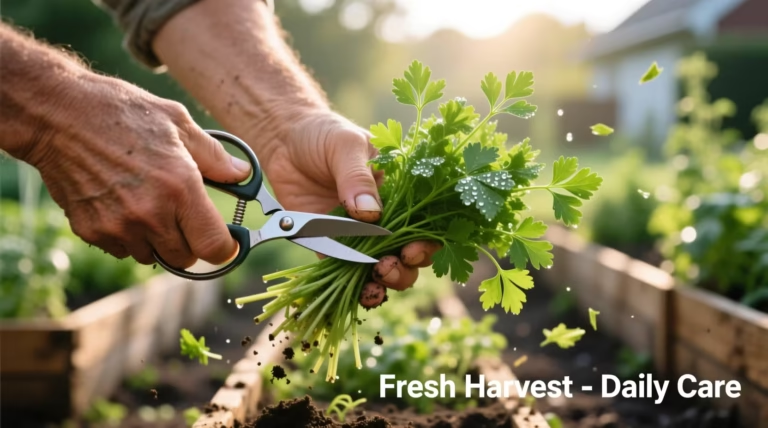
The concept is straightforward. Herb scissors feature multiple blades, usually five to nine, that are connected by a single pivot. Instead of rocking a knife back and forth, you simply snip over the herb, producing uniform pieces in a fraction of the time.
Manufacturer specifications indicate that a standard five-blade model can cut a full bunch of chives in under thirty seconds. As of 2026, these tools have evolved significantly, with features like ergonomic handles and built-in leaf strippers. Let's break down which herbs actually benefit from this approach.
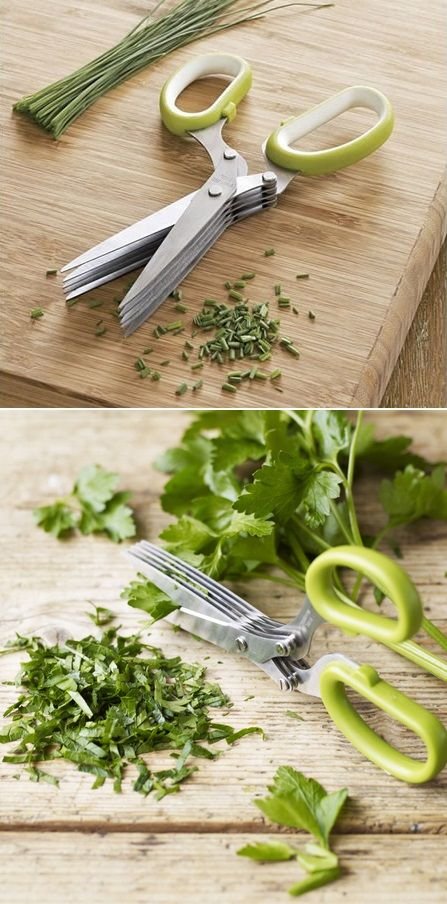
Image source: Bing (Web (fair-use with source credit))
Why This Comparison Matters
Not all herbs are created equal, and that's the core issue here. The structure of a herb dictates how well it will respond to being chopped with scissors. We're essentially talking about two distinct categories: soft-leaf herbs and woody-stem herbs.
Getting this wrong is the difference between a beautiful, fluffy pile of basil and a bruised, watery mess.
The physical mechanics of the tool favor certain plants. Multi-blade scissors work by making several clean, parallel cuts in a single squeeze. This action is perfect for tender leaves and hollow, thin stems.
It's a clean cut that minimizes cell damage. When you crush a leaf with a dull knife, you release enzymes that cause browning and flavor loss. Scissors, especially sharp ones, slice through the tissue cleanly, preserving the herb's integrity.
Conversely, pushing those blades through a thick, woody stem is a recipe for disaster. The blades will struggle, potentially bending or jamming. You end up with a mangled stem, a strained hand, and a dulled tool.
This comparison matters because using the right tool for the right herb saves you time, money, and frustration. It also ensures your food tastes and looks better.
The Quick Answer: What Cuts Well vs. What Fights Back
If you're in a hurry, here's the simple breakdown. Herb scissors are a fantastic tool for a specific group of herbs, and not so great for another.
- Excellent for scissor cutting: Chives, dill, parsley, cilantro, mint, basil, tarragon, and lettuce-like greens (like sorrel).
- Handle with care or skip: Rosemary, thyme, oregano, sage, and other herbs with tough, woody stems.
The reason for this distinction is simple. The first group has soft, pliable stems or delicate leaves that yield easily to a sharp blade. The second group has stems that are rigid and fibrous.
Snip some rosemary with your herb scissors, and you'll likely find the blades get stuck halfway through the stem, leaving a crushed, splintered mess.
That's not to say you can't use scissors on woody herbs at all. It just means you need to prep them first. Strip the leaves from the stem, then snip the leaves.
This works fine because the leaves themselves are soft enough for the blades. The hard stem is the problem, not the leaf. So, the rule of thumb is: if the stem snaps easily with your fingernail, it's probably fine to cut directly.
If it's tough and fibrous, strip the leaves first.
Soft-Leaf Herbs: The Stars of the Show
This is where herb scissors truly shine. Soft-leaf herbs are the ones you typically use in large quantities for salads, sauces, and garnishes. They are also the ones that take the longest to chop by hand because they bruise so easily.
Basil is the classic example. A single basil leaf is wide and tender. Using a knife often results in bruising along the cut edge, which turns black quickly.
With herb scissors, you can stack the leaves, roll them up, and snip. The multiple blades cut through the stack with minimal crushing. You get a perfect chiffonade in two seconds.
Mint and cilantro are equally cooperative. Their leaves are delicate, and their stems are thin and succulent. You can wash a whole bunch and snip it directly into a bowl or pan, stems included.
This saves a massive amount of time. Aggregate user reviews frequently mention how much faster prep is for summer salads and fresh salsas.
Chives and dill are arguably the most natural fit for this tool. Their hollow, grass-like structures are precisely what the scissors were designed for. You can snip them directly over a baked potato or a salmon fillet for an instant, professional-looking garnish.
Here's a quick look at how they stack up:
| Herb | Stem Type | Best Method | Notes |
|---|---|---|---|
| Basil | Soft | Scissors | Stack, roll, and snip for best results |
| Mint | Soft | Scissors | Cut whole leaves and thin stems |
| Cilantro | Soft | Scissors | Snip directly into salsas and bowls |
| Parsley | Soft (curly/flat) | Scissors | Thick stems are fine to cut |
| Chives | Hollow | Scissors | The ideal candidate for this tool |
| Dill | Soft, feathery | Scissors | Excellent for garnishing |
The key takeaway is that with this group, you can practically eliminate your cutting board. Holding the scissors directly over the pan or mixing bowl is faster and results in fewer dishes to wash. It's a workflow change that feels surprisingly liberating once you get used to it.
Woody-Stem Herbs: Proceed with Caution
Let's be clear: you will destroy your herb scissors if you try to chop a full sprig of rosemary with them. The stems of these Mediterranean herbs are rigid, sometimes almost like small twigs. Forcing your blades through them will cause the pins to loosen, the blades to flex, and potentially, the edges to chip.
Rosemary is the biggest offender. Its needles are tough and its stems are like little wooden sticks. Trying to cut it with scissors is a losing battle. Thyme has thin but wiry stems that tend to slip between the blades, causing the cut to be uneven. Sage has thick, woody lower stems and large, soft leaves.
The solution is to use the herb stripper feature that many herb scissors have built into the handle. You slide the sprig through the hole, which pulls the leaves off the stem. Then, you can chop those soft leaves with the scissors without any trouble.
For oregano, the stems are less woody but still firm. If you must cut them directly, ensure your scissors are exceptionally sharp and use a fast, decisive snip. Slow, careful cutting is more likely to result in jams.
The practical advice here is simple:
- Always strip woody leaves first. Don't try to cut the entire sprig.
- If the stem resists, stop. Don't force it.
- Consider a knife. For very woody herbs like rosemary, a sharp chef's knife on a board is often faster and safer.
In our research, the consensus is that trying to force herb scissors through woody material is the number one cause of premature tool failure. The blades bend, the alignment shifts, and they become less effective even on soft herbs. Treat your scissors with respect, and they'll last for years.