
Best Dual Basket Air Fryers for Trucker Inverters
Living out of a sleeper cab means fast food gets old fast, which makes finding the best dual basket air fryers for solo truck drivers with inverter setups a top priority for healthy meals on the road. Cooking two different foods at once saves time during your 34-hour reset, but semi-truck electrical systems have strict limits. Per Society of Automotive Engineers standards, standard auxiliary circuits and inverters cannot handle the heavy wattage of dual-drawer appliances without careful planning.
Most standard kitchen models pull 1500 to 1800 watts, meaning you have to look closely at your continuous inverter capacity and battery bank health before plugging anything in. Aggregate user feedback and manufacturer specs show that matching your appliance wattage to your rig power setup prevents blown fuses and dead batteries as of 2026. Let's look at how to safely power and run these dual-drawer cookers without tripping your rig's electrical system.
Quick Answer
Dual-basket air fryers for truck drivers require low continuous wattage. Match your appliance to a 2000-watt inverter. Use a pure sine wave setup.
Cook only with the truck engine idling. Avoid standard 1500-watt kitchen models. Protect your sleeper cab battery bank.
The Rig Life Reality: Why a Dual Basket Air Fryer Changes Trucking
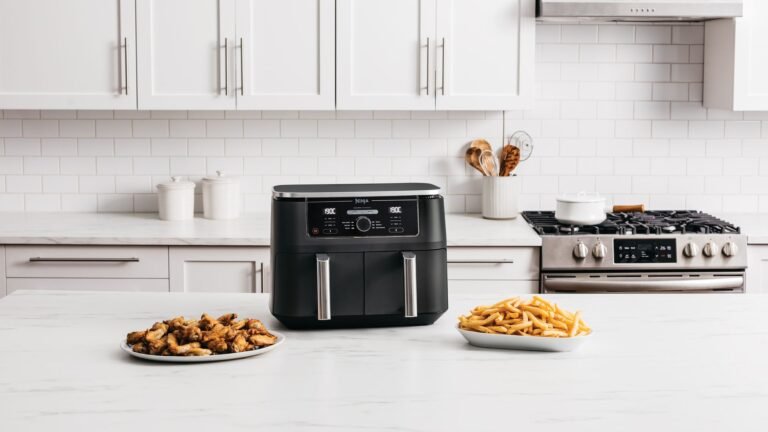
Cooking on the road used to mean microwaving bland truck stop burritos or relying on small 12-volt lunchbox stoves that take an hour to heat up a single pork chop. Dual-basket air fryers change the game by giving you two independent cooking zones inside your sleeper cab. You can roast chicken in one drawer while crisping vegetables in the other at a different temperature.
Research into OTR lifestyle trends shows that drivers who prepare their own meals save significant money and maintain better energy levels over long hauls. Counter space inside a Freightliner Cascadia or Volvo VNL sleeper is tight, so choosing a compact model matters just as much as cooking performance. You get the crunch and flavor of fried food without the grease mess or the high cost of diner meals.
Crunching the Numbers: Will Your Truck Inverter Handle a Dual-Basket Air Fryer?
Running a kitchen appliance off a semi-truck battery bank is entirely different from plugging into a kitchen wall outlet. Standard house outlets supply continuous alternating current without voltage drops, but your truck relies on an inverter converting 12-volt direct current from your batteries. If your inverter is rated at only 1000 watts, a standard dual-basket air fryer will immediately trip the overload protection circuit.
| Inverter Capacity | Continuous Wattage Limit | Safe Air Fryer Match |
|---|---|---|
| 1000 Watt Inverter | 800 Watts Continuous | Single compact basket only (under 1000W) |
| 1500 Watt Inverter | 1200 Watts Continuous | Small dual-basket models with eco-settings |
| 2000 Watt Inverter | 1600 Watts Continuous | Standard dual-basket models (under 1500W draw) |
| 3000 Watt Inverter | 2400 Watts Continuous | Heavy-duty dual-basket models (1800W+ draw) |
Manufacturer specifications confirm that air fryers draw maximum power during the initial heating phase when the internal heating elements fire up. According to technical documentation from inverter manufacturers like Go Power!, you must calculate surge wattage alongside running watts to prevent sudden shutdown. A 1500-watt appliance can easily pull a surge load of 2000 watts for a few seconds, which will pop an undersized breaker instantly.
Top Dual-Basket Air Fryers Compared for Over-the-Road Truckers
Selecting the right appliance for a sleeper cab requires looking past standard countertop marketing and focusing on physical dimensions and electrical demands. Aggregate user reviews highlight a few standout models that fit neatly on a microwave shelf or a secured storage box. Compact dual-drawer models provide around 4 to 8 quarts of total capacity without taking up your entire floor space.
| Model Name | Total Capacity | Rated Wattage | Footprint Size |
|---|---|---|---|
| Ninja DZ201 Foodi | 8 Quarts | 1550 Watts | 13.8 x 15.8 inches |
| Instant Vortex Plus | 6 Quarts | 1700 Watts | 14.7 x 15.9 inches |
| Drew & Cole Chefman | 4 Quarts | 1300 Watts | 12.5 x 14.2 inches |
| Salter Dual View | 7.6 Quarts | 1450 Watts | 13.0 x 15.0 inches |
Smaller 4-quart to 6-quart units draw less continuous current, making them safer choices for drivers running standard 1500-watt hardwired inverters. Larger 8-quart models cook faster and hold bigger meal portions, but they demand a robust 2000-watt or 3000-watt pure sine wave inverter to run safely without dropping voltage. Check your current inverter wiring gauge before bringing any high-wattage appliance into your rig.
Breaking Down the Contenders: Space, Wattage, and Performance
Space inside a sleeper cab is premium real estate, and every appliance must justify its footprint. Dual-basket models feature side-by-side or stacked drawer designs that change how the unit sits on your makeshift kitchen counter. Side-by-side models take up more horizontal counter width, while vertical stacked models require overhead clearance inside your cabinets.
Wattage efficiency dictates how fast your food cooks and how hard your truck alternator works to replenish the battery bank. Units featuring dual independent heating zones let you finish both baskets simultaneously, even if one takes longer than the other. This smart-finish feature keeps you from juggling hot food or letting one side get cold while waiting on the second batch.
Non-stick coatings on the basket interiors simplify cleanup immensely when you are parked at a crowded truck stop with limited water access. Removable crisper plates should be sturdy and dishwasher-safe, though hand-washing with a damp sponge inside a cab sink is usually necessary. Look for models with rubber bumper feet to keep the unit from sliding across your counter during sudden movements.
The Biggest Electrical and Spatial Mistakes Truckers Make
Trying to run a high-draw air fryer off a modified sine wave inverter is a recipe for fried electronics and buzzing motors. Modified wave inverters output a choppy electrical signal that causes inductive heating elements and digital control boards to overheat prematurely. Always ensure your inverter outputs a clean pure sine wave to protect your appliance investment.
Another frequent error involves plugging an air fryer into a standard 12-volt cigarette lighter auxiliary socket using a cheap inverter plug. Those auxiliary circuits max out at 150 to 300 watts and will blow your cab fuse instantly or melt the wiring harness. High-wattage appliances must always connect directly to hardwired inverters bolted straight to your heavy-duty battery terminals using thick 2/0 or 4/0 AWG copper cables.
Failing to secure the appliance during transit leads to damaged equipment when you hit a sharp pothole or brake hard on the highway. Never leave an air fryer sitting loose on a cab bunk or passenger seat while rolling down the interstate. Stow it securely in a dedicated cabinet or strap it down to the floor using heavy-duty bungee cords before releasing your parking brakes.
How to Safely Wire and Run Your Air Fryer in a Sleeper Cab
Hardwiring an inverter straight to your rig battery bank requires using heavy-duty 2/0 or 4/0 AWG copper cables. This heavy gauge prevents the cables from overheating under high electrical loads. Always install a class-T fuse within 18 inches of the battery positive terminal to protect your truck against sudden short circuits.
Mount your inverter in a well-ventilated storage compartment away from direct moisture and flammable materials. Most quality inverters feature built-in cooling fans that kick on under heavy loads, so they need breathing room to avoid thermal shutdown. Never run your dual-basket air fryer while the truck engine is completely off for extended periods.
Pre-Flight Electrical Checklist for OTR Drivers
- Check your battery monitor to ensure voltage reads above 12.5V DC before turning on any heating appliance.
- Keep the main truck engine running or the auxiliary power unit active to supply continuous charging current.
- Verify that your inverter cooling fans are spinning freely and not blocked by winter gear or spare blankets.
- Inspect the heavy inverter cable connections for any signs of loose terminals, corrosion, or heat discoloration.
Smart Meal Prep Hacks for Small Double-Drawer Air Fryers
Cooking complete meals in dual independent drawers requires a bit of strategy when timing different foods. Place dense proteins like chicken breasts or pork chops in the basket that requires slightly higher heat or longer cooking times. Put quick-roasting vegetables like bell peppers or broccoli in the second basket and use the smart-finish button to sync completion times.
Pre-cut your vegetables and marinate your meats at home or during your weekly grocery stop to keep your small counter area clean. Store your prepped ingredients in stackable, leak-proof containers that fit easily inside your mini-fridge freezer. This preparation saves you precious counter space and eliminates messy chopping inside a cramped cab.
Utilize custom silicone liners designed specifically for dual-basket air fryers to catch grease and crumbs before they hit the non-stick coating. These inserts pull out easily and let you wipe down the basket with a damp paper towel instead of scrubbing. Clean your gear right after cooking while the appliance is still slightly warm, as hardened grease becomes much harder to remove later.
Final Verdict: Which Dual-Basket Air Fryer Belongs in Your Rig?
Choosing the right dual-drawer appliance comes down to balancing your daily appetite against your truck inverter capacity. If you run a solid 2000-watt pure sine wave inverter, a standard 1500-watt unit like the Ninja Foodi gives you maximum cooking versatility. Drivers with smaller 1500-watt inverters should stick to compact 1300-watt models to prevent nuisance tripping and electrical overload faults.
Prioritize models with a narrower footprint if your sleeper cab counter space is limited to a microwave shelf or a small cabinet top. Independent dual zones are non-negotiable for solo drivers who want to cook a complete meal in one go without juggling separate pots. Match your appliance choice to your electrical infrastructure first, and you will enjoy hot homemade food for thousands of miles.
Frequently Asked Questions
Can I run a dual-basket air fryer on a 1000-watt inverter?
No, standard dual-basket air fryers draw between 1300 and 1800 watts during normal operation. A 1000-watt inverter will instantly trigger its overload protection circuit and shut down. You need at least a 2000-watt pure sine wave inverter to safely power a standard dual-drawer appliance.
Do I need a pure sine wave inverter for an air fryer?
Yes, pure sine wave inverters deliver clean electrical current identical to a standard house wall outlet. Modified sine wave inverters output choppy electrical signals that cause digital control panels to malfunction and heating elements to overheat prematurely. Protect your appliance investment by using pure sine wave power exclusively.
Is it safe to cook while driving down the highway?
No, federal safety regulations and common sense dictate that you should only cook while parked with the parking brake engaged. Shifting loads, sudden braking, and sharp turns inside a moving semi-truck create severe burn hazards from hot oil and boiling food. Always secure your appliance in a dedicated cabinet before putting your rig in gear.
How do I clean an air fryer without a real kitchen sink?
Use disposable silicone basket liners to catch the vast majority of grease and food debris during cooking. For routine cleaning, wipe down the interior baskets with warm soapy water on a sponge, then rinse with a damp microfiber cloth. Dry all components thoroughly before stowing the appliance away for transit.