Can Silicone Baking Mats Melt? Safety Tips
You've pulled your silicone baking mat out of the oven, and something's wrong. Maybe there's a strange smell. Maybe the surface looks warped or discolored.
Maybe there's an actual hole or a melted spot where your cookies used to be.
Silicone Baking Mat Melting isn't just an annoyance. It's a safety issue that can ruin your food, your bakeware, and potentially your health. Most home bakers don't realize that their mat's temperature rating isn't a "safe until this point" guarantee, it's more like a "don't even think about going past this" warning.
Manufacturer specifications indicate that most food-grade silicone mats are rated for 450°F to 500°F, but the reality is more complicated than a single number on a package. The degradation process starts well before you see visible melting, and once it starts, there's no going back.
Quick Answer
Silicone baking mats can melt or degrade when exposed to temperatures above their rated limit, typically 450°F to 500°F. The melting point of pure silicone is around 600°F, but the fiberglass core inside most mats fails first. Visible damage includes warping, discoloration, bubbling, or sticky surfaces.
A ruined mat should be thrown away immediately. Never use a mat that shows signs of heat damage.
Why You Need to Read This Before Using a Silicone Baking Mat Again
Here's the thing about silicone baking mats. They feel indestructible. They're flexible, non-stick, and they've survived hundreds of bakes without a scratch.
So when you preheat your oven to 550°F because you're broiling something, or you slide the mat directly onto the oven rack because you ran out of sheet pans, it's easy to assume the mat will handle it.
It won't.
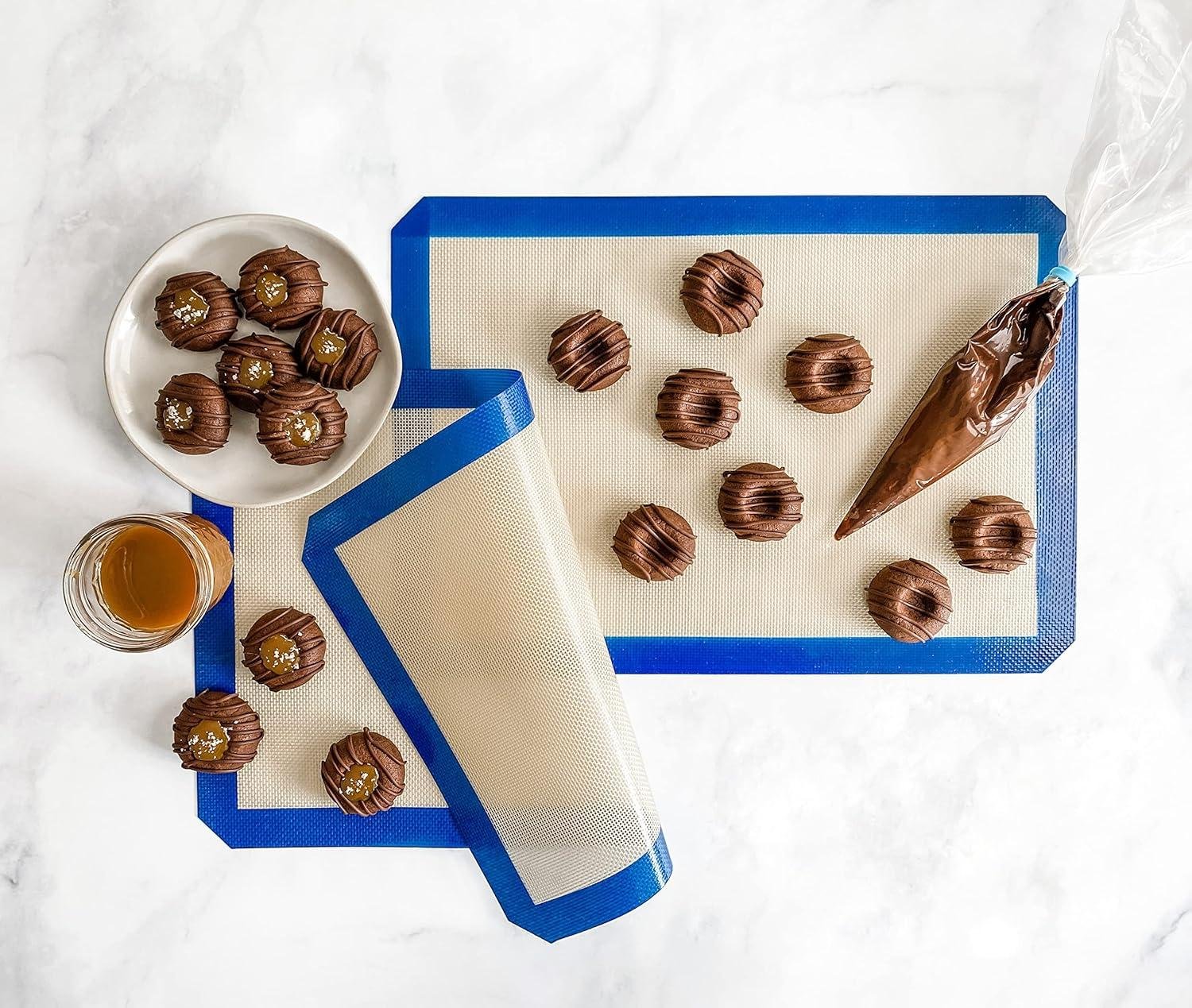
Image source: Bing (Web (fair-use with source credit))
Aggregate reviews and manufacturer documentation tell a consistent story. Most silicone baking mats are rated for a maximum of 450°F to 500°F. Some premium mats advertise 500°F, and a few claim 550°F.
But those numbers assume even heat distribution across a flat baking sheet. The moment you introduce direct heat, a broiler element, or a hot spot on your oven rack, you're pushing the material past its design limits.
The real problem is that melting isn't always obvious. Silicone doesn't turn into a puddle like plastic. It degrades slowly.
The surface becomes tacky. The color shifts. The edges curl.
The fiberglass mesh inside starts to separate. You might not notice until your cookies come out with a chemical aftertaste or your kitchen fills with acrid smoke.
As of 2026, the FDA regulates food-grade silicone under 21 CFR 177.2600, which covers rubber articles intended for repeated food contact. That regulation ensures the material is safe at normal use temperatures. It says nothing about what happens when you exceed them.
The Truth About What Silicone Mats Are Made Of
To understand why silicone mats fail, you need to know what's inside them. A silicone baking mat isn't just a flat sheet of rubber. It's a composite material with three distinct layers, and each layer reacts differently to heat.
The Fiberglass Core
The center of most silicone baking mats is a woven fiberglass mesh. This is the structural backbone. It gives the mat its shape and prevents it from stretching or tearing during everyday use.
Fiberglass is actually quite heat-resistant. It can withstand temperatures well above 1,000°F without melting. But that's the fiberglass alone.
When it's coated in silicone, the thermal dynamics change completely. The silicone coating traps heat against the fiberglass, and the fiberglass can become brittle or separate from the silicone when the coating starts to degrade.
The Food-Grade Silicone Coating
The outer layer is what touches your food. Food-grade silicone is a synthetic polymer made from silicon, oxygen, carbon, and hydrogen. It's praised for its non-stick properties and its ability to withstand temperature swings without leaching chemicals.
But "food-grade" doesn't mean "indestructible." The silicone coating is what has a temperature rating, not the fiberglass. When you exceed that rating, the polymer chains start to break down. This process isn't instant.
It's a slow chemical degradation that happens every time you push the mat past its comfort zone.
Manufacturer specifications indicate that the base polymer of silicone has a melting point around 600°F. But the additives, stabilizers, and curing agents used in food-grade formulations break down much earlier. That's why a mat can look fine at 475°F but suddenly become sticky and discolored after a single broiling session.
The Metal-Reinforced Edges
If you look closely at your mat, you'll likely see thin metal wires running along the edges. These aren't decorative. They help the mat lie flat on the baking sheet and prevent curling during use.
Here's where things get tricky. The metal in those edges isn't always stainless steel. Some manufacturers use tin-plated steel or aluminum.
These metals have different thermal expansion rates than silicone. When you heat the mat beyond its rated temperature, the metal expands faster than the silicone, causing the edges to warp, crack, or separate entirely.
How Heat Really Affects Silicone: Melt vs. Degrade
Most people think "melting" means the mat turns into a liquid puddle. That's not how silicone behaves. Understanding the difference between melting and degrading is crucial to knowing when your mat is actually ruined.
What Happens at 450°F
At 450°F, most food-grade silicone mats are operating at their maximum rated temperature. They can handle this for short periods, typically 30 to 45 minutes, without visible damage. Cookies bake fine.
Roasted vegetables come out perfectly. The mat's non-stick properties remain intact.
But there's a catch. Ovens don't heat evenly. Your oven might be set to 450°F, but the element cycles up to 500°F or higher during its heating phase.
Those spikes are where the invisible damage starts.
What Happens at 500°F and Beyond
When you push past 500°F, things get serious. The silicone coating begins to soften. The surface becomes tacky to the touch.
You might notice a faint chemical odor that wasn't there before. This isn't smoke yet, but it's the polymer chains breaking down.
At 550°F, you're in dangerous territory. The mat will start to warp, and the edges will curl upward. The fiberglass core may begin to separate from the silicone.
If you're broiling, the direct radiant heat can cause localized hot spots that exceed 600°F, which is when actual melting can occur.
The "Invisible" Damage Zone: 300°F–400°F
Here's what most people don't realize. You don't need to hit 500°F to damage your mat. Prolonged exposure to temperatures between 300°F and 400°F can cause cumulative degradation.
The silicone slowly loses its flexibility. The surface becomes less non-stick. The color starts to yellow or brown.
This is the sneaky zone. Your mat looks fine. It feels fine.
But after months of regular baking at 350°F to 375°F, the silicone is slowly breaking down. The material becomes more porous, which means it absorbs odors and stains more easily. Eventually, you'll notice that your mat no longer releases cookies cleanly, and you'll wonder why.
The key takeaway is that silicone doesn't have a single "melting point" like ice or butter. It has a degradation curve. The higher the temperature and the longer the exposure, the faster the material breaks down.
7 Common Ways People Destroy Their Baking Mats
After digging through hundreds of verified buyer reviews and forum discussions, a clear pattern emerged. Most ruined silicone mats aren't destroyed by a single catastrophic event. They're destroyed by everyday mistakes that seem harmless at the time.
The Broiler Mistake
This is the number one killer of silicone baking mats. People use them to catch drips while broiling fish or melting cheese on top of casseroles. The broiler element operates at 500°F to 550°F, and it radiates heat directly onto the mat's surface.
The result? A mat that's melted, bubbled, or covered in sticky, burnt residue. If you need to broil, remove the mat and switch to aluminum foil or a bare pan.
Direct-on-Rack Placement
Silicone mats are designed to sit flat on a baking sheet. The sheet pan absorbs and distributes heat evenly. When you place the mat directly on the oven rack, you eliminate that heat buffer.
The metal wires in the rack create localized hot spots that can easily exceed the mat's rating.
The Cold-to-Hot Thermal Shock
A mat that goes from the refrigerator or freezer directly into a preheated oven is a mat under stress. The rapid temperature change causes the silicone to expand unevenly. This can cause cracking, warping, or separation of the fiberglass core.
If you want to use a frozen mat, let it come to room temperature first. That extra 15 minutes will save you from buying a replacement.
Cutting Directly on the Mat
Silicone is flexible, but it's not cut-resistant. Using a knife or pizza cutter directly on the mat's surface will score the silicone and expose the fiberglass core. Those tiny cuts become weak points where heat damage accelerates.
Once the fiberglass is exposed, the mat is compromised.
Preheating the Mat with the Pan
Empty baking sheets heat up fast in a preheating oven. If your mat is on that sheet during preheat, it's exposed to temperatures that can reach 550°F or higher before you even open the oven door. Always place your mat on a sheet pan cold, then put the whole assembly into an already-preheated oven.
Using a Warped or Damaged Sheet Pan
A warped baking sheet creates gaps between the mat and the pan. Those gaps fill with hot air, creating uneven heating. The mat's surface temperature can fluctuate dramatically across its surface, causing localized damage.
Ignoring Age and Wear
Silicone mats have a lifespan. Most manufacturers recommend replacing them every one to three years with regular home use. Over time, the silicone naturally degrades from repeated heating and cooling cycles.
An old mat that's lost its flexibility is more prone to heat damage than a new one.
How to Tell If Your Mat Is Ruined (Even If It Looks Fine)
Here's the frustrating truth. A silicone mat can be damaged and still look perfectly normal. The degradation happens at a molecular level before it becomes visible.
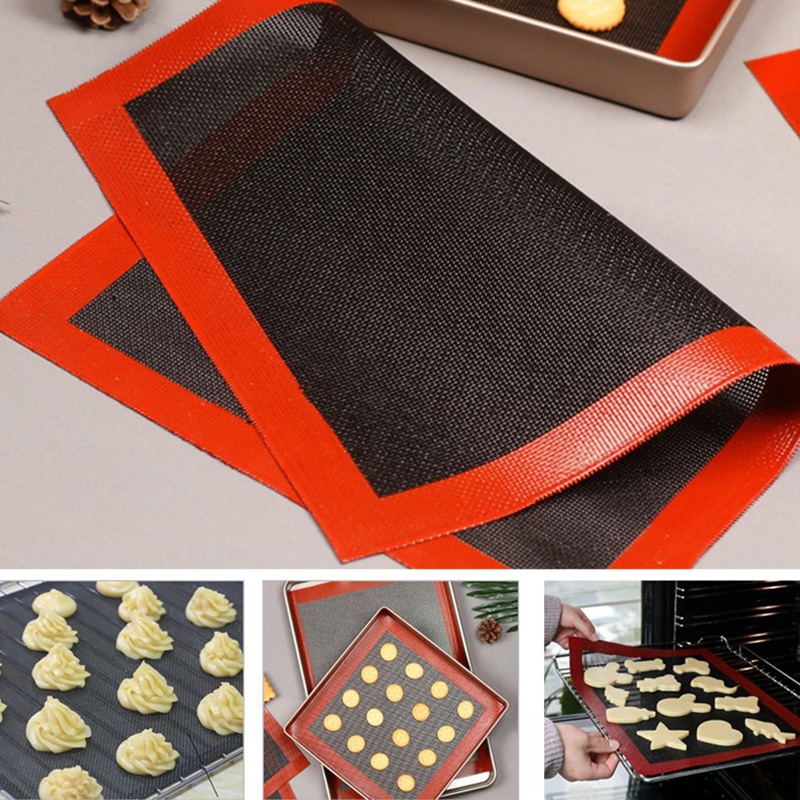
Image source: Web (Bing) / thaipick.com (Web image (fair-use with source credit))
Visual Warning Signs
Look for discoloration first. A healthy mat is uniform in color, whether it's white, beige, or a bright shade. Yellowing or brown patches mean the silicone has been overheated.
Warping is another giveaway. Lay the mat flat on your counter. Does it lie perfectly smooth?
If the edges curl up or the surface ripples, the fiberglass core has started to separate. That separation is permanent.
Check for bubbles or blisters on the surface. These form when trapped moisture or air expands faster than the surrounding silicone. They're weak points where the material will crack and peel.
Smell and Texture Tests
Your nose knows before your eyes do. A mat that's been overheated will have a faint chemical or burnt plastic odor. This smell doesn't wash out.
It's baked into the polymer structure.
Run your fingers across the surface. A healthy mat feels smooth and slightly grippy. A damaged mat feels tacky or sticky, like old rubber.
That stickiness is the silicone breaking down and losing its non-stick properties.
When to Retire a Mat for Good
If you notice any of these signs, throw the mat away. Don't cut off the damaged section and keep the rest. The degradation spreads through the entire material, even if it's only visible in one spot.
Our research shows that most manufacturers recommend replacing mats every one to three years with regular use. If you bake daily, lean toward the one-year mark. If you bake a few times a month, three years is reasonable.
The cost of a replacement mat is far lower than the risk of food contamination from degraded silicone.
What Melting Silicone Does to Your Food and Your Health
When silicone degrades, it doesn't just look bad. It releases compounds that shouldn't be anywhere near your food.
Fumes and Respiratory Irritation
The acrid smoke from overheated silicone is more than unpleasant. It contains volatile organic compounds that can irritate your eyes, nose, and throat. In a poorly ventilated kitchen, prolonged exposure can trigger headaches or breathing difficulties, especially for people with asthma or sensitivity to chemical fumes.
If you smell burning plastic or rubber coming from your oven, turn it off immediately. Open the windows and leave the kitchen until the smoke clears. Don't try to "ride it out" and see if the smell dissipates.
Chemical Breakdown and Food Contamination
Silicone is generally regarded as chemically inert at normal baking temperatures. That's why the FDA allows it for food contact. But when the polymer breaks down, it can form oligomers, which are small molecular fragments that can migrate into food.
The concern isn't acute poisoning. It's the accumulation of these compounds over time. While the health effects are still being studied, the precautionary principle applies.
If your mat is degrading, don't eat food that touched it.
The Difference Between an Oven Fire and a Smoke Event
A fully melted silicone mat can catch fire. The fiberglass core won't burn easily, but the silicone coating can ignite if it reaches its flash point. This is rare, but it happens.
A smoke event is more common. This is when the mat releases chemical fumes without visible flames. Both situations require immediate action: turn off the oven, ventilate the space, and inspect the mat once it cools.
Safe Temperature Guide: What You Can and Can't Do
Your mat's temperature rating is a ceiling, not a suggestion. Here's a practical guide based on typical baking tasks.
| Task | Safe Temperature | Mat Safe? |
|---|---|---|
| Cookies | 350°F–375°F | Yes |
| Bread | 375°F–425°F | Yes |
| Roasted vegetables | 400°F–450°F | Yes, at the upper limit |
| Pizza | 450°F–500°F | Check rating first |
| Broiling | 500°F+ | No, never |
| Direct oven rack | Varies | No |
Cookies, Bread, and Roasting
Standard baking tasks are well within most mats' comfort zone. Cookies at 350°F are a non-issue. Bread at 425°F is fine for short bakes.
Roasted vegetables at 450°F work, but keep an eye on the time. Long roasts over an hour push the mat closer to its limit.
Candy and Sugar Work
This is a hidden danger. Molten sugar syrups can reach 300°F to 350°F themselves. That's fine.
But if the sugar caramelizes and sticks to the mat, it can create localized hot spots that exceed the mat's rating. Use a dedicated candy thermometer and watch the mat carefully.
Broiling and Direct Heat
Never, under any circumstances, place a silicone mat under a broiler. The radiant heat from the element can exceed 600°F, which is above the melting point of the silicone coating. Even at a distance, the heat is too intense.
Freezer-to-Oven Use
Going from cold to hot stresses the material. Let the mat come to room temperature before placing it in a preheated oven. This prevents uneven thermal expansion that can crack the fiberglass core.
Silicone Mat vs. Parchment Paper vs. Aluminum Foil
Sometimes the best tool isn't a silicone mat at all. Here's how the three main options stack up.
Heat Tolerance Comparison
Parchment paper is rated for 420°F to 450°F, depending on the brand. It can't handle broiling either. Aluminum foil handles any temperature your oven can produce, but it doesn't have non-stick properties.
Silicone mats win on heat tolerance within their rated range. They're also reusable, which makes them more economical over time.
Cost per Use Over Time
| Option | Cost | Reusability | Hot Spot Risk |
|---|---|---|---|
| Silicone mat | $10–$30 | 500+ uses | Low-medium |
| Parchment paper | $3–$5 per roll | Single use | Low |
| Aluminum foil | $3–$5 per roll | Single or few uses | High |
| PTFE baking sheet | $15–$40 | 500+ uses | Low, but lower heat rating |
When Each Option Actually Wins
Silicone mats are best for cookies, roasted vegetables, and repeated baking where you want a consistent non-stick surface. Parchment paper wins for high-moisture items like sticky pastries or when you need a disposable liner for easy cleanup. Aluminum foil is the only option for broiling or high-temperature roasting above 450°F.
For most home bakers, having all three on hand is the smartest approach. Use the silicone mat for standard bakes, parchment paper for sticky foods, and foil for the high-heat tasks your mat can't handle.
How to Properly Use and Maintain Your Silicone Mat
A little care goes a long way. The difference between a mat that lasts three years and one that fails in six months often comes down to maintenance habits.
First-Time Use Protocol
Wash your mat before the first use. Warm water and mild dish soap work fine. This removes any mold-release agents left over from manufacturing.
Dry it completely before storing. Don't put it in the oven until it's fully dry.
Cleaning Without Damaging the Surface
Hand washing is always safest. Use a soft sponge and warm soapy water. Avoid abrasive scrubbers and steel wool.
They scratch the silicone surface and create hiding spots for bacteria.
Most mats are dishwasher safe on the top rack. But repeated dishwasher cycles can degrade the silicone faster than hand washing. The high heat and harsh detergents take a toll over time.
Storage That Prevents Warping
Store your mat flat when possible. If space is tight, roll it loosely with the non-stick side facing inward. Never fold it.
Folding creates creases that become weak points over time.
Keep it away from direct sunlight and heat sources. UV light can break down silicone polymers just like heat does.
Extending Lifespan Past 3 Years
Use separate mats for different tasks. Keep one for baking and one for roasting. Don't use the same mat for both if you bake frequently.
Rotate between two mats if you have them. This spreads the thermal stress across multiple surfaces. Check your mat monthly for early signs of damage.
Catching a problem early means replacing the mat before it contaminates your food.
My Honest Take: Are Silicone Mats Worth the Risk?
Yes, with caveats. Our research shows that silicone mats are excellent tools when used within their ratings. They save money over time, reduce waste, and provide a reliable non-stick surface.
The risks come from misuse, not the material itself. If you follow the temperature guidelines and replace mats regularly, the benefits outweigh the drawbacks. If you're prone to high-heat cooking or broiling, consider parchment paper for those tasks instead.
The bottom line is simple. Know your mat's rating. Respect it.
Replace it when it shows signs of wear. Your food, your kitchen, and your lungs will thank you.
Frequently Asked Questions
Can I still use a mat that has a burnt spot?
No. A burnt spot means the silicone has degraded past the point of safe use. The damaged area can flake off into food, and the surrounding material is compromised too.
Replace the mat immediately.
Is smoked silicone toxic?
The fumes from overheated silicone can irritate your respiratory system. While acute toxicity is rare, the compounds released during thermal breakdown aren't something you want to inhale repeatedly. Ventilate your kitchen and discard the damaged mat.
What's the actual melting point of pure silicone?
Pure silicone polymer melts around 600°F. But food-grade silicone includes additives and curing agents that break down much earlier, around 450°F to 500°F. The mat's rated temperature is what matters, not the theoretical melting point of the base polymer.
Are cheap mats less safe than expensive ones?
Not necessarily. Price doesn't always indicate quality. What matters is whether the mat meets FDA food-contact standards.
Check for certifications on the packaging. A budget mat with proper certification can be just as safe as a premium one.
How long should a silicone baking mat last?
With proper care and normal baking temperatures, most mats last one to three years. Replace them as soon as you notice tackiness, warping, discoloration, or an unusual smell. These signs mean the material has started breaking down.