Single vs Multi Blade Herb Scissors: Which Cuts Best?
You know the drill. You've got a bunch of fresh parsley or a fat bundle of chives, and you're standing at the cutting board dreading the mincing. Rocking a chef's knife back and forth works, sure, but it takes time, and if you're making a garnish-heavy dish, it feels like forever.
That's exactly where the Single Blade vs Multi Blade Herb Scissors debate comes in. It's a simple question with an answer that actually depends on how you cook.
Manufacturer specifications show that multi-blade scissors typically feature five or seven parallel stainless steel blades designed to produce uniform cuts between 1/8-inch and 1/4-inch in a single squeeze. That's significantly faster than hand mincing for soft herbs like chives, but the trade-off is cleaning, maintenance, and a frustrating lack of versatility. As of 2026, the market is full of options in both camps, so let's break down which one actually earns a spot in your kitchen.

Image source: Bing (Web (fair-use with source credit))
Quick Answer
For soft herbs like chives, parsley, and dill, multi-blade scissors win on speed and consistency. For woody herbs like rosemary and thyme, single-blade shears are the only sensible choice. If you cook with herbs daily, a good pair of single-blade kitchen shears is the versatile workhorse.
Multi-blades are specialized tools that shine for one task only. Most home cooks will get more use from single-blade shears.
Why This Comparison Matters More Than You Think
Here's the thing about herb scissors. They look like a brilliant idea on the package, and then they sit in your drawer for months. Why?
Because most people buy the wrong type for their actual cooking habits.
We're not talking about a $5 pair of flimsy scissors here. We're talking about a tool that either saves you five minutes of prep every night or becomes a frustrating, hard-to-clean gadget you regret buying. The difference comes down to understanding what each design actually does well.
Multi-blade scissors aren't just a gimmick. They use multiple parallel blades to make several cuts at once. That's genuinely useful if you're processing large bunches of soft herbs regularly.
But those same blades create narrow gaps where wet herb bits get stuck, and cleaning them requires patience.
Single-blade shears, on the other hand, are the Swiss Army knife of the kitchen. They can handle herbs, but they also cut chicken, open packages, snip green beans, and trim parchment paper. They're less specialized but infinitely more practical for day-to-day cooking.
The real question isn't which one is "better" in the abstract. It's which one matches your cooking style, your herb usage, and your tolerance for cleaning fiddly tools.
How Multi-Blade Herb Scissors Actually Work
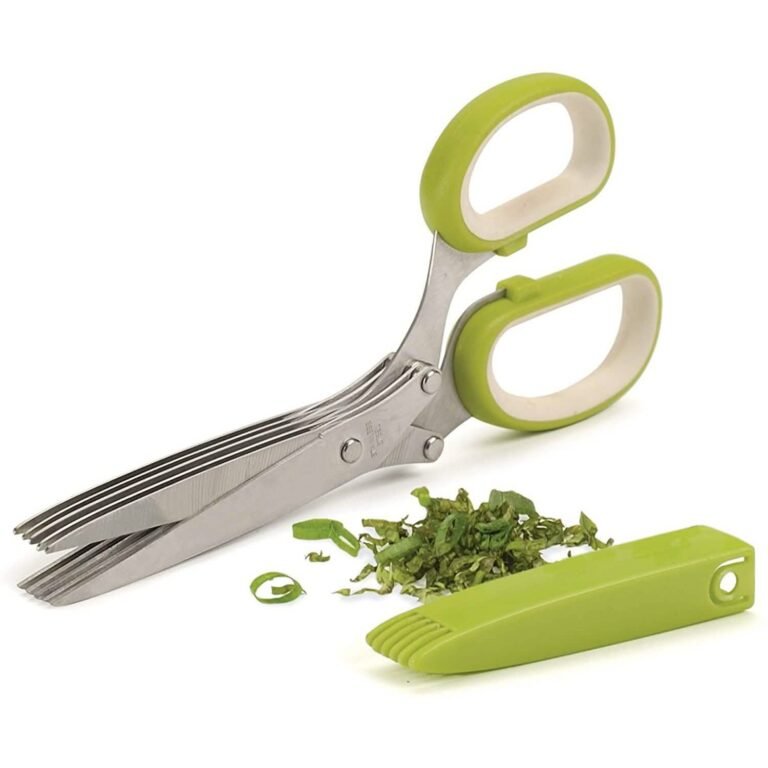
Multi-blade herb scissors are exactly what they sound like. Instead of two blades, they have five or seven blades stacked together, all pivoting on a single screw. When you squeeze the handles, all the blades come down simultaneously, making multiple parallel cuts in one pass.
What You're Really Getting With 5 or 7 Blades
The blade count matters more than you'd think. Five-blade models are the most common and produce four strips of cut herb per squeeze. Seven-blade models add more blades for a finer mince, but they also create more gaps where herbs can get trapped.
Here's what the specs tell us:
| Feature | 5-Blade Model | 7-Blade Model |
|---|---|---|
| Cuts per squeeze | 4 strips | 6 strips |
| Typical cut size | ~1/4 inch | ~1/8 inch |
| Cleaning difficulty | Moderate | Higher |
| Best for | Parsley, dill, cilantro | Chives, fine garnishes |
The blades are typically made from stainless steel, and the handles are usually plastic or rubberized for grip. Some models come apart for cleaning, which is a big deal because the gaps between blades get gross fast.
The Mechanics of the Cut
When you squeeze a multi-blade scissor, you're not just cutting through the herb. You're slicing it into short, uniform pieces in a single motion. That's why it's so much faster than a knife for soft herbs.
You grab a bundle of chives, hold it over the cutting board, and snip snip snip. Thirty seconds later, you have a neat pile of uniform pieces.
But here's the catch. Those same mechanics mean the blades only work well on soft, leafy material. Try cutting through a woody rosemary stem with a multi-blade scissor, and you'll either crush the stem or jam the blades.
The design simply isn't made for that kind of density.
Image source: Bing (Web (fair-use with source credit))
How Single-Blade Kitchen Shears Earn Their Keep
Standard kitchen shears are the underrated heroes of the kitchen. Most people already own a pair, and they don't think twice about them. But a good pair of single-blade shears can handle almost any herb prep task you throw at them.
The Versatility Factor
Think about everything you use scissors for in the kitchen. Opening packages, snipping bacon, cutting pizza, trimming fat, and yes, mincing herbs. A single pair of kitchen shears does all of it.
That's the biggest advantage over multi-blade scissors, which are strictly a one-trick pony.
For herb work, single-blade shears are slower than multi-blades. You have to do repeated snips to achieve a fine mince. But you get more control over the cut size, and you can handle both soft and woody herbs without missing a beat.
What a Good Pair Feels Like
A quality pair of kitchen shears has a few key traits. The blades are sharp and stay sharp. The handles are comfortable and fit your hand well.
The two halves come apart for thorough cleaning. And the blade tension is adjustable, so you can tighten them as they wear.
Look for shears that feel substantial in your hand. Cheap ones have a lot of play in the pivot, which makes precise snips frustrating. A good pair will feel solid, cut cleanly through paper, and not wobble.
Side-by-Side Comparison: Single Blade vs Multi Blade
Let's put them next to each other and see how they stack up.
| Factor | Multi-Blade Scissors | Single-Blade Shears |
|---|---|---|
| Speed on soft herbs | Fast | Moderate |
| Speed on woody herbs | Poor | Good |
| Versatility | Single-purpose | Multi-purpose |
| Cleaning ease | Difficult | Easy |
| Control over cut size | Limited | Full control |
| Price range | $10–$25 | $10–$30 |
| Durability | Blades can dull unevenly | Long-lasting with care |
The speed difference is real. Aggregate user reviews consistently report that multi-blade scissors cut prep time for soft herbs roughly in half compared to hand mincing with a knife. But those same reviews complain about cleaning difficulty and the limited range of use.
For most home cooks, the versatility of single-blade shears wins out. You're not just buying a tool for herbs. You're buying something that earns its place in the drawer every single day.
Herb-by-Herb Breakdown: Which Tool Matches Your Cooking Style
This is where the decision gets practical. Not all herbs are created equal, and the anatomy of each herb should drive your choice.
Soft Leafy Herbs (Chives, Parsley, Cilantro, Dill)
These are the multi-blade's home turf. The stems are tender, the leaves are soft, and they respond beautifully to being chopped in bulk. If you make salsa, chimichurri, or garnish-heavy dishes regularly, multi-blade scissors will save you real time here.
Woody Stem Herbs (Rosemary, Thyme, Oregano)
Skip the multi-blades entirely. These herbs have thick, fibrous stems that will jam or crush between the blades. Single-blade shears handle them easily, letting you snip fine pieces right off the stem.
There's no contest here.
Delicate Herbs (Basil, Mint, Tarragon)
These bruise easily, and the multiple blades of a multi-blade scissor tend to mash them rather than cut cleanly. A single sharp blade makes a cleaner cut, which keeps the leaves green and prevents the browning that comes from crushed cell walls.
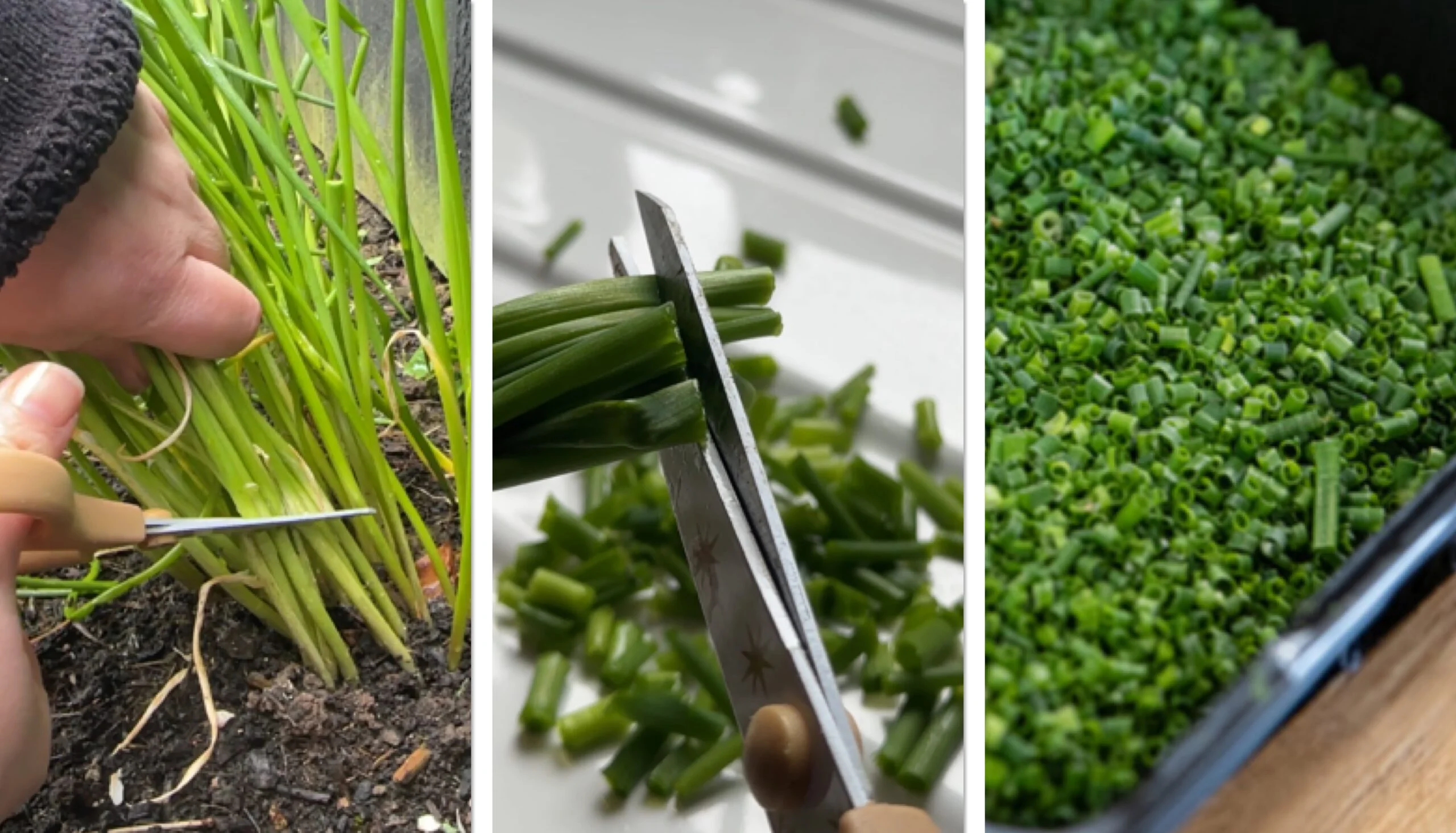
Image source: Web (Bing) / caledonianhorticulture.co.uk (Web image (fair-use with source credit))
The bottom line? If you're buying one tool, get good single-blade shears. They do everything.
If you're a dedicated herb enthusiast who processes big bunches of soft herbs daily, add multi-blades as a specialized second tool.
The Cleaning and Maintenance Reality Check
This is where many people make their final decision. Multi-blade scissors look great on the shelf, but they turn into a frustrating chore the first time you use them with wet herbs.
Here's the problem. The blades are packed close together, usually just a few millimeters apart. When you cut fresh herbs, the natural moisture and oils from the leaves get between those blades.
Then it dries, hardens, and basically glues everything together.
Why Multi-Blade Scissors Get Gross Fast
You have to clean multi-blade scissors immediately after every single use. Not in an hour. Not after dinner.
Right away. Dried herb residue is genuinely difficult to remove once it sets.
Some models come apart for cleaning, which helps a lot. You separate the blades, rinse each one, and wipe them down individually. But that takes time, and honestly, most people don't want to disassemble a tool after every use.
The alternative is worse. If you leave them dirty, the next time you use them, those old herb bits end up in your food. That's not just unpleasant.
It's a food safety issue.
The USDA recommends cleaning kitchen tools thoroughly after each use to prevent bacterial growth. Wet plant matter left between blades is a perfect environment for bacteria to multiply.
How to Keep Either Pair Sharp and Rust-Free
Single-blade shears are far easier to maintain. Most quality pairs come apart into two pieces, so you can wash them properly and dry them completely before reassembling.
Here are the basics for keeping either type in good shape:
- Hand wash whenever possible, even if the label says dishwasher safe
- Dry completely before storing to prevent rust
- Oil the pivot screw occasionally with food-safe mineral oil
- Keep them dry and store them in a drawer or knife block
Rust is the enemy. Even stainless steel can corrode if you leave it wet or run it through the dishwasher repeatedly. A little maintenance goes a long way.
Common Mistakes People Make With Herb Scissors
People use herb scissors wrong all the time, then blame the tool. Here are the most common errors we see in aggregate user reviews and cooking forums.
First, using multi-blade scissors on woody herbs. This jams the blades and can actually bend them over time. Rosemary and thyme stems are too dense for the narrow gaps between blades.
Second, cutting wet herbs directly over the sink or in a bowl. You want a stable cutting board. It protects your counters and gives you a flat surface to control the cut size.
Third, putting multi-blade scissors through a full dishwasher cycle loaded with other utensils. The blades get knocked around, and the high heat can warp the plastic handles. Hand washing is safer.
Fourth, ignoring blade tension. Single-blade shears have a screw at the pivot. If the blades are loose, they slide instead of cutting cleanly.
Tighten them periodically.
Finally, buying cheap. A $5 pair of multi-blade scissors will dull fast, and you can't sharpen them easily. A mid-range pair is worth the extra money.
Real Kitchen Scenarios: When Each Tool Wins
Let's walk through three common scenarios and see which tool handles them better.
The Weeknight Garnish Rush
It's 6:30 PM. You're making a soup or a grain bowl, and you want a fresh herb garnish. You grab a handful of cilantro or chives.
Multi-blade scissors absolutely win here. You snip directly into the bowl, get uniform pieces instantly, and you're done in fifteen seconds. The cleanup is annoying, but the speed is unmatched.
Meal Prep Sunday
You're batch cooking for the week. You have three bunches of parsley, a bunch of dill, and a bunch of thyme to process.
This is a mixed bag. The multi-blade handles parsley and dill beautifully. But the thyme needs single-blade shears, or you'll be fighting the stems all day.
If you're prepping a variety of herbs, you'll need both tools.
Herb Garden Harvest Day
You stepped outside and grabbed whatever was ready. Basil, mint, oregano, maybe some sage.
Multi-blade scissors are the wrong choice here. Basil and mint bruise too easily under multiple blades. The right move is a sharp pair of single-blade shears, snipping leaves one by one.
You get clean cuts, no bruising, and the herbs stay fresh longer.
What You'll Spend: Price Ranges and What's Worth It
Herb scissors aren't a big investment, but price does track with quality. Here's what you should expect to pay as of 2026.
| Tool Type | Budget | Mid-Range | Premium |
|---|---|---|---|
| Multi-blade scissors | $8–$12 | $12–$20 | $20–$30 |
| Single-blade kitchen shears | $8–$15 | $15–$25 | $25–$40 |
Budget multi-blade scissors are usually single-piece construction. You can't separate the blades, and cleaning is a nightmare. Spend at least $12 to get a model that comes apart.
For single-blade shears, mid-range is the sweet spot. You get a solid pivot, replaceable parts, and a comfortable grip. Premium shears from established German or Japanese manufacturers are nice, but you're paying for brand name and longevity more than a fundamentally better cut.
If we had to recommend where to put your money, it's on good single-blade shears. They do everything, they last for years, and they're easier to maintain. Add multi-blades later if you find yourself wishing for more speed.
FAQs People Actually Ask About Herb Scissors
Can I put multi-blade herb scissors in the dishwasher?
Most manufacturers claim dishwasher safety, but it's a bad idea. The high heat and water pressure knock the blades around, and the detergent can dull them faster. Hand washing takes two minutes and keeps the blades aligned.
Your scissors will last years longer.
Do herb scissors actually save time?
For soft herbs like chives, parsley, and cilantro, yes. Aggregate reviews consistently report cutting prep time roughly in half compared to knife mincing. For woody herbs or small batches, the difference is negligible.
If you process large bunches of soft herbs regularly, the time savings are real.
Can I use multi-blade scissors for anything besides herbs?
Not really. The narrow blade gaps jam on anything dense. Some people use them for snipping green onions, but that's about the limit.
Single-blade shears handle everything from herbs to packaging to chicken skin.
How do I sharpen herb scissors?
Multi-blade scissors are nearly impossible to sharpen properly. The blades are stacked too close together for a sharpening steel. Single-blade shears are easier, and many models have replaceable blades.
If your multi-blades go dull, replacement is usually cheaper than sharpening.
What's the best way to cut basil without bruising it?
Use single-blade shears or a sharp chef's knife. Basil leaves bruise easily, and multi-blade scissors mash the cell walls, causing browning. A clean single cut preserves the leaf structure and keeps it green.
Final Verdict: The Right Choice for Your Kitchen
Here's the bottom line. If you're buying only one tool, get a solid pair of single-blade kitchen shears. They handle every herb type, clean up easily, and pull double duty for a dozen other kitchen tasks.
If you cook with soft herbs daily and want faster prep, add multi-blade scissors as a specialized second tool. Just be ready for the cleaning routine and the single-purpose limitation.
For most home cooks, the decision comes down to how often you actually reach for fresh herbs. Occasional use? Single-blade shears are plenty.
Daily garnishes and big batches? The multi-blade earns its place.
Either way, you're looking at a modest investment. The right pair will last years, and the wrong pair ends up in a drawer. Match the tool to your cooking habits, and you'll make the right call.